Last Updated: September 29, 2026
A teletherapy room has a higher bar than any other home office. Clients share things they may never have said aloud, and they need to feel that no one else can hear, that the therapist is fully present, and that the connection will not drop at the worst moment. For clinicians working from home, the setup is not just about comfort; it is part of the therapeutic frame and, in many places, part of professional and legal obligations around confidentiality. This guide covers the physical and technical elements that matter most.
📄 In This Review
Quick answer: Our top pick in 2026 is the Headphones — our #1 rated choice. See the full ranked comparison, alternatives and buying advice below.
Confidentiality starts with sound
Privacy on a video session has two directions: the client’s voice must not be heard outside your room, and household sounds must not reach the client. Headphones or earbuds are the first line of defence, because a client’s voice through laptop speakers can carry through a door easily. The second is sound masking outside the room: a sound conditioner or white noise machine placed outside the door, such as the Yogasleep Dohm style of fan-based units, blurs any speech that escapes. Many in-person therapy offices use exactly this approach in waiting areas.
Treat the door
Hollow interior doors and gaps underneath leak sound. A door sweep and adhesive weatherstripping around the frame, typically $15–$40 in total, noticeably reduce leakage. Soft furnishings inside the room, such as a rug, curtains and upholstered chairs, reduce echo and make your voice sound warmer to the client.
| Element | Recommended approach | Approximate cost |
|---|---|---|
| Headphones | Comfortable closed-back or earbuds with a clear mic | $50–$250 |
| Sound masking | White noise machine outside the door | $30–$60 |
| Door sealing | Door sweep plus weatherstripping | $15–$40 |
| Camera | 1080p webcam at eye level | $60–$150 |
| Lighting | Warm-neutral soft light (about 3500–4500K) | $40–$120 |
| Connection | Wired Ethernet plus mobile hotspot backup | $10–$50 |
| Signage | “Session in progress” sign or light for the household | $10–$30 |
Platform and data protection
See also: Best Roku Streaming Deals Reviewed • Olipop Flavors Ranked: Best Tastes from Worst to Best
Use a video platform intended for healthcare that meets the privacy rules where you practise, such as HIPAA in the United States, and has the appropriate agreement in place where required. Keep clinical notes in a secure, compliant system rather than in personal documents. Use a device dedicated to clinical work if possible, with full-disk encryption and automatic screen lock, and make sure family members do not share the account. Check with your licensing body and liability insurer for jurisdiction-specific requirements.
Camera framing and presence
Therapy relies on non-verbal cues. Frame yourself from mid-chest up so the client can see your facial expressions and some hand gestures. Place the camera at eye level and the client’s video window close to it, so your gaze meets theirs as closely as possible. Avoid backlighting from a window, which hides your face in shadow. A soft light in front of you, slightly warm rather than clinical, feels more welcoming.
A calming, neutral background
Clients see your background every session. A plain wall, a simple bookcase or a plant works well. Remove personal photos, family items and anything that reveals details about your home life. Consistency matters too: using the same background each session helps create a stable, predictable frame.
Comfort for back-to-back sessions
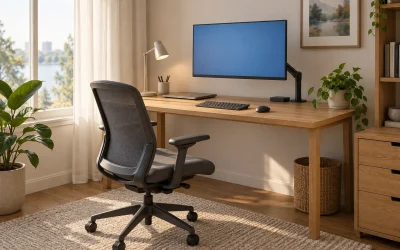
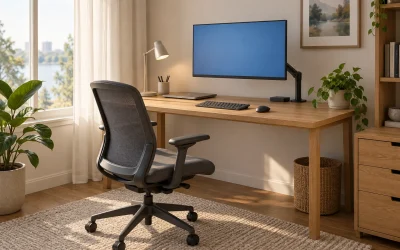
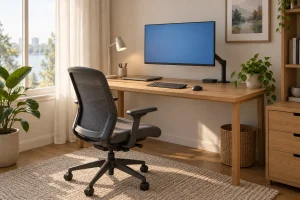
Sessions of 50–60 minutes back to back are physically demanding, even sitting still. A supportive chair that allows an open, relaxed posture on camera is important. Some therapists prefer an armchair-style setup with a laptop on an adjustable stand rather than a traditional desk, which can feel less like an office meeting for the client. Keep water and tissues within reach but out of frame.
Reliability
A dropped call mid-session is disruptive. Use a wired connection, close background apps, and have a plan for disconnections: agree with clients in advance to rejoin or switch to phone. A small UPS on the router keeps the connection alive through brief power cuts.
FAQ
Can I conduct teletherapy from a shared home?
Yes, with headphones, sound masking, a door that closes and clear household agreements. If complete privacy cannot be guaranteed, consider renting a quiet office for sessions.
Are earbuds acceptable for sessions?
Yes, as long as the microphone is clear and they are comfortable for several hours. Discreet wireless earbuds can look less formal than a headset on camera.
Bottom line
A teletherapy office protects confidentiality first, through headphones, sound masking and a sealed door, then supports presence with eye-level camera, warm soft light and a neutral background. Use a compliant platform, a secure device and a reliable wired connection. This is general guidance; check your jurisdiction’s professional requirements.
Ready to decide? Our #1 pick for 2026 is the Headphones.
Live price & availability on Amazon.
Related Reviews & Guides
What to Look for in an Ergonomic Chair
Docking station not detecting second monitor fix