Last Updated: September 18, 2026
📄 In This Review
Quick answer: Our top pick in 2026 is the Sturdy cardboard box — our #1 rated choice. See the full ranked comparison, alternatives and buying advice below.
The Short Answer
Yes, a desk footrest is worth considering if your feet cannot rest flat on the floor while your chair and desk are set to a comfortable working height. If your feet already sit flat, your knees are roughly level with or slightly below your hips, and you can change positions easily, you probably do not need one.
A footrest is not a magic fix for back pain, poor posture, or an unsuitable desk. Its main job is simple: it gives your feet a stable surface when your chair is high enough for your desk but too high for the floor. That small change can reduce dangling legs, pressure behind the knees, and the temptation to perch on the edge of your chair.
As an Amazon Associate we earn from qualifying purchases at no extra cost to you.


What You Actually Get
See also: Best Gaming Desk Pads for Full Desk Coverage • Best Desk Organizers Under $30: Match the Organizer to Your Clutter
A desk footrest is a low platform, cushion, or angled support that sits beneath your desk. Most models are about 16 to 18 inches wide and 10 to 14 inches deep, giving you enough room to place both feet and shift positions. Adjustable models commonly provide roughly 2 to 6 inches of height, while fixed cushions may be closer to 3 to 5 inches tall.
The best height is not necessarily the tallest setting. Sit back in your chair with your feet supported and aim for knees at about a 90- to 100-degree angle. Your thighs should feel supported without your knees being pushed noticeably higher than your hips. You should also have enough clearance to move your feet forward and back rather than being locked into one position.
There are three common types:
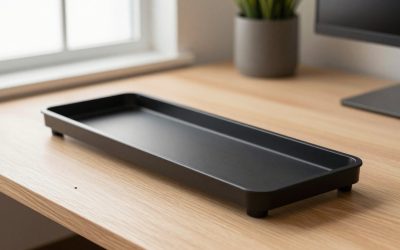
- Adjustable plastic or hard-surface rests: These are often lightweight, easy to clean, and useful if more than one person uses the desk. A textured top can help prevent slipping.
- Memory foam footrests: These feel softer and may be more comfortable for long work sessions, especially if you like to move or rest your feet at different angles. They can be harder to clean and may compress over time.
- Angled or rocking footrests: These let you flex your ankles or gently rock your feet. Movement can be useful during a long day, but an unstable design may feel distracting if you prefer firm support.
The two reference products illustrate the main price split. The CasaZenith Foot Rest, a six-height adjustable model, is listed at $19.99 and is aimed at shoppers who want basic height flexibility. The ComfiLife Foot Rest is listed at $34.19 and uses a memory-foam design intended for an office chair or gaming chair. Neither price alone proves which one will fit your body or desk better; height range, surface size, stability, and return terms matter more.
Pros
- It can make a too-tall desk workable. Desks are often around 28 to 30 inches high, and shorter users may need to raise their chairs to keep their elbows at desk level. A footrest fills the gap between the floor and your feet.
- It supports a more stable sitting position. When your feet dangle, you may brace against the chair, hook one foot around the chair base, or slide forward. A solid platform gives you another point of contact.
- It may reduce pressure behind your knees. If the chair is too high and your legs hang downward, the front edge of the seat can press into the backs of your thighs. A footrest can let you lower your chair slightly or support your legs more comfortably.
- It encourages movement. A rocking or angled model gives your ankles a small range of motion. Even a fixed footrest lets you alternate between placing your feet flat, slightly forward, or closer to the chair.
- It is a relatively inexpensive ergonomic change. Basic models often cost about $15 to $25, while cushioned or more adjustable versions commonly run from $25 to $50.
- It can help shared workspaces. An adjustable model is easier to adapt when different people use the same desk, chair, or home office.
Cons
- It cannot correct every ergonomic problem. If your monitor is too low, your keyboard is too far away, or your chair has poor lumbar support, a footrest addresses only one part of the setup.
- The wrong height can make you less comfortable. A footrest that is too tall may push your knees upward and tilt your pelvis. One that is too short may not solve the original problem.
- Some models slide. Lightweight plastic rests can move on hardwood or smooth flooring, especially if you frequently reposition your feet. Look for rubber grips or a broad base.
- It takes up floor space. A large platform can interfere with a rolling chair, under-desk storage, a treadmill desk, or another person’s legs.
- Soft foam is not automatically better. Memory foam can feel comfortable but may lack the firm support some users prefer. It may also collect dust, pet hair, and crumbs.
- It may encourage staying still. A footrest should support movement, not become a reason to sit in one position for hours. Standing, walking, and changing posture remain important.
Who Should Buy It
Buy a desk footrest if your feet do not reach the floor when your chair is adjusted for your desk. It is also a sensible purchase if you regularly feel pressure behind your knees, find yourself tucking your feet under the chair, or use a desk shared by people of different heights.
It can be especially useful for shorter adults, children using an adult-sized desk, and anyone working at a counter-height surface. People who sit for long periods may appreciate an angled or rocking model because it offers a simple way to change ankle position without leaving the chair.
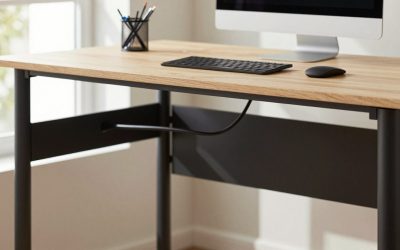
Before buying, measure the open space under your desk. Allow at least 2 to 3 inches of extra width beyond the position of both feet, and check that the footrest will not collide with a center support, drawer, outlet, or chair base. If you wear shoes at your desk, account for their sole thickness when judging height.
Who Should Skip It
Skip a footrest if your feet already rest flat and your current setup feels comfortable. You may gain little from adding another object under the desk. You can also skip it if your workspace is too cramped for a stable platform or if you frequently move between sitting and standing.
A footrest is not a substitute for medical care. If you have persistent numbness, swelling, significant leg pain, or back pain, ask a qualified health professional for advice rather than treating the accessory as a solution. Likewise, if your chair seat is too deep or your desk is unusually high, adjusting or replacing the main furniture may be more effective.
Cheaper Alternatives
| Option | Cost | Trade-off |
|---|---|---|
| Sturdy cardboard box | $0 to $5 | Free or nearly free, but it can collapse, slide, or look untidy. Use only a box that can support your weight without bending. |
| Yoga block or firm foam block | $8 to $15 | Compact and easy to adjust by stacking, but one block may be too narrow for both feet and stacking can reduce stability. |
| Folded blanket or firm cushion | $0 to $20 | Soft and adjustable, but it compresses and may not provide a level, stable surface. |
| Basic adjustable footrest | $15 to $25 | More stable and easier to fine-tune than household items, though inexpensive plastic may slide or feel less polished. |
For a first test, use a sturdy box or firm cushion for a day. If supporting your feet clearly improves comfort, a purpose-built footrest is more likely to be worthwhile. Choose adjustability if you are uncertain about the height; choose a cushioned model if you prefer softness and have enough clearance under the desk.
FAQ
How high should a desk footrest be?
Start with the lowest setting that lets your feet rest fully and keeps your knees level with or slightly below your hips. For many desks, that means roughly 2 to 6 inches, but your chair height, leg length, shoes, and desk height determine the correct setting. Your thighs should not be forced upward, and the front edge of your chair should not press into your knees.
Is a footrest good for back pain?
It may improve comfort when back strain is related to unsupported feet or a chair that is too high. Supporting your feet can help you sit farther back in the chair and maintain a steadier position. However, a footrest is not a guaranteed treatment for back pain. Check your chair, monitor, keyboard, and sitting habits as well, and seek professional guidance for ongoing or severe symptoms.
Should I choose a hard or soft footrest?
Choose a hard surface if you want firm support, easy cleaning, and a platform that stays at a predictable height. Choose memory foam if you prefer cushioning or like to shift your feet during the day. A firm base with a removable cover can offer a useful middle ground. Whichever type you choose, stability matters more than softness.
Does a footrest improve posture?
It can support better posture indirectly by giving you a stable base and making it easier to sit back in the chair. It will not automatically straighten your spine or keep you comfortable all day. Adjust the chair so your elbows are near desk height, place the monitor at a comfortable viewing level, and change positions regularly. The right footrest is a small ergonomic aid, not a complete workstation upgrade.
Ready to decide? Our #1 pick for 2026 is the Sturdy cardboard box.
Live price & availability on Amazon.
Related Reviews & Guides
6 Best Compact Treadmills Under-Desk 2026
6 Best Seateds To Standing Desk 2026