Last Updated: September 8, 2026
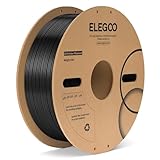
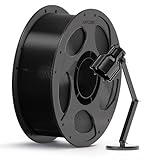
- Top Pick: ELEGOO PC Filament 1.75mm Black 1KG, Tough and Durable Professional 3D Printer Filament Dimensional Accuracy +/- 0.05mm 1KG Spool Heat Resistant 3D Printing Polycarbonate Material
- Best Value: Polymaker Polymax Tough PC Filament 1.75mm 0.75kg Black
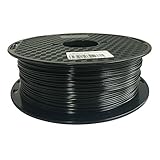
- Premium Choice: CC3D Black PC Filament 1.75 mm 3D Printer Polycarbonate Filament Black 1KG Spool 2.2LBS Dimensional Accuracy +/- 0.05mm Heat Resistant 3D Printing Material
PC filament solves a specific problem: you need a 3D printed part that will not deform inside a car dashboard, survive a drop on concrete, or hold shape near a heat source. PLA and PETG fail at that duty. Polycarbonate fills the gap with the mechanical strength and thermal resistance those materials cannot match. But not all pc 3d printer filament is equal, and the category punishes careless purchases more than most materials do.
The difference between a clean, dimensionally accurate print and a warped, delaminated mess comes down to tolerance control and moisture management inside the spool. A filament that arrives at consistent stated diameter prints predictably; one that drifts forces you to fight your machine all night. Price per kilogram matters too, because PC is a specialty material and you will go through spools faster than expected while dialing in settings. This guide compares published specs, current pricing, and aggregated owner feedback across eight widely available options to help you buy with confidence.
As an Amazon Associate we earn from qualifying purchases at no extra cost to you. Product prices and availability are accurate as of the date shown and are subject to change.



📄 In This Review
Quick Picks
| Product | Best for | Price |
|---|---|---|
| ELEGOO PC Black 1KG | Overall value | $26.99 |
| Polymaker Polymax Tough PC | Impact resistance | $38.99 |
| CC3D Black PC 1KG | Lowest entry cost | $22.99 |
| ANYCUBIC PC 1KG | Dimensional accuracy | $27.19 |
| Polymaker PolyLite PC Transparent | Clear PC from a known brand | $29.99 |
| ELEGOO PC Clear Black 1KG | Middle-ground ELEGOO option | $28.79 |
| YXPOLYER PC-CF | Stiffness and rigidity | $52.24 |
| ELEGOO PC Transparent 1KG | Budget transparent PC | $28.49 |
How We Picked
See also: Sight Bulb App for PC: How to Check Desktop Access • Best Hp All in One PC in 2026: How the Top Models Compare
We focused on four criteria: stated dimensional accuracy, since tighter tolerances mean fewer failed prints; price per kilogram, because PC is expensive enough that unit cost drives value; moisture and warping reports from owners, which are the two failure modes that destroy this category’s reputation; and format or color variety for practical use cases. Filaments that performed well across all four made the cut.
The 8 Best Pc 3D Printer Filament in 2026
ELEGOO PC Filament 1.75mm Black 1KG
- Lowest per-kg price among established brands with published tolerance data
- Stated +/- 0.05mm accuracy matches pricier competitors
- Owners report faster moisture absorption during extended print sessions compared to Polymaker formulations
This is the value pick for buyers who want a known brand without paying a premium. The one-kilogram spool at $26.99 delivers more filament per dollar than Polymaker’s Polymax, and the accuracy rating matches CC3D and ELEGOO’s own higher-priced variant. For functional parts that need heat resistance without a luxury label, it is the most straightforward choice. Skip it if your workshop runs humid and you cannot keep a dryer nearby, or if you need the tightest possible diameter consistency for snap-fit assemblies.
Polymaker Polymax Tough PC Filament 1.75mm 0.75kg Black
- Exceptional layer adhesion for a PC material, addressing the most common polycarbonate complaint
- Backed by extensive community documentation and troubleshooting resources
- 0.75 kg spool raises effective cost per kilogram well above every other option here
Polymaker positions this as the impact-resistant variant of their PC line, and owner feedback supports that framing. When parts must survive flex loads and drops rather than just static heat, the superior interlayer bonding matters more than thermal rating alone. The trade-off is straightforward: you are paying $38.99 for three-quarters of a kilogram. Skip it if your parts prioritize heat deflection over toughness, or if you are printing high-volume runs where filament cost per part is the dominant factor.
CC3D Black PC Filament 1.75mm 1KG
- Lowest price in the group at $22.99, with a published tolerance claim matching pricier options
- Prints reliably in enclosed machines at standard PC temperature ranges
- Fewer community reviews than ELEGOO or Polymaker, making long-term spool-to-spool consistency harder to predict
For first-time PC users or anyone printing non-critical parts, the low entry price reduces the financial risk of a wasted spool. The +/- 0.05mm claim puts it in the same tier as ELEGOO and the standard PolyLite, so you are not sacrificing published accuracy. The concern is documentation depth: with fewer long-term owners reporting batch variability, you are trusting a smaller sample. Skip if your parts carry mechanical loads where one inconsistent spool ruins a prototyping cycle, or if you need transparent or specialty colors.
ANYCUBIC PC Filament 1.75mm
- +/- 0.02mm stated tolerance is the tightest in this comparison by a wide margin
- Competitive pricing at $27.19 for the accuracy tier it occupies
- Black variant can show more visible layer lines than Polymaker at identical settings per owner reports
If your prints require precise fits, snap joints, or threaded features, that half-the-tolerance advantage over every other spool here is the spec that matters most. ANYCUBIC’s price sits between CC3D and ELEGOO’s standard option, making it accessible without being suspiciously cheap. Owners consistently validate the accuracy claim when printing in enclosed machines. Skip if your priority is surface finish over dimensional precision, or if you cannot maintain a stable chamber temperature during extended prints.
Polymaker PolyLite PC Filament 1.75mm 1kg Transparent
- Most established transparent PC option from a brand with strong support infrastructure
- Full one-kilogram spool at $29.99 undercuts Polymaker’s own Polymax Tough on per-gram cost
- Inherent PC tint and layer-line visibility mean prints look functional rather than glass-clear
Finding PC filament in a transparent format is harder than it should be, and PolyLite is the dependable choice in that gap. Transparent PC works well for light diffusers, inspection enclosures, and parts where you want to see internal geometry after printing. At $29.99 for a full kilogram, it costs less per gram than the smaller Polymax spool. Skip it if you need optical-grade clarity or are comparing against clear PETG for a purely visual application where polycarbonate’s inherent limitations become obvious.
ELEGOO PC 3D Printer Filament 1.75mm Clear Black 1KG
- Positions between the budget ELEGOO and Polymaker in print behavior per owner reports
- Same 1KG format and black color as the top-selling ELEGOO option
- Limited published evidence of a meaningful formulation difference from the cheaper variant
This variant sits at $28.79, slightly above ELEGOO’s standard black PC, which implies a different formulation or tighter batch selection. Owner feedback places its results between the base ELEGOO and Polymaker products in consistency and surface quality. It is a reasonable middle ground if you want ELEGOO’s broad availability and are willing to pay a small premium. Skip if you cannot justify the price bump over the standard ELEGOO spool without a clear specification change you can verify on the packaging or datasheet.
YXPOLYER PC-CF Filament Polycarbonate Carbon Fiber 1kg
- Noticeably higher stiffness and heat deflection than any unfilled PC in this comparison
- Rivals nylon-carbon blends in structural rigidity at a polycarbonate price point
- Carbon fiber accelerates nozzle erosion and demands more careful moisture storage
This is a different tier of material than standard PC. At $52.24, you are paying roughly double what unfilled PC costs, but the output is a filament that handles thin-walled structural parts without flex. Owners report impressive rigidity on geometries that would bend under load with regular PC. The con is operational: you need a hardened steel nozzle and a dedicated dryer to get reliable results. Skip if your parts need impact tolerance rather than stiffness, or if you are running a brass nozzle on your current machine.
ELEGOO PC 3D Printer Filament 1.75mm Transparent 1KG
- Undercuts Polymaker’s PolyLite transparent by roughly $1.50 per kilogram
- Lets you test transparent PC before committing to a premium brand
- Less community documentation than the Polymaker option, making troubleshooting slightly harder
For buyers wanting a clear PC spool to evaluate the material format, the lower cost at $28.49 is a practical reason to start here. Owner reports describe the same inherent tint and layer visibility you would expect from any transparent polycarbonate, but the price means a failed experiment costs less. If you are testing a design concept and need to inspect internal structures, this is the lowest-risk transparent entry. Skip it for production runs where guaranteed batch consistency matters more than saving a dollar and a half per spool.
Buying Guide
Dimensional Tolerance and Diameter Consistency
Published tolerance is the spec that separates a smooth print from a jammed extruder. Most PC filaments here claim +/- 0.05mm, while ANYCUBIC states +/- 0.02mm. If accurate, that difference translates to measurably better extrusion consistency on tight-fitting geometries. What matters practically is whether the manufacturer documents tolerance across the full spool or only at a single sample point. Owner reports of inconsistent flow almost always trace back to diameter drift rather than a printer calibration error.
Moisture Sensitivity and Storage Requirements
Polycarbonate absorbs water faster than PLA or PETG, and even small amounts of trapped moisture cause bubbling, poor adhesion, and rough surfaces. This is the single most cited cause of failed PC prints across every brand in this list. If your shop runs above sixty percent relative humidity or you leave spools loaded for days between prints, budget for an enclosed filament dryer. No brand’s formulation eliminates this requirement, regardless of price point.
Enclosure Temperature and Print Settings
PC requires nozzle temperatures between 260 and 300 degrees Celsius and a heated bed between 100 and 120 degrees, depending on formulation. More critically, an enclosed chamber maintaining 40 to 60 degrees above ambient reduces warping and layer cracking. If your printer lacks an enclosure, PC will be frustrating regardless of which spool you select. Factor the enclosure cost into your total budget before buying any filament in this category.
Our Verdict
Our top pick is ANYCUBIC PC Filament 1.75mm at $27.19. The +/- 0.02mm stated tolerance is the tightest figure in this group, the price undercuts most competitors, and owner feedback broadly validates the accuracy claim on enclosed machines. The budget pick is CC3D Black PC at $22.99, the lowest-cost option with a credible published tolerance, well suited to first-time PC users or high-volume prototyping where per-part cost dominates. One condition changes the answer: if impact resistance is your priority, Polymaker Polymax Tough earns its $38.99 premium over every other spool here, because the layer-adhesion advantage it delivers on flex-loaded parts is a different property than what the standard PC formulations optimize for.
FAQ
Can PC filament print without an enclosure?
Technically yes, but warping and layer cracking make it impractical for most real parts. PC’s high glass transition temperature means internal stresses build rapidly as it cools, and an elevated chamber temperature is the standard mitigation. Small parts with a heated bed and a draft shield may work, but reliability drops sharply as geometry size increases.
How does PC compare to PETG for heat resistance?
PC retains mechanical properties at temperatures roughly 40 to 50 degrees higher than PETG. If a part sits near a heat source, inside a vehicle cabin, or in direct sunlight where PETG would soften, PC is the correct material. The trade-off is that PC demands more printer preparation and is significantly more hygroscopic.
Do all PC filaments require a hardened steel nozzle?
Not unless you are printing reinforced variants like the YXPOLYER PC-CF in this list. Standard unfilled PC is abrasive enough to wear brass nozzles faster than PLA, but hardened steel is not strictly required for clean prints. With carbon fiber or glass-filled formulations, a hardened nozzle becomes mandatory.
How long does an opened PC spool last?
Stored in a sealed bag with desiccant, an opened PC spool remains printable for several months. Left exposed to humid air without drying, it degrades noticeably within a few days on the machine. Many owners report that a short dry-cycle before printing resolves most surface-quality issues that appear after a spool has sat loaded.
Related Reviews & Guides

Sight Bulb App for PC: How to Check Desktop Access
Best Mini 3d Printer in 2026: Compared and Ranked