Last Updated: September 29, 2026
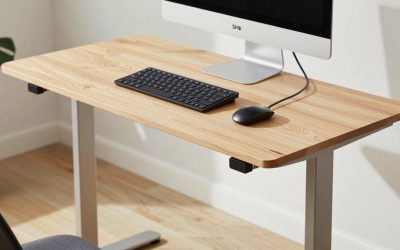
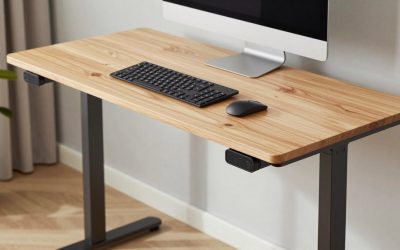
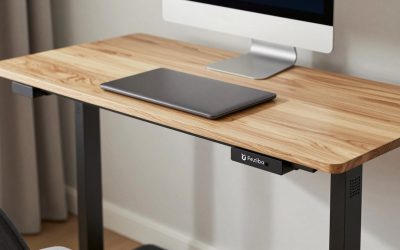
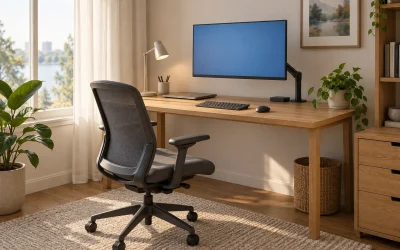
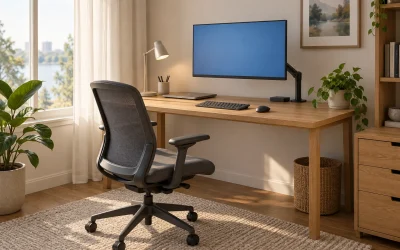
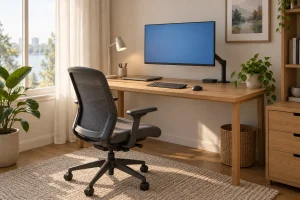
Minimalist desk photos online usually show a bare wooden top, one monitor and a single plant, with no visible cable anywhere. They look calm, but many of them are staged for the photo and quietly rebuilt afterwards. A minimalist setup you can actually work at every day is less about owning almost nothing and more about deciding what earns a place on the surface and giving everything else a home out of sight. These ideas focus on the practical side: how to reduce visual noise without making work harder.
📄 In This Review
Quick answer: Our top pick in 2026 is the Daily tools — our #1 rated choice. See the full ranked comparison, alternatives and buying advice below.
Start with a surface audit
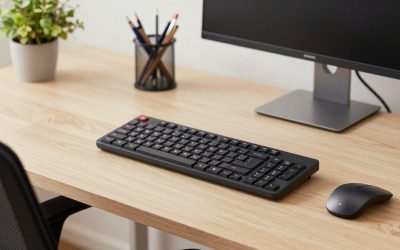
Take everything off the desk. Put back only the items you used in the past two days. For most people that is a screen, a keyboard, a mouse, one drink and perhaps a notebook. Everything else goes into a box for a week. If you have not needed an item after a week, give it a drawer, a shelf or the donation bag. This simple test is more effective than buying organisers, because organisers often preserve clutter in neater containers.
| Item category | Minimalist approach | Where it lives |
|---|---|---|
| Daily tools | Keep, choose one of each | On the desk |
| Weekly tools (stapler, hard drive, charger) | Keep, store close | Top drawer or under-desk drawer |
| Monthly or rare items | Keep only if needed | Shelf, cabinet or another room |
| Decorative items | Limit to one or two | Desk corner or shelf above |
| Paper | Scan, file or recycle | One inbox tray at most |
Idea 1: Reduce the number of devices
See also: Best Roku Streaming Deals Reviewed • Olipop Flavors Ranked: Best Tastes from Worst to Best
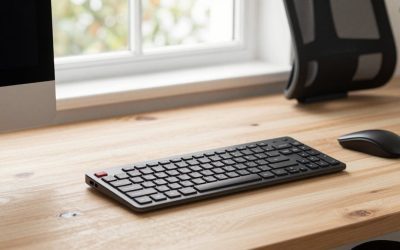
Each device brings a cable, a charger and a place on the desk. A single larger monitor instead of two smaller ones, a laptop that closes into clamshell mode on a vertical stand, and a wireless keyboard and mouse remove several items at once. Combining functions helps too: a monitor with built-in speakers or a USB-C hub, or a desk lamp with a wireless charging pad, replaces two objects with one.
Idea 2: Choose a calm palette
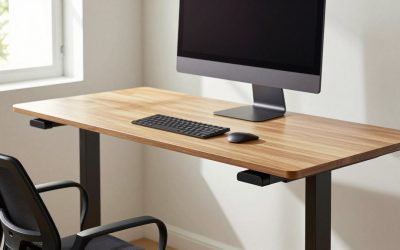
Visual calm comes from limiting colours and finishes. Pick two or three materials, such as light wood, matte black metal and white, and keep peripherals within that range. A desk mat in a neutral felt or leather defines the working area and hides the desk surface’s wear. Avoid multicolour RGB lighting if calm is the goal; a single warm white under-shelf light looks far cleaner.
Idea 3: Hide cables completely
Nothing breaks a minimalist look faster than a visible cable. Mount a power strip under the desk, route every cable into an under-desk tray and use one sleeve for the drop to the wall. A single-cable connection from laptop to monitor or dock reduces the problem at source. Adhesive cable clips under the desk’s rear edge hold charging cables out of sight until needed.
Idea 4: Float the monitor
A monitor arm removes the stand’s footprint and lifts the screen visually off the desk, which makes the surface look much larger. If drilling or clamping is not possible, choose a monitor with a slim flat-base stand rather than a V-shaped leg design.
Idea 5: Give everything a home off the surface
Under-desk drawers that slide out from beneath the top, wall-mounted shelves and a pegboard behind the desk keep tools accessible without cluttering the surface. The rule is that nothing lives on the desk unless it is used daily. Headphones hang on a clamp-on hook under the desk edge; notebooks go on a shelf; cables for occasional devices live in a drawer pouch.
Idea 6: Keep one analogue item
Minimalist desks can feel sterile. One plant, one object with meaning or a small paper notebook adds warmth. Choose low-maintenance plants that tolerate indoor light, such as pothos or snake plants, and give them a saucer so they do not mark the desk.
Idea 7: Reset daily
Minimalism fails when it depends on weekend clean-ups. A two-minute end-of-day reset, putting everything back in its place and wiping the surface, keeps the desk calm and gives a clear mental boundary between work and home. It is especially helpful in small apartments where the desk shares a room with the rest of life.
FAQ
Can a minimalist desk be ergonomic?
Yes. Ergonomics depends on screen height, keyboard position and chair fit, not on how many objects are nearby. A monitor arm and a laptop stand can make a minimal setup more ergonomic than a cluttered one.
Is a small desk better for minimalism?
Not necessarily. A small desk forces items to stack, which looks cluttered. A medium desk with plenty of empty surface often feels more minimal than a tiny, crowded one.
Bottom line
A workable minimalist desk comes from subtracting, not from buying organisers: keep daily items only, reduce devices, pick a calm palette, hide every cable, float the monitor and reset daily. Add one living or personal object so the space feels calm rather than empty.
Ready to decide? Our #1 pick for 2026 is the Daily tools.
Live price & availability on Amazon.
Related Reviews & Guides



Best docking station with ethernet port

Best wireless mechanical keyboard for office