Last Updated: September 29, 2026
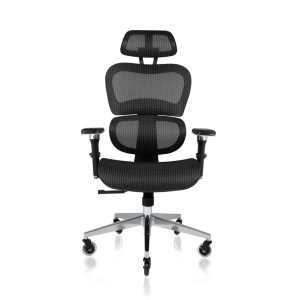
Ergonomic chair prices range from under $150 to well over $1,500, and the spread is confusing because many chairs at every price use the same buzzwords. The honest answer is that most people get the best value between about $300 and $800, but what you should pay depends on hours in the chair, body size and how long you intend to keep it. This guide breaks down what each price tier really buys and how to calculate a sensible budget.
📄 In This Review
Quick answer: Our top pick in 2026 is the Budget — our #1 rated choice. See the full ranked comparison, alternatives and buying advice below.
Price tiers and what they deliver
| Tier | Typical price | What you usually get | Common compromises | Typical warranty |
|---|---|---|---|---|
| Budget | $120 to $250 | Height, tilt, fixed or basic lumbar, 2D arms | Foam compresses in 1 to 3 years, limited depth adjustment | 1 to 3 years |
| Value ergonomic | $250 to $500 | Adjustable lumbar, seat slider, 3D or 4D arms, synchro-tilt | Mixed material quality, plastic mechanisms | 3 to 7 years |
| Mid-premium | $500 to $900 | Refined mechanisms, better mesh or foam, BIFMA testing, wider fit range | Fewer size options than flagship lines | 5 to 12 years |
| Flagship | $900 to $1,800 | Multiple sizes, long-lasting materials, excellent resale | Diminishing comfort returns per dollar | 12 years or more |
Where the money actually goes
See also: Best Roku Streaming Deals Reviewed • Olipop Flavors Ranked: Best Tastes from Worst to Best
Mechanisms
The tilt mechanism, gas cylinder and armrest hardware are where cheap chairs fail first. A smooth synchro-tilt with several lock positions and progressive tension costs more to engineer and build. When you move from $200 to $450, the biggest improvement is usually here.
Seat and back materials
High-density moulded foam holds shape for years; low-density slab foam can flatten noticeably within 12 to 24 months. Quality elastomeric mesh keeps its tension; cheap mesh sags and develops a hammock feel. You pay for material that behaves the same in year five as in week one.
Testing and warranty
Chairs certified to BIFMA X5.1 have passed cycle tests for the seat, back, arms and base. Long warranties are expensive for manufacturers to honour, so a 10 to 12 year warranty is a strong signal of confidence in the build.
Brand and design
At the top end, part of the price is design pedigree and resale value. Well-known flagship chairs retain 40 to 60 percent of their value on the used market, which softens the real cost if you might sell later.
Calculating your own budget
A practical method is cost per hour of use. If you sit 6 hours a day, 230 working days a year, that is about 1,380 hours annually. A $600 chair kept for 8 years costs around 5 cents per hour. A $180 chair replaced every 2.5 years costs slightly more per hour over the same period and delivers less support throughout. For heavy users, the mid tier is usually the sweet spot.
Adjust the budget up if any of the following apply: you sit more than 8 hours a day, you are over 6’2″ or under 5’3″ and need a specific size, you weigh over 250 lb and need a higher load rating, or you have a diagnosed back condition and need precise lumbar control. Adjust it down if you mostly stand at a sit-stand desk, work part time, or share a hot desk where settings are constantly changed.
Spending smarter
Consider certified used or refurbished
Office liquidators sell flagship chairs that have been cleaned and had cylinders or arm pads replaced, often at 40 to 60 percent of new. Check that the frame is uncracked, the tilt lock engages in every position and the mesh has no tears. Warranties rarely transfer, so factor that in.
Pay for adjustments you will use
A seat slider and adjustable lumbar are worth paying for almost universally. A headrest, forward tilt or 4D arms matter only for specific habits. Skip features you will never touch.
Time your purchase
Office chairs see regular promotions around major retail sale periods and at the end of the financial year for office suppliers. Discounts of 15 to 25 percent are common in the value and mid-premium tiers.
Red flags at any price
- “Ergonomic” chairs with no lumbar adjustment of any kind.
- No published seat height or depth range.
- Weight capacity not stated or cylinder class not listed.
- Warranty under one year on a chair above $200.
FAQ
Is a $1,000 chair twice as good as a $500 chair?
No. Comfort gains flatten quickly above roughly $600 to $800. The extra money buys longevity, size options, materials and resale value rather than dramatically better posture.
Can a chair under $200 be ergonomic?
It can offer basic ergonomics: height, tilt tension and some lumbar support. It usually lacks seat depth adjustment and durable materials, so it suits lighter use better than full-time work.
Bottom line
Most full-time desk workers should budget $300 to $800 for an ergonomic chair, which buys adjustable lumbar, a seat slider, a good tilt mechanism and a meaningful warranty. Spend more if you need a specific size or sit for very long days; spend less only if your chair time is limited. Always judge a chair by its adjustment ranges and warranty, not by the word ergonomic on the box.
Ready to decide? Our #1 pick for 2026 is the Budget.
Live price & availability on Amazon.
Related Reviews & Guides


How to clean a mechanical keyboard
Best Ergonomic Office Chair for Conference Rooms