Last Updated: September 29, 2026
For many people with ADHD, working from home is both a relief and a trap. There is no open-plan chatter and no commute, but there is also no external structure: the laundry, the phone, the fridge and forty open browser tabs all compete for attention with nothing to hold the line. A home office cannot fix attention, but it can shape the environment so that the path of least resistance leads toward the task rather than away from it. The ideas below come from common ADHD coaching strategies and ergonomic practice; treat them as experiments and keep what works for you.
📄 In This Review
Quick answer: Our top pick in 2026 is the Faster start — our #1 rated choice. See the full ranked comparison, alternatives and buying advice below.
Design principle: reduce friction to start, add friction to distraction
Starting tasks is often the hardest part. Anything that makes starting slower, such as a cluttered desk, a laptop that needs setting up or a missing charger, becomes an excuse to drift. Meanwhile, distractions should take effort: a phone in another room, social apps behind a blocker, snacks in the kitchen rather than on the desk.
| Goal | Environment change | Approximate cost |
|---|---|---|
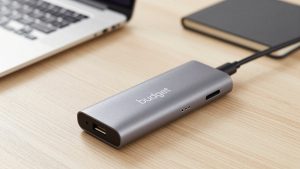
| Faster start | Desk always “docked” and ready, one cable to connect | $0–$200 for a dock |
| Fewer visual cues | Closed storage instead of open shelves in view | $50–$200 |
| Phone distance | Charging station outside the office | $15–$40 |
| Time awareness | Visual timer on the desk | $15–$35 |
| Sound control | Noise-cancelling headphones or brown noise | $0–$350 |
| Restless energy outlet | Standing desk, under-desk pedal or fidget tool | $10–$400 |
Visual environment
See also: Best Roku Streaming Deals Reviewed • Olipop Flavors Ranked: Best Tastes from Worst to Best
Face a calm view
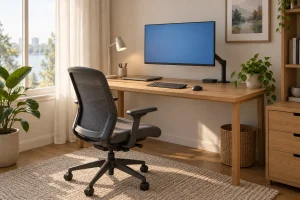
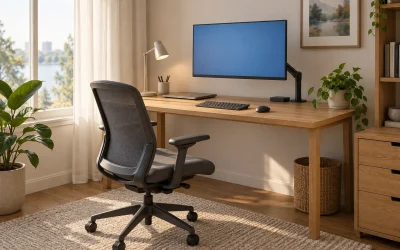
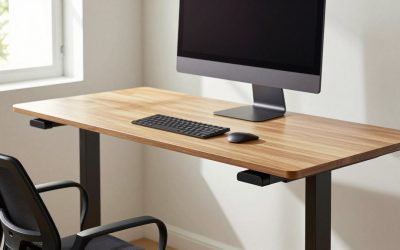
Position the desk so you face a plain wall or a window with a quiet view, not the door, the TV or a busy room. Movement at the edge of vision pulls attention. If you share a room, a freestanding screen or a bookcase used as a divider cuts visual noise.
Hide what you are not using
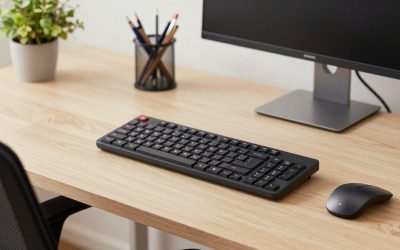
Open shelves full of objects are a constant stream of prompts. Closed cabinets, boxes with lids and drawers keep things out of sight. On the desk itself, keep only what the current task needs. A small tray for “things that need doing today” is useful; a pile of everything is not.
But keep key items visible
The ADHD paradox is that out of sight can also mean out of mind. Use a whiteboard or a single visible list for today’s priorities. Keep important physical items, such as a notebook or a bill that needs paying, in one designated visible spot rather than scattered.
Sound
Some people with ADHD focus best in silence, others in background noise. Noise-cancelling headphones help in either case: they remove unpredictable sounds, and you can layer brown noise, white noise or instrumental music over the top. Many people find brown noise, with its lower, rumbling frequencies, less harsh than white noise. Experiment for a week with each option.
Time and structure
Time blindness is common with ADHD. A physical visual timer, one that shows remaining time as a shrinking coloured disc, makes time concrete in a way a phone clock does not. Many people use it for focused work blocks of 20–45 minutes followed by short breaks. A clock visible from the desk and scheduled calendar blocks with reminders also help.
Body doubling
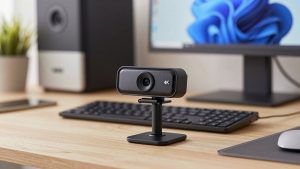
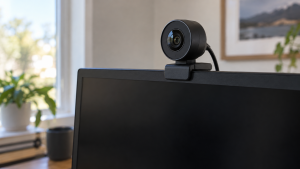
Working alongside another person, in person or on a video call, is a widely used ADHD strategy. Online body-doubling sessions or a friend on a silent call can provide gentle accountability. A decent webcam and headset make this easier to sustain.
Movement
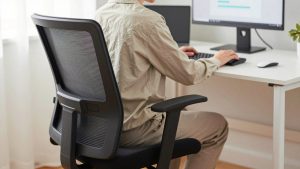
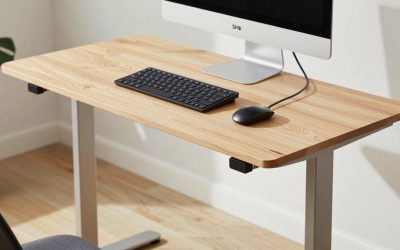
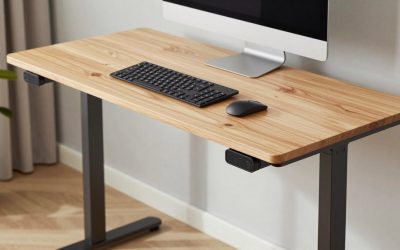
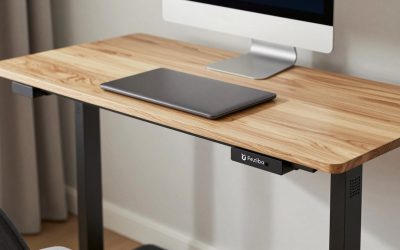
Restlessness is easier to manage when it has an outlet. A sit-stand desk lets you switch positions whenever energy rises. An under-desk pedal or balance board keeps legs moving quietly. Small fidget tools, such as a smooth stone or a putty, occupy hands during calls. A chair that swivels and rocks slightly can be more comfortable than a rigid one.
Digital environment
The physical desk is only half the setup. Use website and app blockers during focus blocks, turn off non-essential notifications, and keep a separate browser profile or user account for work. A second monitor can help by keeping reference material visible, but it can also become a distraction screen; decide deliberately what goes on it.
FAQ
Is a standing desk helpful for ADHD?
Many people with ADHD report that changing position helps them re-engage when attention fades. It is not a treatment, but it is a practical tool for restlessness.
Should I work in a separate room?
If possible, yes. A dedicated room, or even a dedicated corner, helps your brain associate the space with work. Avoid working from the bed or sofa if you can.
Bottom line
An ADHD-friendly home office makes starting easy and distraction effortful: a ready-to-go desk, a calm view, hidden clutter with one visible priority list, controlled sound, visible time and an outlet for movement. Adjust it over time, because what works is personal. This article is general guidance, not medical advice.
Ready to decide? Our #1 pick for 2026 is the Faster start.
Live price & availability on Amazon.