Last Updated: September 26, 2026
Most office chairs are designed around an “average” body, and tall people pay the price: seats too shallow to support the thighs, backrests that stop at the mid-back, headrests that jab the neck, and armrests that never rise high enough. If you are 6’2″ or taller, buying an ergonomic chair means reading the dimensions, not the marketing. This guide covers the specific measurements and features that make a chair work for a tall frame.
📄 In This Review
The measurements that make or break it
For tall users, four dimensions matter more than any feature list: seat height range, seat depth, backrest height, and weight capacity. A chair can have every adjustment in the world and still fail you if its seat is too shallow or its back too short. Always find the spec sheet and compare it to your body before buying.

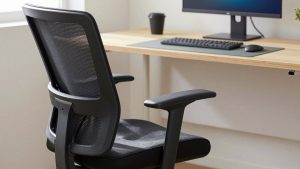
GABRYLLY Ergonomic Office Chair, High Back Home Desk Chair with Headrest, Flip-Up Arms, 90-120° Tilt Lock and Wide Cushion, Big and Tall Mesh Chairs for Man Woman, Black Task Chair
Included for 'best ergonomic office chair for tall people' because the listing specifies High Back Home Desk Chair with Headrest and Flip-Up Arms, details this guide uses to compare options.
View on Amazon
ELABEST X100 Ergonomic Mesh Office Chair with Footrest, Big and Tall Hone Desk Chair with 5D Flip-Up Arms, Adjustable 3D Lumbar Support,Gaming & Executive Computer Chairs
Included for 'best ergonomic office chair for tall people' because the listing specifies Big and Tall Hone Desk Chair with 5D Flip-Up Arms and Adjustable 3D Lumbar Support, details this guide uses to compare options.
View on Amazon
Marsail Ergonomic Office Chair: Office Desk Chair with High Back Mesh and Adjustable Lumbar Support Rolling Work Swivel Task Chairs with Wheel 3D Armrests and Headrest
Included for 'best ergonomic office chair for tall people' as a relevant option in this category; details come from the product listing.
View on AmazonSeat height and depth
Taller people have longer legs, so you need a high maximum seat height—look for a top end around 21–23 inches, or a tall/big-and-tall cylinder option. Seat depth is just as critical: a longer femur needs a deeper seat (or an adjustable-depth slider) so your thighs are supported without the front edge cutting behind your knees. Too-shallow seats are the number-one complaint from tall users.
| Dimension | Tall-friendly target | Why |
|---|---|---|
| Max seat height | ~21–23 in (or tall cylinder) | Feet flat with long legs |
| Seat depth | ~19–22 in or adjustable | Supports longer thighs |
| Backrest height | Tall back reaching shoulders | Full-spine support |
| Headrest | Height + angle adjustable | Reaches a tall neck |
| Armrest max height | High top range, 4D | Elbows at 90° when seated tall |
| Weight capacity | 300–400 lb | Frame durability |
| Warranty | 5–12 years | Long-term support |
Backrest, headrest, and arms
See also: Best Roku Streaming Deals Reviewed • Olipop Flavors Ranked: Best Tastes from Worst to Best
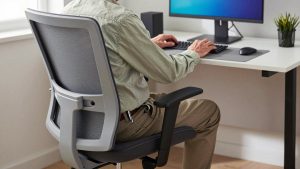
A backrest that ends at your mid-back leaves your shoulders and upper spine unsupported, which is why tall users should favor high-back or “big and tall” chairs whose backrest reaches the shoulder blades. If you want head support, the headrest must be height- and angle-adjustable—a fixed headrest sized for an average user will hit a tall person at the wrong spot and force the head forward.
Armrests for long arms
Armrests need a generous top height so that, once you have raised the seat for your legs, your elbows still land at roughly 90 degrees. 4D arms (height, width, depth, pivot) give the range to position support correctly for broader shoulders and longer arms. Fixed or low-only armrests leave tall users hunching.
Big-and-tall vs. standard ergonomic
| Aspect | Big-and-tall chair | Standard ergonomic (tall cylinder) |
|---|---|---|
| Seat height | Higher stock range | Extend via tall gas cylinder |
| Seat width/depth | Larger | Depends on model |
| Weight capacity | 350–500 lb | 250–350 lb |
| Backrest | Tall by design | Model-dependent |
| Best for | Tall and broad frames | Tall and slim frames |
If you are both tall and broad, a purpose-built big-and-tall chair with a higher weight rating and wider seat is usually the safer bet. If you are tall but slim, a well-specced standard ergonomic chair—especially one that accepts a taller replacement gas cylinder and has an adjustable-depth seat—can fit beautifully and often offers more refined adjustments.
Setup tips for tall users
Raise the seat until your feet are flat and thighs are parallel to the floor; if the desk becomes too low relative to your raised seat, raise the desk or use a keyboard tray rather than dropping the chair and cramping your legs. Slide the seat depth out to support your thighs, set the lumbar as high as it goes if it still feels low, and lift the armrests to meet your elbows. A footrest is rarely needed for tall users, but a taller cylinder often is.
FAQ
What seat height should a tall person look for?
Aim for a maximum seat height around 21–23 inches, or a chair that accepts a tall/extended gas cylinder. The goal is to raise the seat enough that your feet rest flat with your knees near 90 degrees. If a chair tops out at 20 inches, a tall user’s knees end up higher than the hips, which strains the lower back.
Do I need a big-and-tall chair specifically?
Only if you are broad as well as tall, or above the standard weight rating. Big-and-tall chairs offer higher capacity and wider seats. If you are tall and slim, a standard ergonomic chair with a deep or adjustable seat, a high backrest, and a tall cylinder option can fit just as well and may adjust more precisely.
Bottom line
For tall people, the right ergonomic chair is a dimensions exercise, not a brand contest. Prioritize a high seat-height range (21–23 inches or a tall cylinder), a deep or adjustable seat for longer thighs, a backrest that reaches your shoulders, an adjustable headrest, and high-rising 4D armrests. Decide between a big-and-tall model and a tall-specced standard chair based on your build, read the spec sheet before you buy, and set it up to your legs first—everything else follows from getting your feet flat.