Last Updated: September 29, 2026
Your keyboard and mouse are the two things your hands touch thousands of times a day, which makes them the fastest way to either relieve or create strain at a desk. This page is our starting point for choosing and setting up ergonomic input devices. It pulls together the key principles, the main device types, and a decision framework, and it points you toward our more detailed guides on each topic. If you are new to ergonomic peripherals, read this first, then dive into the specific guide that matches your situation.
📄 In This Review
Quick answer: Our top pick in 2026 is the Ulnar deviation — our #1 rated choice. See the full ranked comparison, alternatives and buying advice below.
The four postures that cause most problems
Ergonomic keyboards and mice exist to reduce four awkward wrist and forearm positions. Knowing which one bothers you narrows the choice immediately.
| Posture | What it looks like | Device features that help |
|---|---|---|
| Ulnar deviation | Wrists bent outward toward the little finger | Split or angled keyboards; narrower layouts that bring the mouse closer |
| Pronation | Forearms rotated palm-down flat on the desk | Tented keyboards; vertical mice (commonly 57-90 degrees) |
| Wrist extension | Hands bent upward at the wrist | Negative-tilt or flat keyboards; low-profile keys; palm rests at the right height |
| Static reach | Arm held out to the side to reach the mouse | Tenkeyless or compact keyboards; trackballs; centre-placed pointing devices |
Keyboard types at a glance
See also: Best Roku Streaming Deals Reviewed • Olipop Flavors Ranked: Best Tastes from Worst to Best
Standard with ergonomic tweaks
Full or compact keyboards with a palm rest, low profile and optional negative tilt. The Logitech Wave Keys, with its gentle wave shape and cushioned rest, is a good example of an easy first step; note that it tilts only upward (+4 degrees), not negatively.
Fixed-split and “wave” boards
One-piece keyboards with the key area divided and angled, such as the Logitech Ergo K860 and the Sculpt Ergonomic design now sold by Incase. They reduce ulnar deviation and add some tenting while keeping a familiar feel.
Fully split and tented boards
Two separate halves you can position at shoulder width and tent upward, such as the ZSA Moonlander and Kinesis Advantage360. These offer the most adjustment and the steepest learning curve.
Compact and tenkeyless
Removing the number pad (tenkeyless) shortens the reach to the mouse by roughly 8-10 cm for right-handed users. It is one of the cheapest ergonomic changes you can make.
Mouse types at a glance
Contoured ergonomic mice
Sculpted shapes with a thumb rest that support the hand in a slightly rotated position. A good middle ground for people without specific symptoms.
Vertical mice
Handshake-style grip that reduces forearm pronation. Hand size matters a great deal; check the maker’s size guidance.
Trackballs
The device stays still while your thumb or fingers move the ball, removing arm and shoulder movement entirely. Thumb models like the Logitech MX Ergo S tilt up to 20 degrees; finger models like the Kensington Expert Mouse are ambidextrous.
A simple decision framework
- No pain, just want comfort: start with a quality contoured mouse and a tenkeyless keyboard with a palm rest. Budget roughly $80-$180 for both.
- Wrist or forearm discomfort when mousing: try a vertical mouse or a trackball before replacing the keyboard.
- Wrist discomfort when typing: look at a fixed-split keyboard with negative tilt.
- Shoulder or upper-back tension: consider a fully split keyboard at shoulder width, and check desk height first.
- Diagnosed repetitive strain: talk to a clinician or occupational therapist; devices support treatment, they do not replace it.
Setup matters as much as hardware
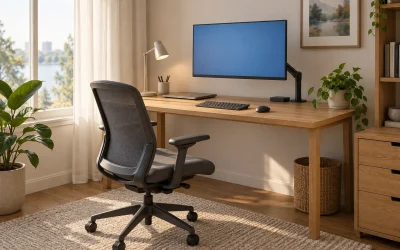
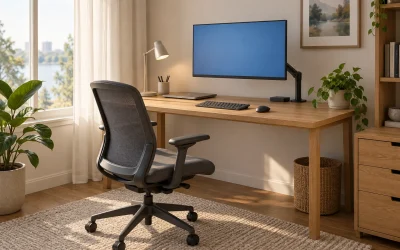
An ergonomic keyboard at the wrong height still causes wrist extension. Your elbows should sit at roughly 90-110 degrees with shoulders relaxed, the keyboard at or slightly below elbow height, and the mouse right beside the keyboard at the same level. Our setup guides cover keyboard and mouse height, keyboard trays and wrist rests in more detail.
Where to go next on this site
- Choosing a keyboard: our ergonomic keyboard buying guide and split keyboard comparisons.
- Choosing a mouse: how to choose an ergonomic mouse, vertical mouse and trackball comparisons.
- Specific needs: guides for carpal tunnel, data entry, spreadsheets, programming and small desks.
- Reviews: in-depth looks at individual boards such as the ZSA Moonlander, Kinesis Advantage360 and Keychron models.
FAQ
Should I change my keyboard and mouse at the same time?
It is usually better to change one at a time. Adapting to a new keyboard and a new mouse simultaneously can cut your productivity for a week or two and makes it harder to tell which change helped.
How long does it take to adjust to ergonomic peripherals?
Contoured mice and wave-style keyboards take a few days. Vertical mice usually take one to two weeks. Fully split, columnar keyboards can take two to four weeks before you are back to your usual typing speed.
Bottom line
Ergonomic input starts with identifying which posture causes you trouble, then choosing the least disruptive device that corrects it, and finally setting it at the right height. Start small with a tenkeyless board and a better mouse, move to split keyboards or trackballs if symptoms persist, and use our individual guides for the details that matter to your specific desk.
Ready to decide? Our #1 pick for 2026 is the Ulnar deviation.
Live price & availability on Amazon.