Last Updated: September 8, 2026
- Top Pick: Entina Tina2C 3D Printer for Kids & Beginners, Fully Assembled Starter Mini 3D Printer, Start in 8 Mins, App & WiFi Control, Auto Leveling, 3000+ Model Library, 20+ Creative DIY Modules for STEM, Home
- Best Value: FLASHFORGE Adventurer 5M 3D Printer with Fully Auto Leveling, Max 600mm/s High Speed Printing, 280°C Direct Extruder with 3S Detachable Nozzle, CoreXY All Metal Structure, Print Size 220x220x220mm
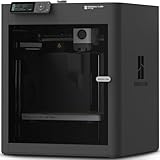
- Premium Choice: Bambu Lab P1S 3D Printer, Ready-to-Use FDM 3D Printer
Setting up a 3D printer on a home workspace used to demand mechanical patience, tedious manual bed leveling, and hours spent troubleshooting failed first layers. For beginners stepping into additive manufacturing, the primary goal is bypassing that steep learning curve to reliably turn digital models into physical objects without turning a desk into an engineering laboratory. The market currently offers options ranging from ultra-compact plug-and-play desktop units designed for classrooms to high-speed, fully enclosed machines capable of printing complex prototypes right out of the box.
Separating a worthwhile starter printer from an frustrating project printer comes down to motion stability, automated calibration features, and software ecosystem integration. A poor entry-level option suffers from constant adhesion failures, cryptic error codes, and difficult nozzle maintenance that quickly stalls user enthusiasm. By analyzing manufacturer specifications, price points, and long-term feedback from home users, this guide identifies which machines deliver smooth initial setups, consistent print quality, and straightforward software for a frictionless desktop setup in 2026.
As an Amazon Associate we earn from qualifying purchases at no extra cost to you.




📄 In This Review
Quick Picks
| Product | Best For | Price |
|---|---|---|
| Entina Tina2C | STEM & Young Beginners | $199.99 |
| FLASHFORGE Adventurer 5M | High-Speed CoreXY Printing | $249 |
| Bambu Lab P1S | Enclosed All-Rounder Workhorse | $399 |
| Bambu Lab A1 | Full-Sized Ready-to-Use Desktop | $299.99 |
| TINA2S | Ultra-Compact Starter Kit | $189.99 |
| Creality SPARKX i7 | Large Volume Smart Printing | $198.99 |
| Bambu Lab A1 mini + LED Lamp Kit | Interactive Starter Projects | $249 |
| AOSEED AI | Enclosed Safety for Kids | $329.99 |
How We Picked
See also: Good Height for a Desk: Seated and Standing Numbers by Body Height • Best Desks for Posture: Height, Depth and Sit-Stand Options
To evaluate the best 3d printer for beginners, we analyzed published technical parameters, chassis architecture, and real-world owner feedback across popular desk setups. Our assessment prioritized reliable automatic bed leveling to prevent common setup headaches, out-of-the-box assembly convenience, intuitive companion software, and functional build volume relative to total desk footprint. We balanced entry-level hardware costs against long-term maintenance needs, highlighting models that maintain stable layer quality without requiring extensive manual upgrades.
The 8 Best 3D Printer For Beginners in 2026
Entina Tina2C
Designed specifically for young students and absolute newcomers, the Entina Tina2C focuses on eliminating initial assembly friction. It arrives fully assembled, allowing users to start printing in roughly 8 minutes. Built-in WiFi connectivity and a companion app provide instant access to a model library containing 3000+ entries, while auto leveling removes manual bed balancing entirely. It also includes 20+ creative DIY modules for STEM learning, making it a tailored introductory tool for small home desks or educational environments.
- Pros: Fully assembled setup ready to print in 8 minutes with auto leveling; Companion app featuring 3000+ pre-loaded models and 20+ STEM modules.
- Cons: Small physical build area limits full-scale project creation.
Skip this model if you intend to print larger household organizers, full-sized tools, or wide desktop accessories.
FLASHFORGE Adventurer 5M
The FLASHFORGE Adventurer 5M targets beginners who want rapid execution without sacrificing structural stability. Built on a rigid CoreXY all-metal structure with a 220x220x220mm print size, it achieves a max high speed printing rate of 600mm/s. Its 280°C direct extruder handles a wide range of filaments, supported by a 3S detachable nozzle system for effortless maintenance. Fully auto leveling ensures consistent first-layer adhesion directly out of the box, reducing downtime for first-time operators.
- Pros: High-speed CoreXY metal frame architecture reaching up to 600mm/s; 3S detachable nozzle system allows simple, tool-free swaps.
- Cons: Open-frame design lacks full heat containment for draft-sensitive materials.
Skip it if you need a whisper-quiet, fully enclosed cabinet for printing technical engineering filaments on an open office desk.
Bambu Lab P1S
The Bambu Lab P1S represents a premium ready-to-use FDM option for beginners seeking a polished, fully enclosed desktop printing experience. Engineered to function straight out of the packaging, this machine isolates internal print temperatures, making it ideal for managing ambient room drafts while printing tricky filaments. Its robust outer shell dampens operational noise and protects internal mechanical components, delivering high success rates and fine surface detail without requiring constant manual adjustments or aftermarket hardware tweaking.
- Pros: Fully enclosed, ready-to-use chassis provides thermal stability and slick desk aesthetics; Consistently high print reliability with minimal initial setup.
- Cons: Premium cost compared to budget open-bed alternatives.
Skip it if you are operating on a strict sub-$300 budget and only plan to print basic decorative objects.
Bambu Lab A1
Tailored for beginners and families seeking a standard desktop footprint, the Bambu Lab A1 is a ready-to-use FDM printer that balances high accessibility with full-scale print capabilities. Its refined automatic calibration systems handle bed leveling and flow rate adjustments, ensuring smooth print layers from the very first project. The open bed configuration provides clear visibility and straightforward part removal, offering a seamless path for users looking to create functional desk organizers, tools, and decorative designs.
- Pros: User-friendly ready-to-use design optimized for beginners and kids; Comprehensive auto-calibration features ensure pristine print quality.
- Cons: Open bed design demands extra clearance depth on your desk.
Skip this printer if you require an enclosed chamber to handle high-temperature industrial materials without warping.
TINA2S Mini
The TINA2S starter kit offers an accessible, ultra-compact desktop solution tailored for young beginners and space-constrained setups. Arriving fully assembled, this mini 3D printer removes complex mechanical assembly entirely, letting users jump straight into printing small models. Its minimal physical footprint fits easily beside a desktop monitor or laptop setup, providing a smooth introduction to 3D design concepts without demanding a dedicated workshop space or a major initial investment.
- Pros: Fully assembled mini starter kit with an extremely compact footprint; Low-cost entry point for introductory STEM learning.
- Cons: Compact build envelope restricts utility to small figurines and small trinkets.
Skip it if you plan to construct larger functional items or full-scale replacement hardware.
Creality SPARKX i7
Combining modern smart monitoring with a generous 260×260×255mm build volume, the Creality SPARKX i7 delivers high capacity at an approachable price point. It features an integrated AI camera for remote print monitoring, auto leveling, and built-in WiFi connectivity for simple file transfers over home networks. A direct drive extruder guarantees accurate filament control, while quiet high-speed desktop printing ensures minimal distraction in shared working environments during long print jobs.
- Pros: Generous 260×260×255mm build volume paired with AI camera monitoring; Direct drive extruder and quiet operational tuning.
- Cons: Larger overall frame requires a dedicated footprint on wider desks.
Skip this printer if space is severely restricted on your workspace desktop and you only need small-scale prints.
Bambu Lab A1 mini + LED Lamp Kit
The Bambu Lab A1 mini bundled with an LED Lamp Kit offers a practical, ready-to-use package geared toward creative beginners. Featuring full auto-calibration routines, quiet operation, and a compact open-bed design, this machine delivers excellent print finish quality on a small footprint. The included LED lamp kit provides an immediate, engaging DIY assembly project, allowing users to combine custom 3D-printed parts with functional hardware right after unboxing.
- Pros: Compact, whisper-quiet ready-to-use platform ideal for home desks; Included LED Lamp Kit offers a fun hands-on project straight away.
- Cons: Smaller print volume limits larger single-piece creations.
Skip it if your primary goal is printing large-scale desk props, tall vases, or wide storage trays.
AOSEED AI
Engineered with child safety and streamlined usability in mind, the AOSEED AI features a fully enclosed structure that protects curious hands from hot internal components. Capable of fast 400mm/s printing speeds, it reduces print completion times for eager young creators. The ecosystem provides integrated software backed by a curated model library containing 8000+ pre-tested objects, making it a secure choice for family workspaces and educational environments.
- Pros: Fully enclosed protective design isolates hot mechanical parts; Fast 400mm/s print speed backed by an 8000+ model library.
- Cons: Higher price point for a specialized, kid-oriented machine.
Skip this unit if you prefer an open-source platform tailored for manual modifications and custom third-party firmware.
Buying Guide
Auto-Leveling and Calibration Systems
For beginner 3D printing, manual bed leveling is the single biggest point of failure. Traditional printers required users to manually turn adjustment knobs while sliding a sheet of paper under the hot nozzle to feel for friction. Modern beginner printers incorporate automatic bed leveling sensors, pressure transducers, or inductive probes that measure bed height across multiple points automatically. Investing in a machine with reliable auto-calibration eliminates initial first-layer adhesion issues, preventing wasted filament and nozzle clogs.
Build Volume vs. Desktop Footprint
Build volume determines the maximum physical dimensions of objects you can print in a single job. While a large volume like 260×260×255mm offers immense flexibility for larger storage boxes and prop builds, it requires a significantly larger desk footprint and additional clearance for moving axes. Compact mini printers with smaller build volumes occupy roughly the same space as an office desk lamp, making them superior choices for narrow study desks or secondary setups where space is premium.
Enclosed vs. Open-Bed Designs
Open-bed printers are generally cheaper, easier to access, and perfect for basic PLA plastics. However, they are susceptible to ambient room drafts, which can cool prints unevenly and cause bottom edges to warp off the build plate. Enclosed printers maintain a warm, stable internal ambient temperature, quiet down fan and motor noise, and provide an added layer of safety by keeping hot print nozzles and moving parts behind closed doors—an essential consideration for homes with pets or young children.
Our Verdict
For the best overall beginner experience, the Bambu Lab P1S takes top honors due to its ready-to-use fully enclosed design, exceptional structural stability, and reliable print performance straight out of the box. If you want maximum capability on a tight budget, the Creality SPARKX i7 is our budget pick, offering a huge 260×260×255mm build volume, AI camera monitoring, and quiet desktop operation for under $200. Finally, if raw print speed in an open-frame CoreXY structure is your primary goal, the FLASHFORGE Adventurer 5M offers unbeatable performance at its price point.
FAQ
Is auto-leveling necessary for a beginner 3D printer?
While not strictly mandatory, automatic bed leveling is highly recommended for beginners because it eliminates manual calibration errors. Proper bed leveling ensures your print sticks correctly to the build surface on every single run. Machines equipped with auto leveling significantly reduce initial failure rates and user frustration.
What is the difference between direct drive and Bowden extruders?
A direct drive extruder mounts the motor directly above the print head, feeding filament directly into the hotend for precise control over flexible and standard materials. A Bowden extruder places the motor on the frame and pushes filament through a long tube, reducing weight on the print head but making fine filament retraction tuning slightly more complex.
Do beginners need an enclosed 3D printer?
An enclosed 3D printer is not required if you primarily print standard PLA filament in a room free from cold drafts. However, an enclosure provides beneficial noise reduction, temperature stability for advanced materials, and safety benefits by containing hot internal components away from children or pets.
What software do I need to start 3D printing on my desktop?
Most beginner 3D printers include dedicated slicing software or companion mobile applications that prepare digital models for printing automatically. Popular free desktop options like OrcaSlicer or Cura allow beginners to easily scale, orient, and convert 3D files into instructions for their specific printer model.
Related Reviews & Guides
3 Best Footrests for Under Your Desk

Best Noise Cancelling Headphones for WFH 2026