Last Updated: September 29, 2026
Many monitor arms come with a grommet mount, a bolt that passes through a hole in the desk, and instructions that assume you have that hole. Plenty of desks do not. Maybe the desk is new and you do not want to drill it, the existing cable hole is in the wrong spot, or the desktop is glass. The good news is that a grommet is only one of several ways to anchor an arm. This how-to walks through each alternative, from the standard edge clamp to drilling your own hole, with the checks that keep a heavy monitor from tipping or damaging the desk.
📄 In This Review
Quick answer: Our top pick in 2026 is the Solid wood / butcher block — our #1 rated choice. See the full ranked comparison, alternatives and buying advice below.
Option 1: Use the C-clamp (the easiest route)
Most arms include a C-clamp that grips the back or side edge of the desk. For the majority of people, this is the answer.
Step by step
- Check the clamp’s thickness range in the manual (commonly around 0.4 to 3 inches) and measure your desktop edge.
- Look under the edge. The clamp’s lower jaw needs a flat, continuous surface; frame rails, drawers, modesty panels and crossbars often sit exactly where the clamp wants to go.
- Assemble the clamp to the arm base, slide it onto the edge and tighten the screw by hand until firm, then add a quarter turn. Do not crank it hard on particleboard.
- Mount the arm, then the monitor, and adjust the tension.
- Recheck tightness after a few days, because the desk surface compresses slightly.
When the clamp will not fit
If a frame rail blocks the lower jaw, move the clamp along the edge to a gap between frame members, or use a clamp with an offset or L-shaped lower plate. Some manufacturers sell low-profile clamps specifically for standing desks with a crossbar near the back edge.
Option 2: Add a reinforcement plate for weak desks
See also: Best Roku Streaming Deals Reviewed • Olipop Flavors Ranked: Best Tastes from Worst to Best
Clamps put a lot of force on a small spot. On laminate over particleboard, hollow-core desks or thin tops, the lower jaw can crush the surface or the top can crack under leverage from a heavy monitor at full reach. A steel reinforcement plate spreads that load. Place it under the desk between the clamp’s lower jaw and the desktop; on very soft tops use a second plate on top as well.
Option 3: Drill your own grommet hole
A grommet is the most stable desk mount, and drilling a hole is less scary than it sounds on a solid or thick desktop.
| Desk material | Drill a hole? | Tool | Notes |
|---|---|---|---|
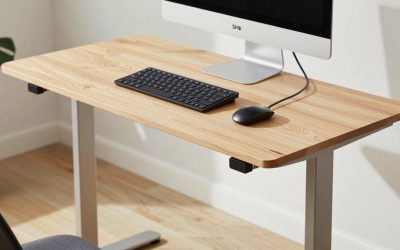
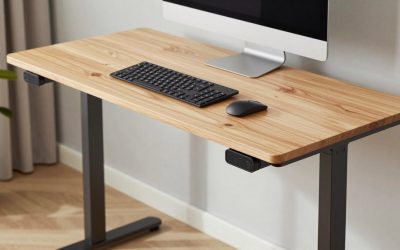
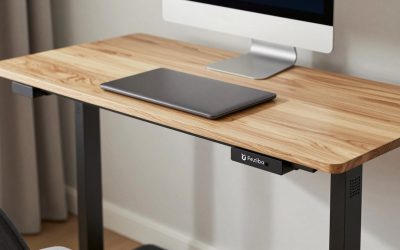
| Solid wood / butcher block | Yes | Spade or Forstner bit, or hole saw | Seal the edge of the hole with finish to block moisture |
| Laminate over particleboard/MDF | Possible with care | Hole saw, tape over the drill spot | Use a reinforcement plate; particleboard is weak near holes |
| Hollow-core or honeycomb top | Not recommended | – | Little material to bear load; use a clamp with a plate or a freestanding base |
| Glass | No | – | Use a freestanding base or wall mount |
| Metal | Only with the right bits | Step bit or bi-metal hole saw | Check nothing electrical or motorized sits underneath |
Check your arm’s grommet bolt diameter (often around 10–12 mm, though some need a larger hole) and the recommended distance from the desk edge. Drill from the top with painter’s tape over the spot to reduce chipping, and drill slowly as the bit breaks through. On standing desks, confirm there is no control box, cable tray or crossbar under the drill point, and never drill into the frame itself.
Option 4: Freestanding weighted base
Some arms can be converted, or bought as a version, with a heavy freestanding base that sits on the desk surface. This is the best choice for glass desks, rented furniture and desks with no usable edge. The trade-off is stability: a freestanding base relies on its weight and footprint, so it supports lighter monitors and less extension than a clamp. Keep the monitor over the base where possible, and stay well under the rated weight.
Option 5: Wall mount or wall track
If the desk sits against a wall, a wall-mounted arm or a slatwall/rail system gets the monitor off the desk entirely. This is the most stable option of all when screwed into studs or with the correct masonry anchors. The downside is that the monitor no longer moves with a standing desk, so it suits fixed-height desks or setups where you only sit.
Quick decision guide
- Normal wood or laminate desk, clear edge: C-clamp, plus a plate if the top is particleboard.
- Edge blocked by a frame rail: move the clamp or use an offset clamp; drill a grommet hole if the top is solid.
- Glass or hollow-core top: freestanding base or wall mount.
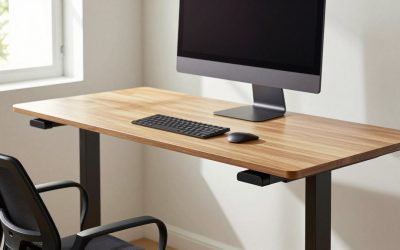
- Standing desk: clamp or grommet, never wall mount, so the monitor rises with the desk.
FAQ
Is a C-clamp as secure as a grommet mount?
For most single monitors, yes, as long as the desktop is solid and the clamp sits on a flat surface. A grommet spreads force better and lets you mount away from the edge, which helps with heavy monitors and long reach.
Can I mount a monitor arm on a glass desk?
Do not clamp or drill glass. Use a freestanding base designed for your arm, or mount the arm to the wall behind the desk.
Bottom line
You do not need a grommet hole to mount a monitor arm. Use the edge clamp with a reinforcement plate on most desks, drill your own hole only in solid tops, and switch to a freestanding base or wall mount for glass and hollow desks.
Ready to decide? Our #1 pick for 2026 is the Solid wood / butcher block.
Live price & availability on Amazon.
Related Reviews & Guides

best ergonomic office chair for hot climates
Home office setup for two people sharing a desk