Last Updated: September 18, 2026
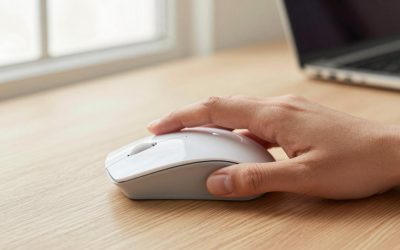
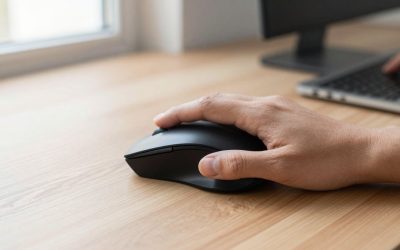
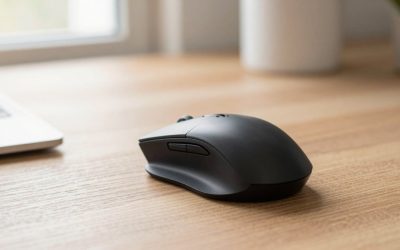
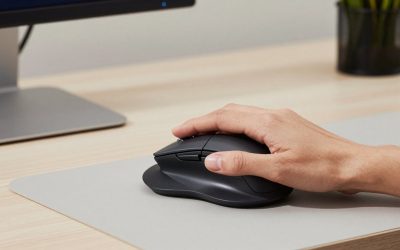
If you use an ergonomic mouse all day, it picks up more than you think: skin oils pool on the palm rest, crumbs and dust collect in the sensor well, and the vertical grip’s crevices trap grime a standard mouse never sees. Cleaning it badly can do real damage — a soaked cotton swab dripping into the scroll encoder, alcohol stripping the rubberized coating, or a damp cloth leaving moisture in the USB receiver port. Done right, a routine clean takes under ten minutes and can add years to a $20 to $65 mouse. This guide walks through the safe method for vertical and trackball-style ergonomic mice, including popular models like the Anker 2.4G Wireless Ergonomic Mouse (~$19.98) and the Logitech Lift Vertical (~$64.49).
Quick answer: Our top pick in 2026 is the Microfiber cloths (2) — our #1 rated choice. See the full ranked comparison, alternatives and buying advice below.
What You Need
| Item | Why | Optional? |
|---|---|---|
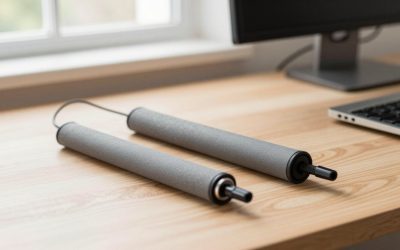
| Microfiber cloths (2) | One damp for the shell, one dry for buffing; lint-free so nothing sticks to the sensor | No |
| 70% isopropyl alcohol | Disinfects grips and buttons; evaporates fast, so less risk of seeping inside than water | No |
| Cotton swabs | Reaches scroll wheel grooves, sensor corners, and the seam around the vertical grip | No |
| Compressed air (short bursts) | Blows debris out of the sensor well and scroll mechanism without touching anything | Recommended |
| Wooden or plastic toothpick | Scrapes gunk from the sensor well rim and button gaps without scratching plastic | Recommended |
| Small Phillips screwdriver | Needed only if your model has a removable palm rest or glide feet you want to clean under | Yes |
| Soft brush (toothbrush works) | Dislodges dust from textured grips before wiping | Yes |
Step-by-Step
See also: Standing Desk 50 Inch Height: Who Needs It and Why • Standing Desk Height for 5’10”: Your Target Number and How to Dial It In
1. Unplug and remove the battery or receiver (1 minute)
Turn the mouse off if it has a switch. For wireless models like the Logitech Lift, remove the USB receiver from your computer and, if applicable, take out the AA battery so no button press registers a click mid-clean. Never clean a mouse that’s powered and connected — a liquid bridge across the switch contacts can send phantom inputs or short the board.
As an Amazon Associate we earn from qualifying purchases at no extra cost to you.


2. Blow out the sensor well and scroll wheel (2 minutes)
Flip the mouse over. Use compressed air in two or three short bursts (under one second each) aimed at the optical sensor opening and the scroll wheel slot. Hold the can upright — tilting it sprays cold propellant that can leave residue. If you don’t have compressed air, a dry soft brush works; just don’t poke the sensor lens with anything rigid.
3. Clear stubborn debris with a toothpick (2 minutes)
Hair and fiber often wrap around the scroll encoder shaft or sit in the sensor well’s corners. Gently lift them out with the wooden toothpick. If your cursor has been stuttering or the wheel feels gritty, this step — not the wiping — is usually the fix.
4. Wipe the shell and grip (2 minutes)
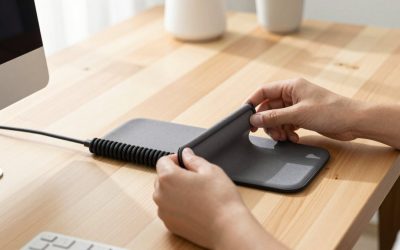
Dampen (never soak) a microfiber cloth with 70% isopropyl alcohol — the cloth should feel barely wet, not drippy. Wipe the palm rest, thumb shelf, and buttons. Pay extra attention to the rubberized or textured zones on vertical mice, where skin oil builds into a slick film. Keep liquid away from the scroll wheel slot, sensor, and any port openings.
5. Detail the seams and buttons (2 minutes)
Wrap a cotton swab around until the tip is firm, dampen it lightly with alcohol, and run it along the seam where the mouse halves meet, around each button, and in the scroll wheel grooves. Use a fresh dry swab to absorb any leftover moisture.
6. Clean the glide feet and dry everything (1–2 minutes)
Wipe the PTFE glide feet on the underside with the alcohol cloth — sticky feet make a mouse feel laggy even when it’s fine. Then buff the whole mouse with the dry microfiber cloth and let it air-dry for at least 5 minutes before reconnecting the battery or receiver.
Mistakes to Avoid
Spraying liquid directly onto the mouse. Always apply alcohol or cleaner to the cloth first. Direct spray forces liquid into the scroll encoder and switch housings, which is the most common way people kill a working mouse.
Using bleach, acetone, or hydrogen peroxide. Acetone dissolves plastic and rubberized coatings permanently. Stick to 70% isopropyl alcohol; 91% works too but evaporates so fast it’s less effective at disinfecting.
Submerging or running it under a faucet. Even “washable” ratings on a few office mice don’t extend to the sensor and receiver port. Most ergonomic mice, including the Anker and Lift models, have no water resistance at all.
Opening the shell to clean. Removing the case voids most warranties and risks breaking the ribbon cable or scroll encoder. Everything you need to reach is accessible from the outside.
Reconnecting while damp. Trapped moisture plus power equals corrosion. Give it a full five minutes even if it looks dry.
How Often
Weekly (2–3 minutes): Quick wipe of the grip and palm rest with an alcohol-dampened cloth. This is where bacteria and oil accumulate fastest, especially in warm weather.
Monthly (10 minutes): The full routine above, including the sensor well, scroll wheel, and glide feet. If you eat at your desk, move this to every two weeks.
Every 3–6 months: Replace the battery (for AA-powered models), check the glide feet for wear, and reassess whether the mouse still feels smooth. Deep grime that survives a monthly clean is usually a sign the coating is degrading rather than dirty.
Shared workspaces and households with multiple users should double the weekly cadence — shared mice are among the germiest surfaces on a desk.
When to Call a Pro or Replace
Honest answer: there’s rarely a “pro” for a mouse. Repair shops typically charge $30 to $60 in labor — more than the mouse itself costs in most cases. Consider replacing instead when:
The scroll wheel skips or double-scrolls after cleaning. The encoder is worn out; replacement parts are rarely sold separately for mice under $70.
The cursor still stutters on multiple surfaces. If cleaning the sensor doesn’t fix it on both a dark desk pad and a light sheet of paper, the sensor is failing.
The grip coating is peeling or sticky. Degraded rubberized coating can’t be restored, and sticky residue returns within days of cleaning.
The battery compartment shows corrosion. Leaked alkaline residue on the contacts can sometimes be cleaned with a vinegar-dampened swab, but corrosion that has reached the board isn’t worth saving on a sub-$70 mouse.
At that point, a budget vertical like the Anker 2.4G (~$19.98, suitable for medium to large right hands) is an easy swap. If you’re replacing anyway and want a quieter, more compact option, the Logitech Lift (~$64.49, designed for small to medium hands, roughly 2.7 inches tall) is a solid upgrade — and starting clean helps it last longer.
FAQ
Can I use disinfecting wipes on my ergonomic mouse?
Yes, with caution. Wring out excess liquid first, avoid the sensor and scroll wheel slot, and follow with a dry cloth. Avoid wipes containing bleach, which can discolor plastics and degrade rubber grips over repeated use.
Why is my vertical mouse harder to clean than a regular mouse?
The 57-degree grip angle creates deep grooves and textured zones where oil and dead skin collect, and the thumb shelf sits in a natural sweat pocket. Plan on spending an extra minute or two on those areas compared to a flat mouse.
My cursor jumps after cleaning — what did I do wrong?
Most likely, moisture or a fiber is on the sensor lens. Power down, dry the sensor area with a cotton swab corner, and blow one short burst of air at the well. If it persists, clean the sensor lens itself very gently with a dry swab.
Is it safe to clean the USB receiver the same way?
You can wipe the plastic body, but never insert anything into the USB connector. If the connector contacts look dull, a single gentle pass with a dry wooden toothpick is the most you should attempt — anything wet risks corrosion in the port.
Ready to decide? Our #1 pick for 2026 is the Microfiber cloths (2).
Live price & availability on Amazon.
Related Reviews & Guides



7 Best USB Hubs: Top Picks Reviewed and Compared (2026)

UPLIFT Desk Review: Is It Worth the Price in 2026?