Last Updated: September 29, 2026
Turning a closet into an office (the “cloffice”) works because it gives you a door you can close at 6 p.m. and hides the work mess from the rest of the house. It also comes with tight limits: shallow depth, no window, weak airflow and often just one light fixture. Before you start pulling out hanging rods, measure the space and check whether it can take a desk, a chair that swings in, a monitor at a sensible distance and enough power for your gear. Here is how to plan a closet home office that you can actually work in for eight hours.
📄 In This Review
Quick answer: Our top pick in 2026 is the Reach-in, bifold or sliding doors — our #1 rated choice. See the full ranked comparison, alternatives and buying advice below.
Measure first: which closets actually work
Closets come in two main shapes, and each one leads to a different layout.
| Closet type | Typical interior size | Best layout | Main challenge |
|---|---|---|---|
| Reach-in, bifold or sliding doors | 4–8 ft wide, 24–26 in deep | Wall-to-wall desktop, chair sits in the room | Monitor too close to your eyes |
| Reach-in, single hinged door | 3–4 ft wide, 24–30 in deep | Narrow desk, laptop plus small monitor | Door swing and knee room |
| Small walk-in | 5 x 5 ft to 6 x 8 ft | Desk on the back wall, chair inside | Heat and ventilation with door closed |
For a reach-in closet, you will usually sit partly outside the opening with your legs under the desk. That means the closet depth becomes the desk depth. At 24 inches deep, a 24-inch monitor on a stand ends up around 18–20 inches from your eyes, which is too close for most people. The fix is either a monitor arm that pushes the screen back against the wall, or a laptop setup where the screen sits at the back edge.
Desktop: built-in vs freestanding
See also: Best Roku Streaming Deals Reviewed • Olipop Flavors Ranked: Best Tastes from Worst to Best
Built-in wall-to-wall top
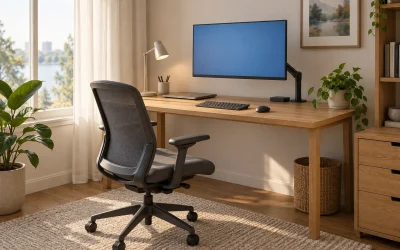
A wall-to-wall top supported by cleats screwed into studs on three sides is the classic cloffice move. It uses every inch, it cannot wobble, and it costs little: a butcher-block or plywood panel plus 1×2 or 1×3 cleats. Set the height at 28–30 inches for most adults, or measure your seated elbow height and subtract about an inch.
Freestanding desk
A narrow freestanding desk is better if you rent or might return the closet to storage later. Look for desks 20–24 inches deep and a width that leaves an inch or two on each side so you can slide it in.
Standing option
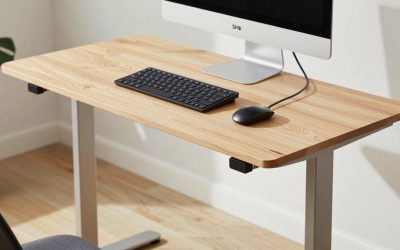
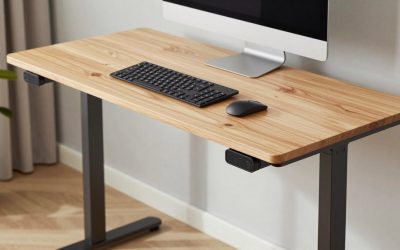
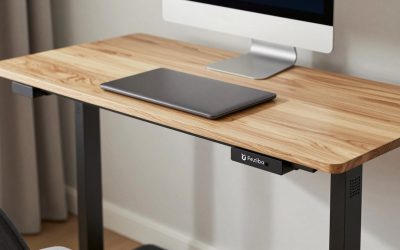
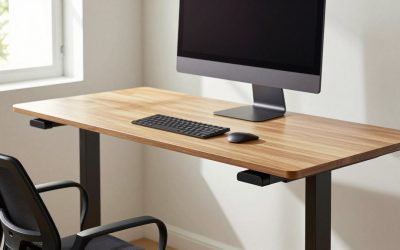
Electric sit-stand frames fit wider closets, but check the minimum width of the frame (many start around 43–48 inches) and make sure nothing above, like a shelf, blocks the top when raised.
Keep the storage above and to the sides
Closets are already built for storage, so use it. Keep the upper shelf for archive boxes and rarely used supplies. Add two or three floating shelves above the desk, starting at least 18 inches above the desktop so the monitor and your head clear them. Pegboard or a wall grid on the side walls keeps headphones, cables and notebooks off the work surface. Leave the area directly in front of your face clear so the space does not feel like a cupboard.
Lighting a room with no window
Most closets have one overhead bulb at best, and it sits behind or above you, which throws shadows on the desk. Layer three sources:
- Under-shelf LED strip running along the front edge of the lowest shelf lights the whole desktop evenly.
- Monitor light bar for reading and writing without glare on the screen.
- Soft light facing you for video calls, such as a small panel or lamp behind the monitor, so you are not a silhouette.
Choose 4000–5000K for daytime focus and make sure the ambient light is not dramatically dimmer than the monitor.
Power and heat
Getting power in
Many closets have no outlet. An extension cord across a doorway is a trip hazard and should not be a permanent solution. Options include a surge-protected power strip mounted under the desktop with its cord routed along the baseboard, or having an electrician add an outlet inside the closet. A desktop PC, monitor and lights can draw 300–500 W together, so avoid chaining power strips.
Ventilation
A small, closed space with a computer and a person in it warms up quickly. Leave the doors open or remove them and use a curtain, choose a laptop or small-form-factor PC over a big tower, and add a quiet clip-on fan. If you must close the door, a louvered or undercut door lets air circulate.
Make it feel like an office, not a cupboard
Paint the inside a light color to bounce light, or use a bold color on the back wall to give it identity. Remove the hanging rod and its brackets and patch the holes. Add a small rug under the chair zone. For privacy on calls, a clean back wall or a shelf with a couple of objects reads well on camera, and closet walls absorb less echo when the clothes are gone, so a small felt panel helps audio.
FAQ
How deep does a closet need to be for an office?
About 24 inches is the practical minimum for a desk with a laptop or a monitor on an arm. With 30 inches or more you can use a monitor stand and still keep a comfortable viewing distance.
Can I fit a standing desk in a closet?
Yes, in a reach-in closet at least about 4 feet wide with no shelf directly above the desktop. Check the frame’s minimum width and the height you need when standing before you buy.
Bottom line
A closet home office succeeds or fails on measurements. Match the desk to the depth, push the screen back with an arm, light the desktop from the front, and solve power and airflow before you move in. Done right, it becomes the most focused room in the house.
Ready to decide? Our #1 pick for 2026 is the Reach-in, bifold or sliding doors.
Live price & availability on Amazon.