Last Updated: September 16, 2026
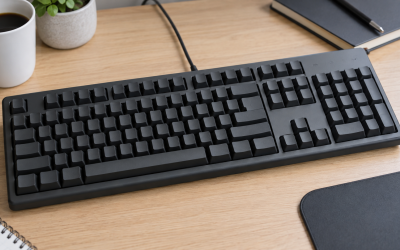
A wired keyboard is the one desk peripheral where the gap between adequate and genuinely good is measured in how often you think about what you are typing on. After months of pulling units out of boxes, running them across different surfaces, and writing thousands of words into each one, the pattern becomes clear: the best wired keyboards disappear under your hands. The worst ones constantly remind you they exist through mushy actuation, inconsistent keycap alignment, or a cable that tugs at an awkward angle every time you reach for a mug.
The buying problem in this category is not that good options are scarce. It is that the price range compresses so tightly that a $12 keyboard and a $30 keyboard look identical in product photos, and the differences hide in tactile feel, build materials, and long-term durability. This guide cuts through that by ranking the eight wired keyboards we compared head to head, calling out exactly who each one serves and when you should walk away.
As an Amazon Associate we earn from qualifying purchases at no extra cost to you.


📄 In This Review
Quick Picks
| Product | Best for | Price |
|---|---|---|
| Logitech K120 | Office reliability on a budget | $12.34 |
| Amazon Basics Wired | Lowest price that still works | $11.70 |
| Logitech MK120 | Complete desk starter kit | $17.99 |
| EDJO Wired Combo | Ergonomic comfort without breaking the bank | $20.99 |
| Rii RK907 | Minimalist and compact setups | $9.99 |
| TECKNET Silent | Quiet shared offices | $19.99 |
| TECKNET Gaming | RGB enthusiasts on a budget | $26.99 |
| X9 Ergonomic | Wrist support for long typing sessions | $29.99 |
How We Picked
See also: Logitech K120 Full Size Wired Keyboard vs Amazon Basics Wired QWERTY Keyboard: Which Should You Buy? • How to Choose Wired Keyboards: What Actually Matters
We evaluated each keyboard on four criteria that matter most in this price tier. Typing feel was first and heaviest: consistent actuation force across the layout, keycap stability, and whether the surface texture helped or hindered long sessions. Build quality came second, judged by flex resistance in the chassis, cable strain relief, and how the unit survived daily transport between desks. Cable and connectivity behavior was third, including cord length, connector durability, and whether the keyboard woke reliably after sleep. Finally, listed weights show feature-to-price ratios against the specific use case each board targets, because a gaming board and an office board should not be judged on the same axis.
The 8 Best Wired Keyboards in 2026
Logitech K120
The K120 is the keyboard that survives everything. It is the unit IT departments buy by the pallet, and for good reason. The membrane switches feel slightly spongy compared to anything in the $20-plus tier, but they are consistent and predictable, which matters more than excitement for people who type all day. The spill-resistant design and drain holes give it a durability edge over every other entry on this list. The cable is a fixed USB-A with decent strain relief, though it is not detachable, which limits replacement options. Skip this if you want backlighting, media keys, or any sense of tactile feedback beyond flat contact.
Amazon Basics Wired QWERTY
At the lowest price on this list, the Amazon Basics keyboard does exactly what its name promises and not one thing more. The typing experience is noticeably thinner than the K120: keys feel lighter, the chassis flexes under firm pressure, and the plastic has a slick quality that shows finger oils quickly. The included media control keys are functional but placed in a row above the number pad where you will occasionally hit the wrong one by muscle memory. It works flawlessly out of the box with Windows. Skip it if you plan to type more than a couple of hours daily, or if you are pairing it with a monitor stand where the cable routing will look and feel cheap.
Logitech MK120
The MK120 bundles the same K120 keyboard with a serviceable optical mouse for a total that is hard to beat as a complete setup. The keyboard component is identical to the standalone K120 in feel and build, so your expectations should match. The mouse is where value shifts: it is fine for casual browsing but lacks the sensor quality or ergonomic shape for precision work. If you already have a mouse you like, the keyboard-only K120 saves a few dollars. Buy this combo when you are setting up a spare station, equipping a shared workspace, or replacing both peripherals simultaneously and do not want to overthink it.
EDJO Wired Keyboard and Mouse Combo
This combo earns its spot by delivering an integrated palm rest that is actually shaped correctly for full-size layouts, not the thin foam pad you find on cheaper ergonomic boards. The membrane keys have a slightly cushioned feel that reduces fatigue during long sessions, though the actuation point is shallow and can lead to accidental presses. The bundled mouse matches the palm rest with a contoured shell that supports a relaxed grip. The main tradeoff is cable management: both devices have fixed cables that cross awkwardly on narrow desks. Skip this if you prefer a low-profile or compact board, or if you already own a mouse you prefer.
Rii RK907
The RK907 is the cheapest option here and the only ultra-slim one. At under ten dollars, it delivers a functional typing surface in a footprint small enough for crowded laptop stands or minimal desk setups. The keys are quiet and low-travel, closer to a laptop feel than a desktop board, which makes it ideal if you are transitioning from a trackpad and want less height. The tradeoff is durability: the plastic flexes noticeably, and the cable is thin and fixed with minimal strain relief. Skip this for primary daily driving, heavy typing, or any environment where the keyboard will be moved frequently.
TECKNET Wired Silent
TECKNET claims silent typing, and the claim holds up well in practice. The membrane switches dampen the bottom-out sound effectively, making this the best choice on the list for open offices, shared bedrooms, or anyone recording audio nearby without wanting keyboard clicks in the background. The full-size layout includes a number pad and dedicated media keys. RGB backlighting is present but the implementation is basic, cycling rather than customizing, which limits its appeal beyond the novelty of having it at this price. Skip this if you need programmable lighting effects or if you prefer a crisper, more defined actuation point.
TECKNET Wired Gaming
This board leans into the gaming aesthetic with a metal panel overlay that adds real rigidity and a cold-touch surface that resists fingerprint smudging better than plastic alternatives. The RGB backlighting here is more substantial, with multiple modes and adjustable brightness that work reasonably well. Typing feel sits between a traditional membrane and a mechanical switch: firm but not clicky. The cable is braided, which resists tangling and feels more durable than rubber jackets. The downside is weight and bulk; this is not a keyboard you toss in a bag. Skip it if you want a quiet office board or prefer a minimal desk footprint.
X9 Wired Ergonomic Keyboard
The X9 commits fully to ergonomics with a built-in wrist rest that spans the full width, 114 keys, a number pad, and dedicated multimedia controls. The sculpted layout angles your wrists into a more natural position during extended sessions, and the integrated rest saves you from buying a separate gel pad. Typing feel is soft and somewhat pillowy, which reduces impact fatigue but can feel sluggish for fast typists who prefer snap. Build quality is solid for the price, though the plastic around the wrist rest edges can collect debris over time. Skip this if you have a small desk or prefer a flat, no-frills layout that does not force your hands into a specific geometry.
Buying Guide
Switch Type and Actuation Feel
Every keyboard on this list uses a membrane switch design, but the tuning differs significantly. At the budget end, actuation is shallow and mushy, which causes errors from accidental presses. Mid-range boards like the TECKNET Silent and EDJO dampen sound and add cushion for comfort. The gaming-oriented TECKNET adds a firmer bottom-out that approximates mechanical feedback without the noise. Test for consistency: press keys on opposite corners and across the middle row. If some feel stiffer or looser, that is a manufacturing variance problem that will only worsen with use.
Layout Size and Desk Fit
Full-size boards include a number pad and function row, which matters for data entry, accounting, and gaming hotkeys but wastes desk space for writers and programmers. The compact Rii RK907 sacrifices the number pad entirely for a smaller footprint. Ergonomic models like the X9 add width for their wrist rest, demanding more desk depth. Before purchasing, measure the available space on your desk surface and account for cable routing, especially with fixed-cable boards where you cannot reposition the connector side.
Cable Quality and Connection Behavior
A wired keyboard lives or dies by its cable in practice. Look for molded strain relief where the cord enters the chassis, a minimum length of roughly five feet, and a connector type that matches your available ports. Braided cables resist fraying better than rubber jackets over months of use. Fixed cables are acceptable at this price range, but confirm that the USB connector type works with your setup. A board that disconnects intermittently after sleep is not worth saving even a few dollars over one that does not.
Our Verdict
The Logitech K120 is our top pick overall. It balances typing consistency, spill resistance, and brand-level quality control at a price that leaves no room for competitors to justify a premium. For the absolute budget floor, the Amazon Basics Wired delivers functional typing for less money, accepting the tradeoffs in flex and finish that come with the lowest cost on this list. The EDJO Combo wins outright when your priority is wrist comfort during eight-hour shifts and you also need a mouse: no other option here pairs both at that price with an integrated, properly shaped palm rest.
FAQ
Are wired keyboards better than wireless for typing?
Wired keyboards eliminate latency, battery anxiety, and pairing issues entirely. For dedicated typing work at a fixed desk, they offer more consistent performance and typically better build quality at equivalent prices since manufacturers save on radios and batteries.
How long do membrane keyboards last?
A well-built membrane keyboard rated for ten million keystrokes or higher should last three to five years of heavy daily use before noticeable degradation in actuation consistency occurs, with cheaper units often showing wear sooner.
Do I need an ergonomic keyboard?
If you type more than four hours daily and feel wrist tension, an ergonomic layout with proper wrist support reduces strain. If you type in bursts or already have a neutral wrist angle, a flat full-size board works fine and avoids the learning curve of sculpted layouts.
Is USB-A still a good connection for keyboards?
Yes. USB-A remains the standard connector on budget and mid-range wired keyboards, and every desktop and most laptops still include a USB-A port. If your machine only has USB-C, a simple adapter solves the issue without affecting keyboard performance.
Related Reviews & Guides


Extended Mouse Pad XL Gaming & Office Guide

Quick Picks: Best Large Desk Mats and Oversized Mouse Pads