Last Updated: September 26, 2026
Programmers type differently from most office workers. Prose is only part of the job; the rest is brackets, braces, semicolons, arrow keys, modifier chords and editor shortcuts, often hundreds of times an hour. A keyboard that is lovely for writing email can be clumsy for code if symbols are a stretch or modifiers sit under the weakest fingers. This guide focuses on what makes a keyboard good for programming specifically, and which designs suit different kinds of developers.
📄 In This Review
Quick answer: For most people in 2026, the best keyboard for programmers 2026 is the Programmable 75% mechanical — our #1 rated choice. See the full ranked comparison, alternatives and buying advice below.
What programmers need from a keyboard
Easy access to symbols
Curly braces, square brackets, pipes and backslashes sit on the far right edge of a standard layout, which means lots of right little-finger reach combined with Shift. Keyboards with programmable layers let you put symbols under the home row on a second layer, cutting that reach dramatically.

Keychron K3 Version 2 QMK 75% Wireless Low-Profile Mechanical Keyboard
Included for 'Best keyboard for programmers 2026' as a relevant option in this category; details come from the product listing.
View on Amazon
HHKB - Happy Hacking Keyboard Studio, Charcoal
Included for 'Best keyboard for programmers 2026' because the listing specifies Happy Hacking Keyboard Studio and Charcoal, details this guide uses to compare options.
View on Amazon
HHKB - Happy Hacking Keyboard Professional Hybrid Type-S, White
Included for 'Best keyboard for programmers 2026' because the listing specifies Happy Hacking Keyboard Professional Hybrid Type-S and White, details this guide uses to compare options.
View on Amazon
RK ROYAL KLUDGE M75 Wireless Mechanical Keyboard with OLED Display & Knob
Included for 'Best keyboard for programmers 2026' as a relevant option in this category; details come from the product listing.
View on AmazonComfortable modifiers
Ctrl, Alt, Cmd and Shift are pressed constantly in editors and terminals. Placing them under the thumbs, or remapping Caps Lock to Ctrl or Escape, reduces little-finger strain.
Reliable navigation
Arrow keys, Home/End and Page Up/Down matter for moving through code. Compact layouts need a good plan for these, either dedicated keys or a navigation layer.
Consistency across machines
Many developers switch between a laptop, a desktop and sometimes a remote workstation. Onboard memory, where remaps live in the keyboard firmware rather than on a single computer, keeps shortcuts consistent everywhere.
Keyboard styles for programming
See also: Best Roku Streaming Deals Reviewed • Olipop Flavors Ranked: Best Tastes from Worst to Best
| Style | Examples | Strengths for code | Trade-offs |
|---|---|---|---|
| Programmable 75% mechanical | Keychron Q1 Max and similar QMK/VIA boards | Arrow keys retained, remapping in firmware, compact reach to mouse | Heavy; full-height keys need a palm rest |
| 60% compact with Topre switches | HHKB Professional Hybrid | Control in the Caps Lock position by default, Unix-friendly layout, excellent feel | No dedicated arrows; function layer required; premium price |
| Fully split, programmable | ZSA Moonlander, Kinesis Advantage360 | Thumb modifiers, symbol layers, ergonomic spacing | Learning curve; price |
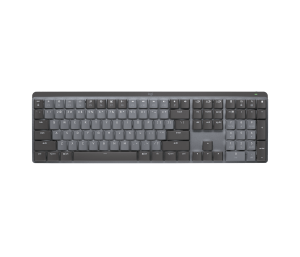
| Low-profile wireless office | Logitech MX Keys S, Logitech MX Mechanical | Multi-device switching, quiet, familiar layout | Limited firmware remapping |
Specifications and prices change; check each maker’s current spec sheet.
Layout choices
Full-size and tenkeyless
Full-size keyboards include a number pad, which few developers use heavily. Tenkeyless (TKL) or 75% boards keep the function row and arrows while bringing the mouse closer, which suits most programmers well.
60% and 65%
Smaller layouts remove the function row and sometimes arrows, relying on layers. They are compact and portable but require you to learn a layer for navigation. The payoff is less hand movement once learned.
Split and columnar
Ideal for developers who type many hours a day and want to put modifiers under the thumbs. The adjustment period is real, typically two to four weeks.
Switches for coding
Tactile switches give a clear bump at actuation, which many programmers like because it signals a registered keypress without bottoming out. Linear switches feel smooth and quiet. Avoid heavy switches: long days of coding add up, and actuation forces around 45-55 gf are comfortable for most. If you work in shared spaces or on calls, choose quieter switches and a board with foam dampening.
Remapping ideas that pay off
- Caps Lock to Ctrl (or Escape for Vim users; tap for Escape, hold for Ctrl if your firmware supports it).
- A symbol layer with brackets and braces on the home row.
- A navigation layer with arrows on H/J/K/L or I/J/K/L.
- Thumb keys for Backspace, Enter and layer toggles on split boards.
FAQ
Do programmers really need a mechanical keyboard?
No. Many excellent developers use laptop or low-profile scissor keyboards. Mechanical keyboards offer durability, consistent feel and, often, deep programmability through firmware such as QMK or ZMK. The programmability matters more for productivity than the switch type.
Is a 60% keyboard good for programming?
It can be excellent once you learn the function layer, especially for terminal and Vim users. If you use arrow keys constantly or dislike layers, a 65% or 75% layout with dedicated arrows is a safer choice.
Bottom line
The best keyboard for programming is one that makes symbols and modifiers easy to reach and keeps your shortcuts consistent across machines. A programmable 75% board suits most developers; a HHKB-style 60% suits Unix and Vim devotees; a split board like the Moonlander or Advantage360 suits heavy typists ready for a learning curve. Whatever you choose, spend an afternoon on remapping; it is where the real productivity gains live.
Ready to decide? Our #1 pick for 2026 is the Programmable 75% mechanical.
Live price & availability on Amazon.
Related Reviews & Guides
Cable management for a gaming desk setup

best ergonomic office chair for heavy people