Last Updated: June 12, 2026


Best Cable Management Box for Floor & Desk: Hide Every Wire Without the Mess
TL;DR — Quick Answer
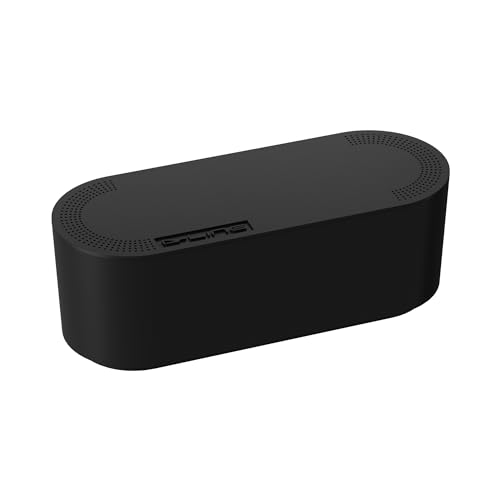
A cable management box is the fastest way to eliminate floor cord clutter without cable clips, raceways, or zip ties. B0D4YYY6ZR fits a standard power strip plus 6–8 cables, features side exit slots for clean routing, and blends into most home-office setups. Works on floor, shelf, or desk surface. Takes under five minutes to set up.
Cables on the floor are a tripping hazard, a dust magnet, and a signal to visitors that your workspace is disorganized — even if everything else is immaculate. A cable management box solves all three problems at once. Rather than routing cables through walls or behind furniture, the box corrals your power strip and all associated cables into a single contained unit that sits on the floor or shelf and looks intentional. Setup takes minutes. The results look like you hired a professional.
📄 In This Review
Quick Comparison
| Product | Brand | Price | Rating |
|---|---|---|---|
| D-Line Cable Management Box | D-LineUSAinc | $22.99 | 4.5/5 |
| D-Line Cable Management Box | D-LineUSAinc | $27.99 | 4.5/5 |
| Cable Management Box by Baskiss | Baskiss | $13.99 | 4.4/5 |
| YECAYE 2 Pack Cable Management Box | Yecaye | $22.99 | 4.6/5 |
| Cable Organizer Box Set of Three | Naeety | $24.99 | 4.6/5 |
Top Picks at a Glance
See also: Best Desk Organizers in 2026: Declutter Your Workspace • Back-to-School 2026: Best Student Desk Setups (and Cooling for a Hot Home Office)
Why Floor Cables Are a Bigger Problem Than They Look
The average home-office setup has 8–12 cables running from desk to floor: monitor power, PC power, USB hub, speakers, laptop charger, phone charger, desk lamp, and an ethernet cable. When those pile up unmanaged, they collect dust inside the bundle — which creates a minor fire risk at the power strip connection points. They also catch on chair wheels, which frays cables faster than any other cause of premature failure. A cable management box addresses both: cables stay separated, ventilated, and off the floor in a single enclosed unit.
Floor vs. Desk vs. Shelf Placement
Floor placement works best when your power strip sits on the floor by default and multiple long cables drop from the desk edge. Position the box close to the wall, with the exit slots facing the desk. Cables enter one side and exit another — the box hides the bundled middle section. Shelf placement works for standing-desk setups where the power strip lives on a shelf below the desk surface. Desk-surface placement suits compact setups with a single monitor and four or fewer devices; in this configuration the box doubles as a small riser for a keyboard or phone.
| Spec | Detail |
|---|---|
| Material | Flame-retardant ABS plastic |
| Typical interior capacity | Full-size 6-outlet power strip + 6–8 cables |
| Exit slots | Both ends + one side, multiple openings |
| Placement options | Floor, shelf, desk surface |
| Lid type | Snap-on / lift-off, ventilated |
| Color options | White, black (standard) |
| Setup time | Under 5 minutes |
Routing Cables the Right Way
Group by Device, Not by Cable Type
The instinct is to bundle all power cables together and all data cables together. A better approach: group by device. The cables for your monitor (power + display cable) stay together; the cables for your PC (power + USB hub + ethernet) stay together. This way, if you need to disconnect a device, you pull one bundle — not hunt through a mixed pile.
Exit Slot Strategy
Use the rear exit slot for the wall-side power cable — the longest run, which should be as straight and short as possible. Use the front or side slots for cables heading up to the desk. Crossing cables inside the box increases heat buildup; route them parallel where possible. Velcro cable ties inside the box keep the internal bundle from shifting when the lid is opened.
Pairing with Other Desk Organization
A cable management box is most effective as part of a layered approach to desk organization. Once floor cables are contained, the next visible problem is usually desk-surface clutter: a sprawling mouse pad that doubles as a catch-all, a scanner that sits at an awkward angle, or task lighting positioned for glare rather than illumination. Our guide to the best large mouse pad with wrist rest covers how to use a full-desk mat to define zones and reduce cable migration back onto the surface. For document flow, the portable document scanner for desk guide explains how scanner placement affects cable routing decisions.
Task lighting is the third piece: once cables are hidden and surface is organized, lighting placement determines whether the workspace looks professional or merely tidy. See our LED desk task light guide for placement and color temperature recommendations that work with a cable-managed setup.
Frequently Asked Questions
Will a cable management box cause my power strip to overheat?
A properly designed cable management box has ventilation slots in the lid and sides to allow heat dissipation. The critical rule: never place the power strip upside down inside the box, and never fully block the exit slots with cable bundles. At normal home-office loads (monitors, laptops, lamps), heat accumulation is not an issue. If you’re running high-draw devices like space heaters or gaming PCs drawing 400W+, leave the lid off or use an open cable tray instead.
How many cables can actually fit inside a standard cable box?
A full-size cable management box (roughly 15″ x 5″ x 4″) comfortably holds one 6-outlet power strip plus 6–8 cables with diameters up to 6mm. Thick extension cords (12-gauge or thicker) take up more space and may limit you to 4–5 additional cables. The interior volume limits capacity more than the number of ports — coiled cable slack is the biggest space consumer. Cut excess cable slack with short cable ties before routing into the box.
Can I use a cable management box with a surge protector?
Yes, and it is actually the recommended pairing. Surge protectors benefit from being stationary (moving them stresses the outlet connections), and a box keeps them in place. Ensure the surge protector’s indicator lights are visible through a ventilation slot or front gap — you want to see the protection-active light without opening the box. Most boxes have enough front clearance for this.
Is a cable box better than a cable raceway for my situation?
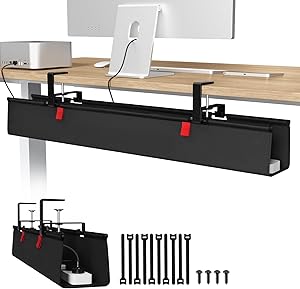
Cable boxes win when your power strip sits on the floor or shelf and you need to contain a large bundle. Raceways win when cables run along a wall or desk edge and you want them adhered flat against a surface. Many setups benefit from both: a box at the floor-level collection point, a raceway for the vertical run up the wall. If you’re renting and can’t mount anything, the box is the better starting point since it requires no adhesive or hardware.
What size cable management box should I buy for a dual-monitor setup?
A dual-monitor setup typically adds two monitor power cables, two display cables (HDMI or DisplayPort), and sometimes an external GPU or hub — pushing cable count to 10–14 easily. For this use case, step up to an XL-size box (18″ or longer) or use two standard boxes side by side: one for the power strip, one for overflow cable slack. The XL size handles most dual-monitor setups in a single unit without stacking cables on top of each other inside the box.
Ready to decide? Our #1 pick for 2026 is the D-Line Cable Management Box.
Live price & availability on Amazon.
Related Reviews & Guides



Pegboard Wall Organizer Home Office Review
Best Height Adjusting Standing Desk 2026