Last Updated: October 11, 2026
- How These Picks Are Ranked
- Decision Matrix: Match the Machine to Your Situation
- Best Overall Desk-Work Laptops Under $1,500
- Best Battery Life Under $1,500
- Best for Upgradeability and Repair
- Best Business-Class Builds and Keyboards
- Best Displays Under $1,500
- Convertibles and 2-in-1s
- Gaming-Capable Machines That Still Do Desk Work
- Budget Picks Well Under $1,000
- What You Give Up at Each Price Band
- Chassis Materials: What the Money Actually Buys
- Desk Ergonomics and Clearance: The Numbers That Matter
The best laptop deals under $1,500 for desk work are the Apple MacBook Air 15-inch (M4) if you want the longest usable battery and the quietest fanless chassis, the Asus Zenbook 14 OLED if you want the best screen per dollar, and the Framework Laptop 13 if you want to still be upgrading the same machine in five years — with the Lenovo ThinkPad T-series, HP EliteBook 840, Dell 16 Plus, LG Gram 16 and Microsoft Surface Laptop 7 filling in the gaps for keyboards, big screens, repairability and battery life respectively.
That is the whole answer compressed into one sentence. Everything below is the reasoning: how each machine behaves when it is actually sitting on a desk for eight hours, what the numbers on the spec sheet really translate into, and where the money in your $1,500 budget is being wasted.

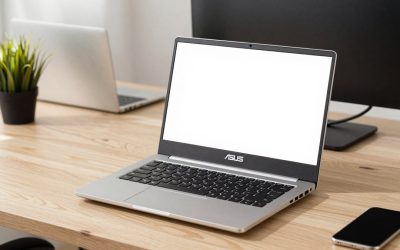
Lenovo IdeaPad Slim 3 Chromebook Laptop, 14" 2K WUXGA Touchscreen Laptop, MediaTek Kompanio 540, 4GB LPDDR5x RAM,64GB UFS+128GB USB, 18 Hours Battery Life, Under 3 lbs Lightweight Business Notebook
Included for 'Best Laptop Deals Under $1,500' because the listing specifies 14" 2K WUXGA Touchscreen Laptop and MediaTek Kompanio 540, details this guide uses to compare options.
View on Amazon📄 In This Review
- How These Picks Are Ranked
- Decision Matrix: Match the Machine to Your Situation
- Best Overall Desk-Work Laptops Under ,500
- Best Battery Life Under ,500
- Best for Upgradeability and Repair
- Best Business-Class Builds and Keyboards
- Best Displays Under ,500
- Convertibles and 2-in-1s
- Gaming-Capable Machines That Still Do Desk Work
- Budget Picks Well Under ,000
- What You Give Up at Each Price Band
- Chassis Materials: What the Money Actually Buys
- Desk Ergonomics and Clearance: The Numbers That Matter
How These Picks Are Ranked
Most laptop roundups sort by benchmark score or by whichever model is discounted hardest this week. That ordering is nearly useless for desk work, because the bottlenecks in a working day are not peak frame rates. They are sustained thermal behaviour, screen legibility under office lighting, battery endurance between charges, whether you can add memory in year three, and whether the hinge, keyboard and ports survive year four.
So the ranking here uses five axes, in this order of importance for someone who works at a desk:
1. Sustained desk-work performance
What matters is not the first 30 seconds of a benchmark run but the 30th minute. A thin 14-inch chassis with a 15–28W sustained power target will hold its clocks all day. A slim machine with a 45W chip crammed in will spike for 20 seconds and then throttle to roughly the same place, often with more fan noise. For an office workload — a dozen browser tabs, a spreadsheet with a few thousand rows, a video call, a chat client, a PDF viewer — a modern 8- to 12-core mobile processor with 16GB of memory is comfortably sufficient. The single upgrade that changes day-to-day feel more than any other is going from 8GB to 16GB of RAM. It is also the upgrade you cannot perform later on most machines, because the memory is soldered.
Fan noise is an underrated performance metric. Measured from a seated position about two feet from the screen, a laptop that stays under roughly 38–40 dBA under a normal office load is unobtrusive. Above 45 dBA it becomes the loudest thing in the room during a call.
2. Display quality
Four numbers decide whether a screen is pleasant for eight hours: resolution, brightness, colour coverage and finish. On a 14-inch panel, 1920×1200 is the floor and 2560×1600 is where text stops looking grainy — roughly 216 pixels per inch versus about 162. On a 16-inch panel, 2560×1600 is the floor. Brightness should be at least 400 nits for a normally lit office; 500 nits or more is what lets you work near a window without squinting. Colour coverage of 100% sRGB is the minimum for anything involving brand colours or product photos; 90%+ DCI-P3 matters for photo and video work. Matte finishes handle overhead lights and windows better; glossy finishes look richer but turn into mirrors.
3. Battery life
Battery life is a function of watt-hours divided by average system draw, and both halves matter. A 13- or 14-inch machine typically carries 50–70Wh; a 16-inch machine carries 70–99Wh. But a 99Wh battery paired with a power-hungry discrete GPU can still die in four hours, while a 60Wh battery in an efficient thin-and-light can run ten. Realistic expectations for light office work — browser, documents, email, a video call or two — are 8 to 12 hours for efficient ultraportables and 5 to 7 hours for anything with a gaming-class GPU. Charging over USB-C Power Delivery at 65W or more means one charger can serve the laptop, a phone and a monitor.
4. Upgradeability
This is where the $1,500 category separates sharply. At one end, almost everything is soldered: memory, storage and sometimes even the wireless card. At the other end, socketed memory and a standard M.2 drive mean a machine bought with 16GB and 512GB can become a 32GB, 2TB machine for far less than the cost of replacement. Check three things before buying: whether RAM is soldered, whether there is a free M.2 slot (and whether it is full-length 2280 or the short 2230 size), and how easy the bottom panel is to remove. Battery replacement in year four is the single most common repair, and on some chassis it is a 15-minute job with a Phillips screwdriver, while on others it requires removing the mainboard.
5. Build quality
Chassis material determines weight, rigidity and how the machine ages. A unibody aluminium shell feels stiff and resists flex but adds weight. Magnesium-aluminium alloys are lighter for the same stiffness but can feel cooler and slightly more hollow. Carbon-fibre-reinforced lids are the lightest option and are common on business machines. Glass-fibre-reinforced plastic is the budget answer: heavier than magnesium for the same rigidity, but perfectly serviceable.
| Criterion | What to measure | Minimum for comfortable desk work | Where money is wasted |
|---|---|---|---|
| Sustained performance | Sustained package power, fan noise at 2 ft | 15W sustained, 16GB RAM, 512GB SSD | Flagship 45W chips in a 14-inch chassis |
| Display | Resolution, nits, sRGB/P3 coverage, matte vs glossy | 1920×1200, 400 nits, 100% sRGB | 4K on a 14-inch panel at the cost of battery |
| Battery | Watt-hours ÷ measured draw, USB-C PD wattage | 60Wh, 65W charging | Oversized batteries paired with power-hungry GPUs |
| Upgradeability | Soldered RAM? M.2 slots? Panel access? | One free M.2 slot, removable bottom panel | Paying for 32GB soldered when 16GB would do |
| Build quality | Chassis material, hinge stiffness, MIL-STD rating | Aluminium or magnesium lid, stiff hinge | Paying for exotic materials you never notice |
Decision Matrix: Match the Machine to Your Situation
See also: It Takes Two 70% Off Steam Sale Deal Guide • Best Diving Watch Deals: Waterproof Picks
If you only read one part of this, read the table. The right laptop depends far more on your circumstances than on any benchmark.
| Your situation | What to prioritise | Look at | Budget band |
|---|---|---|---|
| Small apartment, laptop is your only computer | 15–16 inch screen, good speakers, one-cable docking | MacBook Air 15, Dell 16 Plus, LG Gram 16 | $1,000–$1,500 |
| Commuter who also docks at a desk | Under 3 lb, 10+ hour battery, USB-C charging | MacBook Air 13/15, HP OmniBook X, Surface Laptop 7 | $900–$1,400 |
| Renter who moves every year or two | Light weight, sturdy hinge, no fragile glass panels | ThinkPad T-series, EliteBook 840, Framework 13 | $1,000–$1,500 |
| Back, neck or wrist discomfort | Matte display, external keyboard, laptop stand height | Any 14-inch with a matte panel plus a stand | $900–$1,400 |
| Kids and pets in the house | Spill-resistant keyboard, MIL-STD chassis, accidental damage cover | ThinkPad T-series, HP EliteBook, Dell Pro 14 | $1,100–$1,500 |
| Photo or video side work | 90%+ DCI-P3, 500 nits, 16GB RAM, fast SSD | Asus Zenbook S 14, Samsung Galaxy Book5 Pro, MacBook Air | $1,200–$1,500 |
| Want to upgrade rather than replace | Socketed RAM, M.2 2280, published repair guides | Framework Laptop 13, ThinkPad T-series | $900–$1,500 |
| Occasional gaming after work | Discrete GPU, 120Hz panel, accept 4–6h battery | Asus ROG Zephyrus G14, Acer Nitro V 15 | $1,000–$1,500 |
| Tight budget, documents and browser only | Good keyboard and screen, modest CPU | Acer Swift Go 14, Asus Vivobook 16, Chromebook Plus | $350–$1,000 |
Best Overall Desk-Work Laptops Under $1,500
Apple MacBook Air 15-inch (M4 generation) — usually $1,100–$1,450
The 15-inch MacBook Air is the closest thing to a default answer in this price band, and for desk work the reasons are practical rather than emotional. The chassis is fanless, which means zero fan noise at any load you can realistically generate with browser tabs and spreadsheets. The display is a 15.3-inch panel at 2880×1864, roughly 224 pixels per inch, rated around 500 nits, with full P3 coverage — bright enough to work beside a window and sharp enough that text stays crisp at small sizes. Battery capacity is in the mid-60Wh range and real-world light-office endurance lands in the 12-to-15-hour window, which is genuinely a full working day plus a commute.
On desk-work performance, the M4-generation chip handles a dozen browser tabs, a large spreadsheet, a video call and a chat client without audible complaint because there is nothing to complain with. Sustained performance is flat rather than spiky. The trade-off is that it is not a heavy-compute machine: long video exports, large code compilations or 3D work will take noticeably longer than on a 45W Windows machine of the same price.
Upgradeability is the weak point. Memory is soldered and storage is soldered, so the configuration you buy is the configuration you keep. That makes the 16GB/512GB build the one to aim for — usually $1,300–$1,450 — rather than the base 16GB/256GB, which is cheaper but leaves you managing storage within two years. The upside is that the machine holds its resale value better than almost anything else in the category, so the effective cost of ownership over four years is often lower than the sticker suggests.
Build quality is a machined aluminium unibody with a very stiff hinge and no chassis flex when you rest your palms on it. Ports are limited to two USB-C/Thunderbolt connections plus MagSafe charging and a headphone jack, which means a desk setup needs either a dock or a USB-C hub. For a desk worker, that is the main practical friction. The 13-inch version at usually $850–$1,150 is the same machine with a smaller screen and a smaller battery; if you dock to an external monitor most of the day, the 13-inch is the better value and the 15-inch is the better sole computer.
Asus Zenbook 14 OLED — usually $900–$1,300
If your priority is the screen, this is where the money goes furthest. The Zenbook 14 OLED family pairs a 14-inch 2880×1800 OLED panel — around 242 pixels per inch — with 100% DCI-P3 coverage, roughly 500 nits of peak brightness in HDR content and a 120Hz refresh rate that makes scrolling and window dragging feel noticeably smoother than a 60Hz panel. For photo editing, colour-critical design work or simply reading a lot of text, it is a step above most LCD competitors at the same price.
Desk-work performance comes from a low-power 8- to 12-core processor with 16GB of memory in most configurations, which is plenty for office multitasking. The chassis is thin and light — typically 2.8 to 3.1 lb — and runs warm under sustained load but rarely loud. Battery is usually in the 70–75Wh range, and OLED panels draw more power than LCD at high brightness, so expect 8 to 11 hours of light office use rather than the 13-plus hours a comparable LCD machine might manage.
The OLED caveats are worth stating plainly. Static elements — a taskbar, a docked toolbar, a spreadsheet’s frozen header — held in the same position for thousands of hours can leave faint permanent marks. Modern panels have pixel-shift and screen-saver mitigations that make this unlikely in normal mixed use, but if you plan to leave one application open at maximum brightness for eight hours a day, five days a week, an LCD is the lower-risk choice. Some people also notice OLED flicker at low brightness; if you are sensitive to that, buy an LCD.
Upgradeability is limited: memory is soldered, though most configurations include a single M.2 slot that is often occupied but sometimes paired with a second. Build quality is a magnesium-aluminium alloy lid and aluminium base, with a firm hinge and a keyboard that is comfortable if slightly shallow. Ports are usually generous for the class — two Thunderbolt 4 USB-C, one USB-A, HDMI 2.1 and a card reader on many variants — which reduces the amount of dongle clutter on your desk.
Lenovo Yoga Slim 7i — usually $900–$1,400
The Yoga Slim 7i is the machine to look at if you want a Windows ultraportable that feels more substantial than its price suggests. It typically pairs a 14-inch 2.8K panel at 2880×1800 with a 120Hz refresh rate and 400–500 nits, wrapped in an aluminium chassis weighing around 2.9 lb. Colour coverage is usually full sRGB with a good chunk of P3, which is enough for casual photo work but not for colour-managed print production.
Performance is the standard low-power recipe — 16GB memory, 512GB or 1TB storage, a 15–28W processor — and it behaves exactly as you would want at a desk: quick to wake, quiet under office loads, and consistent rather than spiky. Battery is typically in the 65–75Wh range with realistic light-use endurance of 9 to 12 hours. Charging is USB-C at 65W or more.
The keyboard is the standout feature for desk work: a slightly deeper travel than the class average, with a firm bottom-out that reduces fatigue over a long typing day. The touchpad is large and precise. Upgradeability is mixed — memory is soldered, but there is usually a single M.2 slot you can service, and the bottom panel comes off with standard screws. Build quality is good rather than exceptional; the lid has a little more flex than a MacBook Air or a ThinkPad, and the hinge is smooth rather than stiff.
Where it wins is balance. It does not lead any single category, but it is above average on screen, keyboard, battery and price at the same time, which is rare under $1,500.
Best Battery Life Under $1,500
HP OmniBook X 14 — usually $900–$1,300
This is one of the ARM-based Windows machines built around an efficiency-first chip, and for desk work that architecture pays off in exactly the way you would hope. Light-office endurance commonly lands in the 12-to-16-hour range from a battery in the 60–70Wh range, because average system draw is far lower than on a comparable x86 machine. It is fanless or near-fanless in most configurations, which makes it one of the quietest options here.
The display is a 14-inch 2240×1400 IPS panel at roughly 189 pixels per inch, around 300–400 nits depending on the variant. That is fine for indoor desk work but a step behind the OLED machines above, and it is the main reason this laptop sits in the battery category rather than the display category. If you work near a bright window, look for the higher-brightness panel option.
Performance for office work is excellent: browser, documents, spreadsheets, video calls and most mainstream productivity software run natively and quickly. The caveat is software compatibility. Anything that depends on x86-specific drivers — some VPN clients, older enterprise tools, certain audio interfaces, a subset of games and anti-cheat systems — may run through emulation, run slowly, or not run at all. Before buying, list the three or four applications you cannot live without and confirm each has an ARM-native build or a known-good emulation path.
Upgradeability is poor: memory is soldered and storage is usually a single M.2 slot. Build quality is a magnesium-aluminium chassis that feels light but rigid, typically around 2.9 lb. Ports are reasonable — two USB-C, one USB-A, HDMI — so a desk setup needs only a modest hub. For a writer, consultant, student or anyone whose day is browser-and-documents, the endurance advantage is worth more than raw compute.
Microsoft Surface Laptop 7 (13.8-inch and 15-inch) — usually $1,000–$1,500
The Surface Laptop 7 comes in two sizes and both fit the budget, with the 15-inch landing near the top of the range and the 13.8-inch comfortably inside it. Both use efficiency-focused chips, giving light-office endurance in the 12-to-15-hour window on the smaller model and slightly less on the larger one. Neither has a fan in the mainstream configurations, so desk noise is effectively zero.
The displays are 3:2 aspect ratio, which is genuinely better for documents, spreadsheets and web pages than 16:10 or 16:9 — you see more vertical content, which means less scrolling. The 13.8-inch panel runs 2304×1536 at about 201 pixels per inch and the 15-inch runs 2496×1664 at about 201 pixels per inch; both are around 400–500 nits with full sRGB and good P3 coverage. The taller aspect ratio is the single most underrated desk-work feature in this entire roundup.
Performance is fine for office multitasking with 16GB of memory. As with the HP above, the compatibility caveat applies: check your critical applications before committing. Upgradeability is essentially nil — memory and storage are soldered — which is the biggest mark against it at this price. Build quality is excellent: an aluminium lid and base with a very stable hinge, a keyboard that is among the better ones in the consumer class, and a large, precise touchpad.
The 15-inch version is the one to choose if this is your only computer and you do not dock to a monitor. The 13.8-inch is the better buy if you do dock, because the extra screen size buys you little when the laptop is closed on a stand.
LG Gram 16 — usually $1,200–$1,500
The Gram line’s entire proposition is weight, and the 16-inch model is the most striking expression of it: roughly 2.5 to 2.8 lb for a 16-inch laptop, which is lighter than many 13-inch machines. That is achieved with a magnesium-alloy chassis and a very slim profile, and for desk work the payoff is that you can move it between a desk, a couch and a kitchen table without thinking about it.
The display is a 16-inch 2560×1600 IPS panel at about 189 pixels per inch, typically 350–400 nits with full sRGB coverage. It is a good working panel rather than a spectacular one — the anti-glare coating helps under office lighting, and the larger diagonal means you can genuinely run two documents side by side. Performance uses low-power processors with 16GB memory and a 512GB or 1TB drive, which is right for office work and light photo editing.
Battery capacity is typically in the 70–80Wh range, and because the machine is efficient and the panel is not unusually demanding, realistic endurance is 10 to 14 hours of light office use. Charging is USB-C. Upgradeability is limited to storage on most variants, with memory soldered; the bottom panel is serviceable but the internals are tightly packed.
The trade-off is rigidity. Magnesium-alloy chassis this thin flex noticeably under palm pressure, and the keyboard deck has more give than a ThinkPad or a MacBook. It is not fragile — the line has a reasonable durability record — but it does not feel like a tank. If you carry a laptop in a bag every day and want it to survive, budget for a rigid sleeve.
Samsung Galaxy Book5 Pro (14-inch and 16-inch) — usually $1,100–$1,500
The Galaxy Book5 Pro line pairs a 2880×1800 AMOLED panel with an aluminium chassis and an efficiency-focused processor, which makes it one of the better display-plus-battery combinations in the band. The 14-inch version is the desk-work sweet spot; the 16-inch adds screen area at a modest weight penalty and usually sits right at the top of the budget.
Colour coverage is excellent — full P3 or close to it — and brightness is around 400 nits typical with higher peaks in HDR. Contrast is effectively infinite, which makes dark-mode interfaces look superb and makes long reading sessions comfortable at low brightness. The usual OLED caveats about static content apply, though AMOLED panels in laptops have improved substantially in this regard.
Battery is typically in the 60–75Wh range, and the efficiency of the chip plus the AMOLED panel’s low power draw at dark content means realistic endurance of 10 to 14 hours for mixed office work — better than most OLED laptops managed a generation or two ago. Performance with 16GB memory is solid for office multitasking and light creative work.
Upgradeability is minimal: memory soldered, usually a single M.2 slot. Build quality is good, with a stiff aluminium chassis and a hinge that holds position well. The keyboard is comfortable, with slightly shallow travel. Ports usually include Thunderbolt USB-C, USB-A and HDMI, which is more than some competitors offer. If you want a screen that makes you want to use the laptop, this is a strong contender.
Best for Upgradeability and Repair
Framework Laptop 13 — usually $900–$1,500 depending on configuration
This is the only mainstream laptop in this price band designed from the ground up to be upgraded and repaired, and for a desk worker planning to keep a machine for five years or more, that changes the economics completely. Every major component — mainboard, memory, storage, battery, display, keyboard, ports, even the hinge — is a replaceable module with published guides and parts available individually.
In practice, that means you can buy a configuration with 16GB of memory and a 512GB drive now, then add a second stick of memory and a second M.2 drive later, swap the battery in year four, and eventually replace the mainboard with a newer generation while keeping the chassis, screen and keyboard. Over a seven-year horizon, that usually costs less than buying two mid-range laptops.
Desk-work performance is competitive: current-generation low-power processors with 16GB or more of memory, a 13.5-inch 2256×1504 panel at about 201 pixels per inch and around 400 nits with full sRGB coverage, and battery in the 55–61Wh range giving roughly 8 to 11 hours of light office use. It is not the longest-lasting machine here, and it is not the quietest under sustained load, but it is entirely adequate. Build quality is a rigid aluminium chassis with a stiff hinge and a genuinely good keyboard — one of the better typing experiences in the category.
The trade-offs are real. The machine is slightly thicker and heavier than the sleekest ultraportables, at around 2.9 lb. Battery life trails the ARM-based machines. Availability of specific configurations fluctuates, and the DIY edition requires you to supply your own memory and storage, which is cheaper but means an extra step. If none of that bothers you, it is the most future-proof $1,500 you can spend on a laptop.
Framework Laptop 16 — usually $1,400 and up, often just over $1,500
The 16-inch Framework is the big-screen version of the same idea, with the addition of a modular expansion bay that can accept a discrete graphics module or extra storage. A base configuration with integrated graphics can land inside the budget; anything with a discrete GPU module pushes past $1,500, which is why it is mentioned here as an also-consider rather than a headline pick.
For desk work, the appeal is a 16-inch 2560×1600 display at about 189 pixels per inch with roughly 500 nits and full sRGB coverage, a full-size keyboard with a numpad option, and the same repairability philosophy as the 13. It weighs noticeably more — around 4.6 lb in base form and more with a graphics module — so it is a desk-first machine rather than a daily commuter. If you want a big screen you can upgrade for years, it is the only real option in this bracket.
Lenovo ThinkPad T-series (T14 and T14s) — usually $1,000–$1,500
The ThinkPad T-series is the classic answer to “I want to be able to fix it.” Many configurations use socketed memory rather than soldered, which means a 16GB machine can become a 32GB or 64GB machine for the price of a memory kit. Storage is a standard M.2 drive, and the battery is a user-replaceable part with published instructions. Service manuals are public, which is more than most consumer lines can claim.
Desk-work performance is deliberately conservative: low-power processors tuned to run cool and quiet, with a sustained power profile that holds steady rather than spiking. It will not win a benchmark contest, but it will be doing the same work in year five with the same consistency. Displays on the T14 run from a basic 1920×1200 300-nit panel up to a 2.8K OLED at around 400–500 nits with full P3 coverage, so the screen quality depends heavily on which configuration you choose — this is the one place where the cheap T14 configs feel cheap.
Battery is typically 50–60Wh with realistic endurance of 8 to 12 hours depending on panel. Build quality is glass-fibre-reinforced plastic with a magnesium frame on some models, tested against MIL-STD-810H for shock, vibration, humidity and temperature extremes, with a spill-resistant keyboard and a hinge rated for tens of thousands of cycles. It is not the prettiest laptop here, and it is not the lightest at around 3 lb, but it is the one most likely to survive a decade of use, and the keyboard is a benchmark that most consumer machines still miss.
Best Business-Class Builds and Keyboards
HP EliteBook 840 series — usually $1,200–$1,600, frequently discounted below $1,500
The EliteBook 840 is the direct competitor to the ThinkPad T14 and shares its priorities: repairability, a spill-resistant keyboard, MIL-STD testing and a chassis built to be serviced. Memory is typically socketed on at least one channel, storage is a standard M.2 drive, and the battery is a replaceable part. Business-channel pricing fluctuates a great deal, so configurations that list higher often sell inside the $1,500 budget.
Displays range from a 1920×1200 250-nit panel — avoid this one, it is dim — up to a 2560×1600 500-nit option with full sRGB and good P3 coverage. Choose carefully, because the panel is the single biggest determinant of how pleasant the machine is to use for eight hours. Performance is low-power and steady, with 16GB or 32GB memory common in business configurations. Battery is typically 50–60Wh, giving 8 to 12 hours depending on the panel. Build quality is aluminium with a magnesium option, a stiff hinge and a keyboard that is quiet, firm and rated for spill resistance.
Dell Pro 14 (formerly Latitude 5000 series) — usually $1,100–$1,500
Dell’s business line covers the same ground: socketed or partially socketed memory, standard M.2 storage, a serviceable battery, a spill-resistant keyboard and MIL-STD durability testing. The Pro 14 is the mid-tier option, and configurations with a 2560×1600 400-nit panel, 16GB memory and a 512GB drive regularly land inside the budget.
Desk-work performance is steady and quiet. Battery is typically 54–64Wh with 9 to 12 hours of light-office endurance. The keyboard is comfortable with moderate travel, and the chassis is a mix of aluminium and reinforced polymer that resists flex well. The main reason to choose this over a consumer machine is the serviceability and the availability of on-site warranty options, which matter if the laptop is your livelihood. The main reason not to is that it is heavier and less exciting than a consumer ultraportable at the same price.
Best Displays Under $1,500
Asus Zenbook S 14 — usually $1,300–$1,500
This sits at the top of the budget and earns it with a 14-inch 2880×1800 OLED panel at about 242 pixels per inch, roughly 500 nits peak, full DCI-P3 coverage and a 120Hz refresh rate, in a chassis that weighs around 2.6 lb. For colour-accurate work and for anyone who simply wants text and images to look excellent, it is the best screen you can get inside this budget.
Performance uses current-generation low-power silicon with 16GB or 32GB of memory, which handles office multitasking, photo editing and light video work without strain. Battery is typically around 72Wh with 9 to 12 hours of light-office endurance; the OLED panel is the main variable. Build quality is a machined aluminium chassis with a ceramic-like finish on some variants, a firm hinge and a keyboard that is comfortable for long sessions. Ports are limited — usually two Thunderbolt USB-C, one USB-A and HDMI — so a desk dock is worth budgeting for. Upgradeability is storage-only, with memory soldered.
Dell 16 Plus — usually $900–$1,400
The 16 Plus is the value play for a big screen. It pairs a 16-inch 2560×1600 IPS panel at about 189 pixels per inch with 300–400 nits and full sRGB coverage, in a chassis around 4 lb. It is not the sharpest or brightest panel in this roundup, but at this size and price it is a lot of working area for the money.
Performance comes from a mid-range processor with 16GB memory and a 512GB or 1TB drive, which is more than enough for office work and comfortable for light creative tasks. Battery is typically in the 64–70Wh range with 8 to 11 hours of light-office endurance. Upgradeability is better than average: many configurations include two M.2 slots, and while memory is soldered, the storage expansion is genuinely useful. Build quality is aluminium with a reasonably stiff lid and a comfortable keyboard with a numpad on some variants. Ports include Thunderbolt USB-C, USB-A, HDMI and a card reader, which reduces dongle clutter.
Lenovo IdeaPad Pro 5 16 — usually $800–$1,300
This is the budget big-screen option and it is better than its price suggests. The 16-inch panel usually runs 2560×1600 at about 189 pixels per inch with 350–400 nits and full sRGB coverage, sometimes with a 120Hz refresh rate. Chassis is aluminium with a slightly heavier feel at around 4.2 lb.
Performance is mid-range with 16GB memory and up to 1TB storage, and some configurations include a low-power discrete GPU that helps with photo and video work without destroying battery life — though it does reduce endurance to roughly 6 to 9 hours. Upgradeability is a strength: usually two memory slots and two M.2 slots, which means a machine bought with 16GB and 512GB can become a 32GB, 2TB machine later for far less than a new laptop. Build quality is solid rather than premium, with a hinge that is smooth rather than stiff. For a desk-bound machine that doubles as a light creative workstation, it is excellent value.
Convertibles and 2-in-1s
HP Spectre x360 14 / OmniBook Ultra Flip 14 — usually $1,300–$1,600, often inside the budget on promotion
A 360-degree hinge and a touchscreen add genuine utility for some desk workers: annotating documents, sketching diagrams, or reading long PDFs in portrait-ish orientations. The trade-offs are a slightly heavier chassis, a glossy touch layer that reflects more light, and often a modest battery penalty.
This class typically pairs a 14-inch 2880×1800 OLED touchscreen at about 242 pixels per inch with around 500 nits and full P3 coverage, an aluminium chassis around 3 lb, and a keyboard that is good though not class-leading. Performance uses low-power processors with 16GB memory. Battery is typically in the 60–70Wh range with 8 to 11 hours of light-office endurance. Upgradeability is storage-only. If you never actually fold the screen, you are paying for a hinge and a touch layer you will not use, and a conventional laptop at the same price will be lighter and last longer on battery.
Lenovo Yoga 7i 2-in-1 — usually $800–$1,200
The value convertible. A 14-inch or 16-inch touchscreen, a 360-degree hinge, 16GB memory and a comfortable keyboard, at a price that leaves room in the budget for a monitor or a dock. Display quality is a step below the premium convertibles — typically 1920×1200 or 2.2K IPS at 300–400 nits — but perfectly usable. Performance is mid-range and adequate for office work, battery is typically 60–71Wh with 8 to 11 hours of endurance, and upgradeability is storage-only. It is the sensible choice if you want the convertible form factor without paying the premium-tier price.
Gaming-Capable Machines That Still Do Desk Work
Asus ROG Zephyrus G14 — usually $1,300–$1,700, sometimes under $1,500 on promotion
If you want one machine for work and evening gaming, this is the best-balanced option in the band. It pairs a 14-inch 2880×1800 OLED panel at about 242 pixels per inch with 120Hz refresh, roughly 500 nits and full P3 coverage, with a mid-range discrete GPU and a chassis around 3.3 lb — unusually light for a gaming laptop.
For desk work it is genuinely good: the processor handles office multitasking easily, the screen is excellent, and the keyboard is comfortable. The compromises are battery and noise. Expect 5 to 7 hours of light office use rather than 12, and expect audible fan noise under sustained load. Upgradeability is decent — usually a single M.2 slot and soldered memory on most variants, though some configurations allow storage expansion. Build quality is a magnesium-aluminium alloy chassis that feels stiffer than its weight suggests. If your work is documents and browsers and your evenings are games, this is the one machine that does both without being a 5 lb brick.
Acer Nitro V 15 and Lenovo LOQ 15 — usually $700–$1,100
The budget gaming class deserves a mention because it delivers a discrete GPU and a 144Hz panel for well under $1,000, which is remarkable value on paper. The catch for desk work is that these machines are heavy — commonly 4.5 to 5.5 lb — with plastic chassis, 4 to 6 hours of battery life, and fan noise that is noticeable even at idle. The displays are usually 1920×1080 at around 141 pixels per inch, which is a visible step down in text sharpness from the 189–242 PPI panels above.
Performance for office work is more than sufficient, and the discrete GPU makes them surprisingly capable for video editing. But if the machine lives on a desk and never moves, that is fine; if it travels, the weight and battery life become daily annoyances. Buy one only if gaming is a genuine priority and the budget will not stretch to the Zephyrus.
Budget Picks Well Under $1,000
Acer Swift Go 14 — usually $700–$1,000
The best value ultraportable in this roundup for pure desk work. A 14-inch 2880×1800 OLED panel at about 242 pixels per inch with roughly 400–500 nits and full sRGB coverage, an aluminium chassis around 2.9 lb, 16GB memory and a 512GB drive, all for well under $1,000 in most configurations. Battery is typically 65Wh with 9 to 12 hours of light-office endurance. Performance is low-power and adequate for office multitasking. Upgradeability is storage-only, and the keyboard is good rather than excellent. If you want the screen quality of a $1,400 laptop at a $900 price, this is where to look.
Asus Vivobook 16 — usually $600–$1,000
A 16-inch 1920×1200 or 2.5K panel with 16GB memory and a 512GB drive, in a plastic chassis around 4 lb. The display is the compromise — 1920×1200 on 16 inches is about 142 pixels per inch, which is noticeably softer for text than the 189 PPI panels above. But the working area is large, performance is fine for office tasks, battery is typically 42–70Wh depending on configuration, and the price leaves budget for a decent external monitor, which is a better use of money than a slightly better built-in panel. Upgradeability is often better than average, with two memory slots and two M.2 slots on some variants.
Chromebook Plus (Acer Chromebook Plus 514, Lenovo IdeaPad Flex 5 Chromebook, HP Chromebook Plus x360) — usually $350–$600
If your entire working day is a browser, a web-based document suite and video calls, a Chromebook Plus machine does the job for a third of the price. The certification requires a minimum specification — usually a mid-range processor, 8GB memory, 128GB storage, a 1080p or better webcam and a 1920×1080 or better IPS display — which means the floor is higher than the old budget Chromebook category. Battery life is typically excellent at 10 to 13 hours, weight is low, and the machines start instantly.
The limits are hard ones. Local Windows or macOS applications will not run. Storage is small, so anything substantial lives in the cloud. And the displays are usually 1920×1080 at around 157 pixels per inch on a 14-inch panel, which is fine but not sharp. If your work fits inside a browser, this is the highest-value option in the entire article; if it does not, it is a dead end.
What You Give Up at Each Price Band
| Price band | Typical screen | Memory / storage | Battery endurance | What you give up |
|---|---|---|---|---|
| $350–$600 | 14 in 1920×1080, 250–300 nits | 8GB / 128–256GB, soldered | 10–13 h | Local desktop apps, colour accuracy, sharpness |
| $600–$900 | 14–16 in 1920×1200, 300 nits | 16GB / 512GB, sometimes expandable | 8–11 h | Panel brightness and PPI, chassis rigidity |
| $900–$1,200 | 14 in 2240×1400 to 2880×1800, 400 nits | 16GB / 512GB, storage-only upgrades | 10–14 h | Colour-critical accuracy, upgradeability |
| $1,200–$1,500 | 14–16 in 2560×1600 to 2880×1800 OLED, 500 nits | 16–32GB / 512GB–1TB | 8–14 h | Very little — this is the sweet spot |
Chassis Materials: What the Money Actually Buys
| Material | Weight for a 14 in shell | Rigidity | How it ages | Typical price band |
|---|---|---|---|---|
| Machined unibody aluminium | 2.7–3.1 lb | Excellent — almost no flex | Dents rather than cracks; scratches show on dark finishes | $1,000–$1,500 |
| Magnesium-aluminium alloy | 2.4–2.8 lb | Good, slightly more flex under palm pressure | Resists dents well; painted finishes can wear at edges | $900–$1,400 |
| Carbon-fibre-reinforced lid + magnesium frame | 2.2–2.7 lb | Good; lid is very light but flexes slightly | Very durable; common on business lines with MIL-STD testing | $1,100–$1,600 |
| Glass-fibre-reinforced plastic | 3.0–4.0 lb | Acceptable; noticeable keyboard deck flex | Survives drops better than it feels like it should | $350–$900 |
The practical lesson: you are paying for stiffness and weight, not for durability in the drop sense. A well-designed plastic business laptop with a magnesium internal frame often outlasts a prettier aluminium consumer machine, because the parts that fail — hinges, ports, keyboards — are designed for service rather than for appearance.
Desk Ergonomics and Clearance: The Numbers That Matter
A laptop is an ergonomic compromise by design: the screen and the keyboard are attached, so you cannot get both to the right height at once. On a standard desk, the keyboard sits at roughly 28–30 inches from the floor, which is comfortable for typing, but
Related Reviews & Guides


Best PC Building Tools for DIY Builds
Best Laminator Machines for Home, School, and Office