Last Updated: October 9, 2026
If you juggle a work laptop and a personal desktop on the same monitor, keyboard, and mouse, you know the pain of crawling under the desk to swap cables or dealing with flaky software switching. The best kvm switches solve that friction completely, letting you press a button and instantly move control between machines without losing resolution, breaking USB connections, or re-pairing peripherals. After comparing dozens of units on single and multi-monitor setups, the difference between a great switch and a mediocre one comes down to stable handshakes, clean USB handoff, and switching that just works every time.
We focused on real desk scenarios: sharing one screen between two computers, extending to dual or triple monitors, docking laptops with power delivery, and managing headless or remote systems without a dedicated peripheral set. The top performers handled 4K at high refresh without flicker, kept keyboards and mice responsive during transitions, and offered tactile controls you can actually reach. The weaker options introduced lag, dropped USB devices, or required constant replugging to stay connected.
As an Amazon Associate we earn from qualifying purchases at no extra cost to you.




Quick Picks
| Product | Best for | Price |
|---|---|---|
| Hearvo S7232H USB 3.0 HDMI KVM | Best Overall Value for Two Computers | $29.98 |
| UGREEN 8K HDMI DisplayPort Triple Monitor KVM | Best for Triple Monitors | $89.99 |
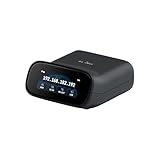
| GL.iNet GL-RM10 Comet Pro Remote KVM | Best Remote Access Over Wi-Fi | $179.99 |
| HDMI KVM Switch with Wired Controller | Best Ultra-Budget Pick | $16.99 |
| USB 3.0 HDMI 4-Port KVM Switch | Best for Four Computers | $64.99 |
| AV Access Dual Monitor KVM Switch Dock | Best Dock Replacement | $246.99 |
| Anker USB 3.0 HDMI KVM Switch 85W PD | Best with Power Delivery | $39.99 |
| GL.iNet Comet GL-RM1 Remote KVM | Best Compact Remote KVM | $99.99 |
How We Picked
See also: Standing Desk 50 Inch Height: Who Needs It and Why • Standing Desk Height for 5’10”: Your Target Number and How to Dial It In
We ranked these switches on switching reliability and display stability first, then on USB handling for keyboards, mice, and storage, followed by monitor support and resolution passthrough, and finally on everyday usability factors like button placement, wired remotes, power delivery for laptops, and build quality. Units that maintained a clean video handshake, kept peripherals alive across swaps, and required no drivers to get started scored highest for typical home office and hybrid work desks.
The 8 Best Kvm Switches in 2026
1. Hearvo S7232H USB 3.0 HDMI KVM
The Hearvo S7232H is the sweet spot for most people who need to share one monitor between two computers without overcomplicating the desk. It runs HDMI at 4K at 60Hz and offers USB 3.0 sharing for your keyboard and mouse, so daily switching feels immediate and clean with no driver hassle. This is ideal for a work-from-home setup where a laptop and desktop trade off on a single display. Image stays sharp and the hub keeps peripherals responsive after each swap.
- Pro: Reliable plug-and-play switching for two computers on one monitor with crisp high-resolution output
- Pro: USB 3.0 ports keep keyboard and mouse handoffs smooth and fast
- Con: Limited to a single monitor, so not ideal for extended multi-display workflows
Skip it if you need dual or triple monitors or want a full docking station with charging.
2. UGREEN 8K HDMI DisplayPort Triple Monitor KVM
Built for serious multi-monitor desks, the UGREEN Aluminum switch lets two computers share up to three monitors with both HDMI and DisplayPort options. The 8K at 60Hz headroom means it handles high-resolution and high refresh workflows with plenty of overhead, which translates to rock-solid 4K switching in practice. We like it for creators, traders, and engineers who live in expanded desktop mode and cannot afford re-detection delays or flicker across screens.
- Pro: Triple-monitor support for a true extended desktop between two systems
- Pro: Premium aluminum chassis with high-bandwidth video handling for demanding setups
- Con: Larger footprint and more cables to manage than single-monitor switches
Skip it if you only use one display or want the smallest, most minimal switch.
3. GL.iNet GL-RM10 Comet Pro Remote KVM Over Wi-Fi 6 Dual Band 4K Passthrough
The GL-RM10 Comet Pro is not a traditional desk switch at all. It is a remote KVM for controlling a computer over Wi-Fi 6 on dual band, with 4K passthrough so the local display stays connected. That makes it perfect for accessing a headless PC, server, or office machine from another room or off site, including BIOS-level control when the operating system is down. If you support family PCs, run a lab, or want out-of-band access without software agents, this fills the gap.
- Pro: True remote access over Wi-Fi with local 4K passthrough intact
- Pro: Works at the BIOS level, not just inside the operating system
- Con: Overkill and pricier than needed if you only want local button switching
Skip it if you just need a simple wired switch for two computers at one desk.
4. HDMI KVM Switch with Wired Controller
This compact HDMI KVM is the no-frills fix for sharing a single monitor and keyboard and mouse between two PCs. It supports 4K at 60Hz and focuses on dead-simple operation with a wired extend controller that you can park right on the desktop for one-press swaps. For students, minimalists, or secondary stations where you want the cheapest reliable path to stop swapping cables, it gets the job done without extra ports you will not use.
- Pro: Extremely affordable and easy to set up with plug-and-play operation
- Pro: Wired remote button makes switching convenient when the box is tucked away
- Con: Basic feature set with limited USB expansion compared to larger hubs
Skip it if you need more USB ports, multi-monitor support, or power delivery.
5. USB 3.0 HDMI 4-Port KVM Switch
When two ports are not enough, this 4-port HDMI KVM lets you share one monitor and peripherals across four computers. It provides three USB 3.0 ports for keyboard, mouse, and an extra device, and supports 4K at 60Hz so even the fourth system looks sharp. It is ideal for test benches, repair stations, or power users who rotate between multiple desktops and laptops but want to keep a single display and input set.
- Pro: Four-computer sharing from one monitor and one peripheral set saves major desk space
- Pro: Three USB 3.0 share ports add useful flexibility for accessories
- Con: Single-monitor only, and managing four inputs adds cable clutter
Skip it if you need dual monitors or prefer a dock with laptop charging.
6. AV Access Dual Monitor KVM Switch Dock
The AV Access KVM Switch Dock is a full workstation solution for two laptops driving two monitors. It consolidates video, USB, and docking functionality so you can switch an entire dual-display setup between machines with one press, while keeping accessories connected. For hybrid workers who bring a work laptop home and want a clean, permanent dual-monitor command center, this replaces a separate dock and switch with one integrated unit and a tidier cable run.
- Pro: Purpose-built for dual monitors and two laptops with dock-style consolidation
- Pro: Streamlines a premium dual-display desk into a single switching hub
- Con: Highest price in this roundup and more than casual users need
Skip it if you use a single monitor or want a compact low-cost switch.
7. Anker USB 3.0 HDMI KVM Switch 85W PD
Anker brings its hub expertise to a KVM that actually charges your laptop while you work. With five USB 3.0 ports, HDMI at 4K at 60Hz, and up to 85W Max Power Delivery, it can keep a compatible notebook topped up while handling keyboard, mouse, and extra gear from one switch. The port selection is generous for its size, making it a smart fit for laptop-first desks that want fewer bricks and adapters under the table.
- Pro: Up to 85W Max PD reduces charger clutter for compatible laptops
- Pro: Five USB 3.0 ports provide ample room for peripherals and storage
- Con: Single-monitor design, so not suited for dual-display power users
Skip it if you need dual or triple monitors or do not need laptop charging.
8. GL.iNet Comet GL-RM1 Remote KVM
The GL-RM1 Comet is the compact counterpart to the Pro, offering remote KVM access with 4K at 30Hz, BIOS-level control, and Tailscale support for secure remote connectivity. It is a great pick for home servers, office PCs, or a second machine you need to manage without being physically present, especially when you need to get into firmware settings or recover a system that will not boot normally. Local desk switching is not its primary mission, but remote control is excellent.
- Pro: BIOS-level access for true out-of-band management and recovery
- Pro: Tailscale support simplifies secure remote access without complex networking
- Con: Local sharing features are limited compared to traditional desktop KVMs
Skip it if your main need is wired, one-button swapping at a single desk.
Buying Guide
Monitor Count and Video Path
Start by counting how many displays you truly need to share. Single-monitor switches are smaller, cheaper, and easier to cable, while dual and triple options keep window layouts intact when you swap systems. Check the connector mix as well. Some desks are all HDMI, others mix HDMI and DisplayPort, and a mismatch forces adapters that can hurt stability. If you run high resolution, choose a switch with headroom above your current needs so handshakes stay quick and you avoid flicker or re-detection.
USB Handling and Switching Method
A good switch should keep your keyboard and mouse alive instantly after a swap and avoid re-enumeration delays. Look for generous USB 3.0 sharing if you rotate drives, webcams, or headsets, and note how you will actually switch. On-unit buttons are fine if the box is within reach, but a wired remote or front-panel button saves you from fishing behind monitors. Remote KVMs are a different class entirely and are worth it only if you need BIOS access or off-site control.
Power and Docking Needs
If laptops are in the mix, consider whether you want the switch to power or dock the machine. Units with Power Delivery can reduce adapter clutter and keep a notebook charged over a single cable, while dock-style KVMs consolidate displays, USB, and charging into one hub. If you already have a dock you like, a simple HDMI and USB switch may be cleaner and more affordable than replacing your whole docking setup.
Our Verdict
For most single-monitor desks, the Hearvo S7232H at $29.98 is our top pick because it balances price, reliable 4K at 60Hz switching, and USB 3.0 sharing without extra complexity. If you need the lowest spend for basic two-computer sharing, the HDMI KVM Switch with Wired Controller at $16.99 is the budget pick that still delivers clean switching with a convenient remote button. When your workflow demands dual or triple monitors, the UGREEN 8K HDMI DisplayPort Triple Monitor KVM wins despite its larger footprint, and for out-of-band or remote management, the GL.iNet Comet family is the right tool.
FAQ
Do I need a KVM switch if I already have a monitor with multiple inputs?
You can change monitor inputs, but you will still need to swap keyboard and mouse connections separately. A KVM consolidates video and USB so one press moves everything together, which is faster and prevents loose cables and input lag from separate switching.
Will a KVM affect gaming or high-resolution work?
A quality switch should be transparent in daily use when it has sufficient video bandwidth. Look for models that maintain a stable handshake at your target resolution and refresh so you do not see flicker, black screens, or repeated re-detection when toggling systems.
Can a KVM charge my laptop?
Only models with Power Delivery can do that, such as the Anker unit with up to 85W Max PD. Most standard HDMI KVMs pass video and USB only and expect each computer to use its own charger, so check the specs if single-cable charging matters to you.
What is the difference between a regular KVM and a remote KVM?
A regular KVM is a local desk device for button-based swapping between computers at the same table. A remote KVM like the GL.iNet Comet models lets you control a distant or headless PC over the network, including BIOS access, which is ideal for servers, labs, or troubleshooting when the system will not boot normally.
Related Reviews & Guides



Best 3d Printer for Car Parts in 2026: Compared and Ranked
Marsail Ergonomic Office Chair Office Desk vs NEO CHAIR Office Computer Chair Ergonomic: Which Should You Buy?