Last Updated: September 8, 2026
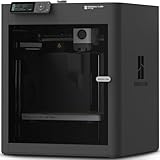
- Top Pick: FLASHFORGE Adventurer 5M 3D Printer with Fully Auto Leveling, Max 600mm/s High Speed Printing, 280°C Direct Extruder with 3S Detachable Nozzle, CoreXY All Metal Structure, Print Size 220x220x220mm
- Best Value: Bambu Lab P1S Combo, P1S 3D Printer and AMS, Multi-Color 3D Printing
- Premium Choice: Bambu Lab P1S 3D Printer, Ready-to-Use FDM 3D Printer
Selecting a high-precision 3D printer for a modern desk setup requires balancing motion frame stability, extrusion reliability, and software ecosystem support. For workstation users, the primary goal is achieving clean surface finishes, precise dimensional accuracy, and sharp corners without spending hours performing manual bed adjustments or mechanical tuning. What distinguishes top-tier machines from subpar options is how effectively they handle vibration compensation, filament flow management, and thermal stability under continuous operation.
Evaluating desktop units on the market involves analyzing hardware construction, automatic bed leveling systems, hotend thermal limits, and community user reports. Today, achieving a high-quality 3D printer setup in 2026 means choosing between high-speed CoreXY platforms, enclosed multi-color stations, and user-friendly bed-slingers. This comparative guide evaluates eight prominent models across various price tiers to help you select the ideal manufacturing tool for your workspace.
As an Amazon Associate we earn from qualifying purchases at no extra cost to you.




📄 In This Review
Quick Picks
| Product | Best For | Price |
|---|---|---|
| FLASHFORGE Adventurer 5M | Best Value High-Speed CoreXY | $249 |
| Bambu Lab P1S Combo | Best Overall Multi-Color Setup | $549 |
| Bambu Lab P1S | Best Enclosed Workhorse | $399 |
| FLASHFORGE AD5X | Best High-Temp Multi-Color CoreXY | $349 |
| Bambu Lab A1 | Best Quiet Entry-Level Printer | $299.99 |
| Entina Tina2C | Best Ultra-Compact Starter | $199.99 |
| Creality K2 Combo (A) | Best Large Volume Multi-Color | $521 |
| Anycubic Kobra X | Best Affordable Native Multi-Color | $329.99 |
How We Picked
See also: Good Height for a Desk: Seated and Standing Numbers by Body Height • Best Desks for Posture: Height, Depth and Sit-Stand Options
Our evaluation process focuses on four primary criteria essential for desktop manufacturing: motion system kinematics, thermal extrusion capabilities, auto-leveling precision, and ecosystem integration. We analyzed published manufacturer specifications, motion controller architecture, and long-term owner feedback regarding component durability and failure rates. Key considerations include maximum print speeds, hotend temperatures, multi-color management efficiency, and out-of-box setup requirements to ensure each machine meets rigorous standards for real-world reliability.
The 8 Best 3D Printer Quality Models
FLASHFORGE Adventurer 5M
This model is built for makers who demand high-speed CoreXY kinematics and automatic bed leveling at an entry-level price point. Its all-metal core frame provides rigid stability during rapid direction changes, while the direct extruder handles various flexible and standard filaments cleanly. The quick-swap 3S detachable nozzle structure makes clearing jams or swapping orifice sizes hassle-free during routine maintenance schedules.
- Fast CoreXY architecture with fully auto leveling.
- User-friendly 3S detachable nozzle for effortless maintenance.
- Open-frame design offers no ambient chamber heat control.
Skip it if you plan to regularly work with technical filaments like ABS that require an enclosed build chamber to prevent severe part warping.
Bambu Lab P1S Combo
Designed for creators needing an enclosed ecosystem paired with automated multi-color production capabilities right out of the box. The combination of an enclosed build chamber and an integrated multi-material system allows for smooth layer transitions, complex multi-filament prints, and high ambient thermal control for demanding structural projects.
- Fully enclosed dynamic CoreXY chassis paired with seamless multi-color printing capabilities.
- Excellent ecosystem software support with automated multi-filament feeding.
- Substantial initial cost compared to single-material base alternatives.
Skip it if your workflow consists purely of single-color functional prototypes where color management hardware adds unnecessary hardware overhead.
Bambu Lab P1S
This standalone unit targets functional fabricators who require a fully enclosed printing environment without paying upfront for multi-color modular systems. It offers rapid CoreXY motion, reliable layer consistency, and direct-drive extrusion capable of working with demanding engineering materials directly out of the box.
- Enclosed build area provides excellent ambient thermal stability for engineering plastics.
- High structural rigidity produces exceptional side-wall surface finish quality.
- Standard setup requires purchasing an external material system later for multi-color output.
Skip it if your primary interest is printing decorative multi-color artistic models immediately without purchasing expansion gear.
FLASHFORGE AD5X
Ideal for hobbyists and prototype builders wanting an affordable route to high-speed multi-color printing on a CoreXY foundation. Featuring a high-temperature 300°C direct drive extruder and 1-click auto leveling, this unit delivers high precision while maintaining fast motion speeds across its build volume for complex multi-filament designs.
- CoreXY framework featuring rapid travel moves with multi-color capabilities.
- High 300°C maximum nozzle temperature expands compatibility with specialized filaments.
- Slicer software profile optimization requires occasional manual setting adjustments.
Skip it if you prefer a plug-and-play user interface experience with zero slicer profile adjustments required during setup.
Bambu Lab A1
A top pick for beginners, students, and home desk environments requiring quiet operation and straightforward setup procedures. This ready-to-use bed-slinger model eliminates assembly headaches through robust automated calibration routines, providing impressive print surface consistency on basic desktop footprints.
- Extremely approachable startup process with full auto-calibration for clean first layers.
- Quiet stepper driving systems make it suitable for close-proximity desk placement.
- Bed-slinger axis motion requires additional physical clearance behind the workspace setup.
Skip it if your workspace depth is tightly constrained or if you plan to print engineering materials requiring high ambient temperatures.
Entina Tina2C
Tailored specifically for young students, STEM classrooms, and absolute beginners needing an ultra-compact starter machine. Operating out of the box with quick 8-minute setup, app and WiFi controls, an integrated library of over 3000 models, and 20+ creative DIY modules, it makes educational 3D printing entirely frictionless.
- Extremely small footprint fits tiny desks with rapid 8-minute unboxing to printing transition.
- Expansive ecosystem featuring 3000+ model library access and 20+ DIY STEM modules.
- Small physical build area limits print size potential for larger projects.
Skip it if you need to print functional desk organization gear, large tools, or high-temperature structural components.
Creality K2 Combo (A)
Built for advanced makers needing an expansive 260x260x260mm build volume alongside multi-color automation. Featuring 95% pre-assembled construction, a next-generation direct drive extruder, smart AI camera tracking, and rapid motion speeds, this machine delivers large-scale multi-color output with high process reliability.
- Generous 260x260x260mm build volume with automated multi-color material feeding.
- Integrated smart AI camera helps detect print defects and monitor progress remotely.
- Large overall footprint requires a strong, heavy desk surface to handle inertia.
Skip it if you have limited desk space or only plan to print small, single-part components.
Anycubic Kobra X
Targeted at cost-conscious fabricators wanting native 4-color multi-material capabilities without spending premium sums. It simplifies multi-filament routing and setup, offering an accessible platform for generating colorful desktop accessories and creative multi-tone designs.
- Accessible entry price for native 4-color multi-filament printing capabilities.
- Simplified assembly and multi-color setup process for quick operational readiness.
- Overall motion acceleration and travel speeds fall behind upper-tier CoreXY platforms.
Skip it if rapid turnaround speed and aggressive acceleration rates are your top performance metrics.
Buying Guide
CoreXY vs. Bed-Slinger Kinematics
The core motion architecture of a printer dictates its maximum output speed and surface finish stability. CoreXY designs keep the heavy bed moving strictly on the vertical Z-axis while fast lightweight gantry motors handle horizontal movements, minimizing mechanical inertia and preventing print artifacts like ringing or ghosting. Bed-slingers move the heavy build plate along the horizontal Y-axis, which can cause taller models to wobble during rapid motion. While bed-slingers are often more budget-friendly, CoreXY platforms offer superior surface finish quality when operating at elevated travel speeds.
Extruder Mechanics and Thermal Limits
Extruder construction directly impacts filament control and material versatility. Direct-drive extruders mount the drive gears immediately above the hotend, offering superior retraction control, lower filament stringing, and reliable feeding of flexible materials like TPU. Bowden setups separate the motor from the toolhead, reducing gantry mass but increasing line resistance. Furthermore, check the maximum nozzle temperature: standard 280°C hotends easily handle PLA, PETG, and TPU, whereas high-temperature 300°C units allow you to print advanced engineering materials like nylon and polycarbonate cleanly.
Multi-Filament Systems and Auto-Leveling
Automatic bed leveling is essential for clean first layers, using physical strain gauges or contactless sensors to create a digital mesh compensation grid across the print bed. For multi-color printing, dedicated multi-material modules manage automated filament retracting, cutting, and swapping during active prints. While multi-filament accessories expand creative capabilities and allow for water-soluble support materials, ensure your desk setup has adequate physical clearance for material buffer units and excess filament purge management.
Our Verdict
For buyers seeking an all-around blend of print perfection, speed, and enclosed multi-material capability, the Bambu Lab P1S Combo ($549) stands out as our top recommendation. For budget-conscious users prioritizing rapid motion speed and CoreXY stability on a single-spool setup, the FLASHFORGE Adventurer 5M ($249) delivers unmatched overall value. If your projects demand a larger volume for oversized components and multi-color flexibility, the Creality K2 Combo (A) ($521) provides the ideal wide-format alternative.
FAQ
What makes direct drive better for print quality than Bowden extruders?
Direct drive extruders position the motor directly above the hotend, significantly shortening the filament path. This precise pushing mechanism allows for exact retraction distances, eliminating oozing and stringing while providing smooth extrusion control for flexible filaments like TPU.
Is an enclosed build chamber necessary for high print quality?
An enclosed chamber is not strictly required for standard filaments like PLA or PETG, which cool easily without warping. However, for high-temperature engineering filaments like ABS, ASA, or polycarbonate, an enclosure maintains warm ambient air temperatures that prevent layer splitting and model deformation.
How does auto bed leveling improve print results?
Auto bed leveling uses sensors to probe multiple points across the build surface and construct a precise digital height map. The printer automatically compensates for subtle bed imperfections in real time, ensuring a uniform distance between nozzle and bed for consistent first-layer adhesion.
Why do multi-color prints take longer to complete?
Multi-color printing requires the toolhead to retract filament, cut it, unload it, load the new filament, and purge excess material into a purge block for every color change per layer. These repeated filament swap cycles add cumulative processing time to total print durations.
Related Reviews & Guides



Document Holder Ergonomic Desk Guide

6 Best USB Charger Desk Multi Port Hubs for Home Office (2026)