Last Updated: September 12, 2026



🛒 Best Price Today on Amazon
Prime members get fast, free shipping on everything above, plus member-only deals. New members get a 30-day free trial — cancel anytime.
As an Amazon Associate we earn from qualifying purchases at no extra cost to you.




📄 In This Review
Quick Comparison
| Product | Brand | Price | Rating |
|---|---|---|---|
| Rotating Pomodoro Timer 5 | OORAII | $16.99 | 4.7/5 |
| GuDoQi Multi-Function Cube Timer | GuDoQi | $13.86 | 4.7/5 |
| Rotating Pomodoro Timer 5 | OORAII | $17.99 | 4.7/5 |
| KADAMS Pomodoro Cube Timer Productivity Visual Timer – … | KADAMS | $16.99 | 4.7/5 |
| Jack Pomodoro Timer – Productivity Cube | PrintersJack | $29.99 | 4.6/5 |
Keep Time and Stay on Task
See also: Good Height for a Desk: Seated and Standing Numbers by Body Height • Best Desks for Posture: Height, Depth and Sit-Stand Options
A desk clock with timer combines time-awareness with productivity techniques like Pomodoro, time-boxing, and meeting countdowns. Unlike a phone timer, a dedicated desk clock keeps your focus on the task rather than pulling you toward notifications. Here are three excellent options that serve double duty as clocks and timers.
1. Time Timer MOD Home Edition
The Time Timer MOD is beloved by productivity enthusiasts and educators alike. Its signature visual countdown disk shrinks as time passes, giving you an immediate, intuitive sense of how much time remains without reading a number. The 60-minute timer pairs with a digital clock face showing the current time. The MOD's compact size and optional cover make it portable for office-to-meeting-room use.
2. MARATHON Large Display Timer Clock
The MARATHON desk clock combines a large 4-inch LED display showing time, date, and temperature with a count-up/count-down timer on the same screen. The alarm is loud enough to hear across a room, and the magnetic back sticks to metal surfaces for flexible placement. An excellent choice for kitchen and home office shared spaces.
3. Jacaranda 25-Minute Pomodoro Cube Timer
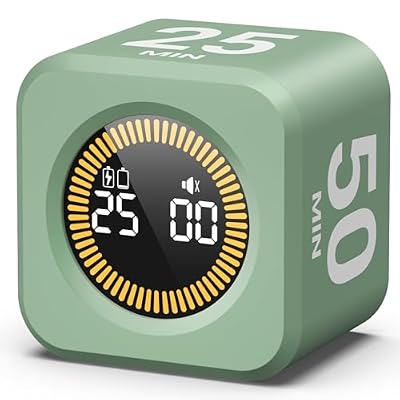
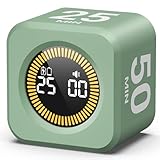
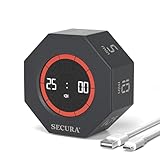
The Jacaranda cube timer is purpose-built for the Pomodoro Technique. Flip the cube to start a 5, 15, 25, or 45-minute countdown timer — no buttons, no screens, no distractions. A subtle beep signals the end of each interval. For users committed to structured time management, this minimalist design removes all friction between you and timed focus sessions.
Buying Guide: Selecting the Right Desk Clock with Timer
- Pomodoro vs. general timer: if you follow a specific productivity method, choose a device optimized for those intervals; otherwise a multi-function clock timer provides more flexibility.
- Visual vs. digital countdown: visual countdown mechanisms (like the Time Timer disk) communicate urgency subconsciously without requiring you to read numbers.
- Display brightness: look for an adjustable or auto-dimming display to avoid screen glare in a dark or evening work environment.
- Alert type: some clocks beep only once at the end of a timer; others have progressive alerts — choose based on how likely you are to notice a single beep.
- Power source: USB or AC-powered clocks keep time indefinitely; battery-powered units are more portable but require periodic replacement.
- Secondary functions: temperature display, date, alarm, and humidity readings add everyday utility to a dedicated desk clock.
Final Thoughts
A desk clock with timer is one of the most underrated productivity tools for a home office. The Time Timer MOD leads for visual time awareness, the MARATHON for multi-function digital display, and the Pomodoro Cube for friction-free structured focus sessions. Whichever you choose, having a dedicated time-keeper on your desk trains your brain to respect intervals and wrap up tasks more consistently.
Frequently Asked Questions
Is a desk clock with timer better than using my phone?
A dedicated desk clock keeps the timer in your line of sight without exposing you to the notifications, messages, and apps that make a phone a distraction trap. When the goal is uninterrupted focus, removing the phone from your workflow is often the single biggest productivity gain. It also keeps your screen free for actual work rather than a running clock.
How does the Pomodoro Technique work with these timers?
The Pomodoro Technique breaks work into focused 25-minute sprints separated by short 5-minute breaks, with a longer break after four rounds. Cube timers like the Jacaranda are built for this because you simply flip the cube to the interval you want, with no menus or buttons. After every fourth sprint, take a 15 to 30 minute break to recharge.
Will the alarm be loud enough in a busy home office?
Models like the MARATHON have alarms designed to carry across a room, while minimalist cube timers use a subtler single beep. If you tend to get deeply absorbed in work or wear headphones, choose a louder or progressive alert so you do not blow past your intervals. Some users place a louder timer slightly behind them so the sound is unmistakable.
Can I use a desk timer for meetings and video calls?
Yes, a visual countdown timer is excellent for keeping meetings on schedule without staring at a phone or laptop clock. Set it for your agenda blocks so everyone can see the time remaining at a glance. The Time Timer’s shrinking disk is especially effective because participants sense the urgency without anyone having to announce the time.
How to Choose the Right Desk Clock with Timer
A desk clock with a timer keeps you on task without reaching for a phone that pulls you into distractions. The right one is glanceable, easy to set, and quiet enough not to disturb a shared space, so weigh these traits against where it will sit.
- Display readability — A large, high-contrast digit display you can read at a glance from across the desk beats a cramped screen you have to lean toward.
- Timer controls — Look for dedicated buttons or a dial that start a countdown in one motion, since fiddly menu diving defeats the point of a quick focus timer.
- Alert style — Choose between an audible beep and a silent vibration or light flash depending on whether you work alone or in a shared room.
- Power source — Decide between battery and USB power; a USB clock never dies mid-session, while a battery unit stays put if your desk lacks free ports.
Common Mistakes to Avoid
The common mistake is buying a clock packed with features you will never touch. A unit crammed with alarms, temperature readouts, and tiny mode buttons becomes harder to operate for the one thing you actually want — starting a focus countdown fast. Favor a simple, tactile timer over a cluttered multifunction gadget.
People also place the clock where it becomes a distraction rather than a tool. A blinking, brightly backlit display in your direct line of sight pulls your eyes off work every few seconds. Position the clock just off to the side, dim the brightness if it supports it, and use the timer to structure work intervals rather than watching the seconds tick down.
Related Reviews & Guides
8 Best Gaming Chairs for Desk: Top Picks for 2026
Best 3d Printer under 100 in 2026: Compared and Ranked