Last Updated: October 19, 2026
- Call-proof noise: how to keep the hum out of your meetings
- Pick by room: a quick sizing guide
- Eight units at a glance
- The eight candidates
- Protecting paper, books and electronics
- Cords, tip-over and placement checklist
- Tank or drain: what it costs in time
- How we picked these
- Verdict
- Frequently asked questions
The best dehumidifier for an office is a quiet, small-footprint unit with an auto shutoff, and for a typical home office the TABYIK 35 oz model, with its 28 dB claim, is the pick to beat on paper for call-heavy days. Larger rooms and basement offices are better served by the Waykar 34-pint unit, which offers automatic or manual drainage and a 2,000 sq ft rating, so you are not emptying a tank every other day.
Office humidity problems arrive quietly. A musty smell in the closet where you keep client files, curling paper, a keyboard that feels damp in July, a window that fogs on winter mornings. This guide looks at the problem from the desk: how loud is too loud for a video call, how much capacity a 120 square foot room needs, what it costs in time to empty a tank, and how to protect paper, books and electronics. The eight units below are described from published listings and buyer feedback, and nobody on the team used or measured them.
📄 In This Review
- Call-proof noise: how to keep the hum out of your meetings
- Pick by room: a quick sizing guide
- Eight units at a glance
- The eight candidates
- Protecting paper, books and electronics
- Cords, tip-over and placement checklist
- Tank or drain: what it costs in time
- How we picked these
- Verdict
- Frequently asked questions
Call-proof noise: how to keep the hum out of your meetings

ToLife Dehumidifier, 1000 Sq Ft 95 oz Tank with Sleep Mode, Auto Shutoff | Portable for Home, Bedroom, Bathroom and Basement with 7-Color LED Light, Grey
Included for 'Best Dehumidifier for Office: Quiet, Compact Picks for Calls and Paper' as a representative moisture-control product in this roundup; selection reflects the product set returned for this topic.
View on Amazon
TABYIK 35 OZ Dehumidifier for Bedroom RV, Quiet with Auto Shut Off, White | 280 Sq.Ft Small Dehumidifiers for Home Bathroom Closet, 7 Color Light, 28dB Ultra Quiet, 35OZ Water Tank
Included for 'Best Dehumidifier for Office: Quiet, Compact Picks for Calls and Paper' as a representative moisture-control product in this roundup; selection reflects the product set returned for this topic.
View on Amazon
Dehumidifiers for Home, 1000 Sq Ft Dehumidifier with 95oz Tank Auto Shutoff | Quiet for Bedroom, Bathroom and Basement with Sleep Mode 7-Color LED Light, Grey
Included for 'Best Dehumidifier for Office: Quiet, Compact Picks for Calls and Paper' as a representative moisture-control product in this roundup; selection reflects the product set returned for this topic.
View on Amazon
Waykar 80 Pints 5000 Sq. Ft 2025 Energy Star Dehumidifier for Basement | 90° Auto Swing, 30%–80% Humidity Control for home, Continuous drainage support, Whole-House Dehumidification, Auto-defrost
Included for 'Best Dehumidifier for Office: Quiet, Compact Picks for Calls and Paper' as a representative moisture-control product in this roundup; selection reflects the product set returned for this topic.
View on Amazon
Small Dehumidifier for Home 44OZ Quiet with Auto Off & Defrost 5 Timers 3 modes 10 Color Lights 3 Brightness 260 Sq.ft Portable Dehumidifiers for Basement Bedroom Bathroom RV Closet
Included for 'Best Dehumidifier for Office: Quiet, Compact Picks for Calls and Paper' as a representative moisture-control product in this roundup; selection reflects the product set returned for this topic.
View on Amazon
BEDRED Dehumidifier, 95Oz Dehumidifier for Home 1000 Sq.Ft | Quiet, Auto Shutoff, Sleep Mode, 7 Color Ambient Light for Bedroom, Bathroom, Basement (Black)
Included for 'Best Dehumidifier for Office: Quiet, Compact Picks for Calls and Paper' as a representative moisture-control product in this roundup; selection reflects the product set returned for this topic.
View on Amazon
Waykar 34 Pints 2025 Most Efficient Energy Star Dehumidifier for Home & Basement, Ideal for Spaces up to 2,000 Sq. Ft. with Auto or Manual Drainage, 0.62-Gallon Water Tank
Included for 'Best Dehumidifier for Office: Quiet, Compact Picks for Calls and Paper' as a representative moisture-control product in this roundup; selection reflects the product set returned for this topic.
View on Amazon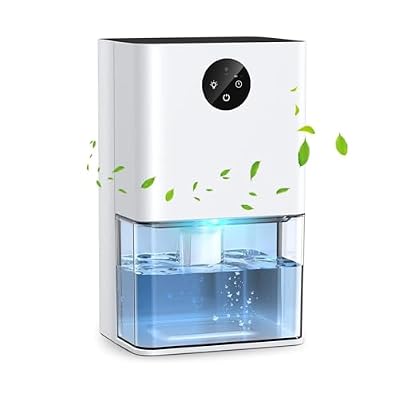
50OZ Dehumidifier, Small-Space Dehumidifier for Bedroom RV Closet 200 Sq.Ft | Quiet Operation, Portable, Auto Shut Off, 7 Color, Energy Saving
Included for 'Best Dehumidifier for Office: Quiet, Compact Picks for Calls and Paper' as a representative moisture-control product in this roundup; selection reflects the product set returned for this topic.
View on AmazonDehumidifiers make two kinds of sound: a low compressor hum and a fan whoosh. Laptop and headset microphones pick up both, and noise suppression software does not always clean them. Maker claims in decibels help only if you know how to read them. A claim of 28 dB is in the territory of a very quiet room; typical figures cited for a normal conversation are around 60 dB, and for a quiet office 40 to 50 dB. Claims are usually measured at close range in ideal conditions, and your room will add reflections.
Distance helps more than most people expect. In open air, sound level drops by roughly 6 dB each time the distance doubles. A unit that registers 40 dB at 1 meter might read about 34 dB at 2 meters and 28 dB at 4 meters. (A general acoustics rule of thumb, not a measurement of any unit here.) Walls and doors help further. So the quietest installation is a unit in a corner away from the desk, ideally behind a door you can leave ajar for airflow.
Practical rules for call days: run the unit in sleep mode or on its lowest fan setting, let it work before your first meeting, and switch it off for the calls if humidity allows. If the unit has a timer, set it to stop 10 minutes before your first call. Do not stand it on a hollow desk or shelf; vibration through furniture amplifies hum.
Only some titles include a decibel claim: 28 dB on the TABYIK, and the rest say quiet or give nothing. Where the number is missing, check the listing and the most recent buyer comments about noise.
Pick by room: a quick sizing guide
See also: Best Sleeping Ear Plugs for Side Sleepers and Home Workers • Best Indoor Outdoor Thermometer: 6 Wireless Picks for Home
| Your office | Typical size | Sensible unit size | Candidates |
|---|---|---|---|
| Closet office or cubicle corner | Under 60 sq ft | Smallest tank, 200 to 280 sq ft rating | TABYIK, Deyagoo, Newo |
| Spare-bedroom home office | 100 to 150 sq ft | 200 to 280 sq ft rating is plenty | Deyagoo, Newo, TABYIK |
| Larger home office with files | 150 to 300 sq ft | 1000 sq ft household tank unit | ToLife, BEDRED, NineSky |
| Basement or open-plan office | 300 to 1,000 sq ft | 2,000 sq ft class with drain option | Waykar 34 Pints |
| Large damp floor or storage area | Over 1,000 sq ft | 5,000 sq ft class with continuous drainage | Waykar 80 Pints |
These size bands are rules of thumb for this article, not manufacturer guidance. Ratings assume a closed room; leave doors shut for the unit to work well.
Eight units at a glance
| Model | Key spec from the listing | Price tier | Best for |
|---|---|---|---|
| TABYIK 35 OZ | 280 sq ft, 28dB claim, 35 oz tank | Budget | Call-heavy small offices |
| Deyagoo 50OZ | 200 sq ft, portable, auto shut off | Budget | Spare-room desks |
| Newo 44OZ | 260 sq ft, 5 timers, 3 modes, auto off and defrost | Budget | Timer-based schedules |
| ToLife 1000 Sq Ft | 95 oz tank, sleep mode, auto shutoff | Budget | Larger home offices |
| BEDRED 1000 Sq.Ft | 95 oz tank, sleep mode, quiet claim | Budget | Offices with file storage |
| NineSky 1000 Sq Ft | 95 oz tank, sleep mode, auto shutoff | Budget | Garage or shed offices |
| Waykar 34 Pints | Up to 2,000 sq ft, auto or manual drain, 0.62 gal tank | Mid-range | Basement and open-plan offices |
| Waykar 80 Pints | 5000 sq ft, 30%-80% control, continuous drainage | Premium | Big damp floors and storage |
Price tiers are relative within this list. Power draw, hose length and operating range are not in the titles; check the live listing.
The eight candidates
TABYIK 35 OZ dehumidifier, 280 Sq.Ft, 28dB
If your workday is mostly video calls, start here. The TABYIK title lists a 35 oz tank, a 280 sq ft rating, auto shut off, a 7-color light and a 28 dB ultra-quiet claim, in white. Of all the units in this roundup, it makes the lowest noise claim, and its small size lets you tuck it into a corner or on a low shelf out of the camera frame. The 280 sq ft rating comfortably covers a 120 to 150 sq ft home office.
The trade-off is the tank. At 35 oz, about 1 liter, it fills quickly if the room is truly damp. In a mildly humid office pulling maybe half a liter a day (an illustrative assumption), the tank would last two days; in a wet basement it could fill in under a day, and the auto shutoff will stop the unit until you empty it. Check your hygrometer: if readings sit in the low 60s, this is plenty, and if they sit in the 70s, step up in size or look at a drain option.
The 7-color light is the one feature to switch off. A colored glow in a camera-facing room is a distraction, so look for the off setting on the listing. Plug it directly into a wall outlet rather than a shared power strip, and keep it a few feet from your computer and docking station.
Because the title is specific that it is for bedrooms, RVs, closets and bathrooms, think of it as a spot unit rather than a floor-wide solution. That suits a single office or a supply closet but not an open-plan floor.
Pros
- Lowest noise claim in the roundup at 28 dB
- Budget tier and small footprint
- Auto shut off when the tank is full
Cons
- 35 oz tank needs emptying often in damp rooms
- 280 sq ft rating is too small for larger spaces
- Drain option not stated in the title
Who it’s for: people who take many calls from a small home office and care more about quiet than capacity.
Deyagoo 50OZ small-space dehumidifier, 200 Sq.Ft
The Deyagoo title lists a 50 oz tank, a 200 sq ft rating, quiet operation, portable build, auto shut off, a 7-color light and an energy-saving claim, intended for bedrooms, RVs and closets. The tank is about 1.5 liters, half again as big as the TABYIK, which changes the emptying schedule: in our illustrative half-liter-a-day office, that is three days between trips instead of two.
The portable label matters if your office is a shared space, such as a dining-room table that becomes a desk by day. A small unit that you can carry to a closet at the end of the workday is easier to live with than a fixture. The energy-saving claim is not quantified in the title, so look for wattage on the listing; as an illustration, a 100-watt draw for 8 hours a day is 0.8 kWh, or around 24 kWh a month, which at an assumed 17 cents per kWh is roughly four dollars. (An assumption, not a measured figure.)
There is a quiet claim but no decibel figure in the title, so rely on recent buyer comments about fan noise. If you are sensitive to the whine of small fans, which can be higher-pitched than the hum of a larger unit, that is the thing to check in reviews.
Its 200 sq ft rating is the smallest in the list, which is a virtue in a bedroom-sized office: you get enough capacity without the aggressive cycling of an oversized machine. For rooms over 200 sq ft, move to the 260 or 280 sq ft models or the larger 95 oz class.
Pros
- Mid-size 50 oz tank for a small unit
- Portable and compact
- Energy-saving claim in the title
Cons
- No decibel figure in the title
- 200 sq ft rating limits it to small rooms
- Still a tank to empty
Who it’s for: spare-room and dining-table offices where the unit has to be carried away after work.
Newo 44OZ small dehumidifier with 5 timers and 3 modes
The Newo title is the most feature-heavy among the small units. It lists a 44 oz tank (about 1.3 liters), a 260 sq ft rating, auto off and defrost, five timer settings, three modes, ten color lights with three brightness levels, and suggested uses in basements, bedrooms, bathrooms, RVs and closets. For an office, the timers are the point. A schedule lets you run the machine overnight or before work and leave it off during calls, which is a better answer to the noise problem than any decibel claim.
A workable routine: set the timer so the unit runs through the evening and early morning, when the room is empty, and it is off when you sit down at 9. If a timer is a fixed countdown rather than a daily schedule, you may need to restart it each evening; check the listing for how the timers behave. The three modes likely trade off power and noise, but the title does not describe them, so read the manual before relying on one.
The auto-defrost mention suggests it is designed for cooler rooms. That is helpful in a basement or garage office where winter air can cause coils to frost. If you also heat the room with a space heater, see our guide to quiet small space heaters for a home office, because warmer air changes how much work the dehumidifier has to do. A heater and a dehumidifier running together fight each other, so use them in sequence.
Ten colors and three brightness levels mean you can turn the glow down to nothing at night, a small plus in a room with a camera.
Pros
- Five timers and three modes for scheduled running
- Auto off and defrost
- Budget tier
Cons
- Modes are not described in the title
- No noise figure given
- 44 oz tank still needs regular emptying
Who it’s for: people who want to run the machine on a schedule that avoids meeting hours.
ToLife 1000 Sq Ft dehumidifier with 95 oz tank and sleep mode
The ToLife moves up the capacity ladder. Its title lists a 1000 sq ft rating, a 95 oz tank (about 2.8 liters), sleep mode, auto shutoff and a 7-color LED light, in grey, for bedrooms, bathrooms and basements. In office terms, it suits a larger home office or a room that holds filing cabinets, bookshelves and a printer, where the volume of stored paper makes you want more margin against dampness.
The larger tank changes the weekly time cost. Take an assumed 1 liter per day in a humid month. A 95 oz tank lasts about 2.8 days and means roughly ten emptyings a month. A 35 oz tank would mean about thirty. At two minutes per trip, that is 20 minutes a month versus an hour. (Illustrative assumptions.) Continuous drainage would remove that chore, but the title does not mention a drain option, so check the listing.
The sleep mode matters most. Many units with this feature dim the display and lower fan activity, which is a good match for a room where you work in the daytime and want quiet at night. We cannot say how quiet it is, since the title gives no figure.
Size is the drawback. A 1000 sq ft rating in a 150 sq ft office means a machine that is physically bigger than a small unit and that may cycle in short bursts. It makes sense if you need the bigger tank or the room is large; otherwise the smaller models are less intrusive.
Pros
- 95 oz tank reduces emptying trips
- Sleep mode for quieter night running
- Budget tier
Cons
- Bulkier than the small-space models
- No decibel figure or drain option in the title
- Oversized for a closet-size office
Who it’s for: larger home offices with shelves, files and equipment where fewer tank trips matter.
BEDRED 95 oz dehumidifier, 1000 Sq.Ft, quiet with sleep mode
BEDRED lists the same 95 oz, 1000 sq ft class as the ToLife, with quiet operation, auto shutoff, sleep mode and a seven-color ambient light, in black. For an office that stores paper, the question to ask is where the machine sits relative to the paper. Dehumidifiers pull air through the room in a loop; a unit right beside an open bookshelf will dry that shelf faster than the rest of the room, which is helpful for damp books but can over-dry a leather chair or wooden desk if left alone for months.
Practical placement: put the unit near the part of the room that feels damp, usually an exterior wall or the floor near a basement wall, with a foot or more of clearance on each side. Do not place it under a desk or inside a cabinet, since both block airflow and can trap the machine’s heat. Keep the cord along the wall and out of foot traffic; a unit with a 95 oz tank is heavier when full, and a tug on the cord can pull it over.
A good habit is to pair the unit with the storage furniture you already use. If your files live in drawers, see our guide to desks with drawers for file storage for ways to keep paper off damp walls and floors. Even a dehumidifier cannot fix paper stored in a wet cardboard box against an outside wall.
The black case is neutral in an office, but it shows dust, which tells you when to clean the filter. Wipe it every couple of weeks and check the intake for lint.
Pros
- Quiet operation claim and sleep mode
- 95 oz tank, budget tier
- Auto shutoff protects the floor
Cons
- Nothing in the title separates it from the other 95 oz models
- Heavy when full, so tip-over matters
- No decibel claim
Who it’s for: offices with bookshelves, filing cabinets or archive boxes that need a steady, quiet background unit.
NineSky 1000 Sq Ft dehumidifier, 95 oz tank, with auto shutoff
The NineSky is another 95 oz, 1000 sq ft unit with sleep mode, auto shutoff and a 7-color LED, in grey. In an office context, we use it to talk about the less glamorous spaces: the converted garage, the backyard shed office, the detached studio. These rooms are often poorly insulated and damp, and they have different needs from a spare bedroom, namely tolerance for cooler air, and a spot where a tank unit is acceptable because you visit daily.
Cooler spaces are where compressor units struggle. The title does not state an operating temperature range, so check the listing. If the room drops toward freezing in winter, a unit like this may stop working well or ice up, and the right answer might be to heat the space slightly and keep the machine off in the coldest weeks. A small thermostat-controlled heater can both warm the room and lower relative humidity.
Shed and garage offices also have outlets of uncertain quality. Use a wall outlet with ground-fault protection if the space has one, and avoid long extension cords running across the floor. Do not leave the unit on a damp concrete slab without a thin tray or mat beneath it, and empty the tank before leaving at night. If you keep a small computer in the space, our guide to the best mini PC for a home office covers compact options, and the same logic applies: keep electronics a few feet from the dehumidifier and off the floor.
Pros
- Budget tier with a 95 oz tank
- Auto shutoff and sleep mode
- Portable for moving between rooms
Cons
- Cold-room performance not stated in the title
- Nothing separates it from other 95 oz units
- Decorative light adds nothing in an office
Who it’s for: garage, shed or studio offices that you visit every day and can empty a tank in.
Waykar 34 Pints dehumidifier, up to 2,000 Sq. Ft, auto or manual drainage
This is the sensible step-up unit for a larger or damper office. The title lists 34 pints, Energy Star, a 2,000 sq ft rating, auto or manual drainage and a 0.62-gallon water tank (about 2.35 liters). The drainage choice is the feature that solves the biggest office annoyance: you can run a hose to a floor drain or sump and stop emptying the tank, or leave it in manual mode and empty it when you like.
A typical use case is a basement office or an open-plan floor of 300 to 800 sq ft, where a small tank unit cannot keep up. On the maker’s rating, 34 pints is about 16 liters a day, which dwarfs the load of a single room. The tank is smaller than the 95 oz units (2.35 liters versus 2.8), so without the drain hose it would need more frequent emptying; the strength of this unit is the hose, not the tank.
Check how the drain works in practice. Gravity drainage needs a lower exit point, and many offices do not have a floor drain nearby. If the hose has to cross a walkway, secure it flat with a cord cover so no one trips. If there is no drain, use the tank mode and treat the unit as a 2.35-liter machine.
The unit is larger and probably louder than the small-space models, so keep it away from your desk and in a corner, and consider the timer approach: run it outside meeting hours. The title does not give a noise figure, which means you need to read buyer comments about fan noise before committing.
Pros
- Auto or manual drainage option
- 2,000 sq ft rating suits open-plan or basement offices
- Energy Star in the title
Cons
- Mid-range tier, above the small units
- Larger footprint and likely more noise
- Smaller tank than the 95 oz models if you skip the hose
Who it’s for: basement and open-plan offices where a drain hose beats emptying a tank.
Waykar 80 Pints dehumidifier, 5000 Sq. Ft, 30%-80% humidity control
The largest unit in this roundup is mostly out of scope for a single office, and we include it for the damp floor, storage room or workshop-office hybrid. The title lists 80 pints, 5000 sq ft, Energy Star, a 90 degree auto swing, 30% to 80% humidity control, continuous drainage support, whole-house dehumidification and auto-defrost. For a space of that scale, the humidity control range and continuous drainage are the useful features.
Think of cases like a warehouse mezzanine office, a church or community-hall office, or a lower level where staff share a damp space. In a small private office it would be a poor match: 5000 sq ft of rated capacity in 150 sq ft is a factor over 30, and it would cycle hard. Noise is also unlikely to be a plus; the title does not claim quiet operation.
The 90 degree auto swing is an airflow feature. In an open space it spreads dry air across the room, but near a desk it blows on you and on papers. Check whether the louver can be fixed in one position and aim it along a wall. The 30% to 80% range gives you room to set a comfortable target, such as 45 percent, without hitting a limit. A hygrometer is still needed to confirm the actual reading at desk height.
Given the premium tier, the value is only there if the space really needs the capacity. For most readers of this page, the Waykar 34-pint or a small unit is the better answer.
Pros
- Stated 30%-80% control range and continuous drainage
- Very large coverage for open floors and storage
- Auto-defrost
Cons
- Premium tier and large footprint
- Far more capacity than a single office needs
- No noise claim in the title
Who it’s for: shared, large or workshop-style offices with a real moisture problem and a drain nearby.
Protecting paper, books and electronics
Paper and books respond to sustained humidity, not momentary spikes. Commonly cited archive guidance keeps paper between roughly 30 and 50 percent humidity, with mold risk rising once readings sit above about 60 percent for weeks. Wooden desks and veneer can swell and crack with large swings, so steady numbers beat aggressive drying. Electronics suffer from condensation when cold gear meets warm, humid air, and from static in very dry air. A target of 40 to 50 percent suits people, paper and keyboards alike.
Three habits help. First, put a hygrometer at desk height and one near the paper storage, since the two can differ by several points. Second, keep paper off floors and exterior walls; use shelves with air gaps behind them. Third, give the dehumidifier a clear path: leave doors closed, keep vents unblocked, and avoid hanging wet coats or towels in the room. If the numbers stay high despite a working unit, the problem is probably a leak, a missing vapor barrier or a nearby source of moisture, and a bigger machine will not fix it.
Cords, tip-over and placement checklist
- Wall outlet, not a shared strip: plug the unit straight into the wall so it does not overload a strip that also feeds your monitor and docking station.
- Cord routing: run the cord along the baseboard, never across a walkway; use a cord cover if it must cross.
- Tip-over: place it on a flat, hard surface, away from chair paths and foot traffic. A full 95 oz tank adds weight, and a bumped unit can spill.
- Clearance: a foot or more on every side, and nothing draped over the vents.
- Distance from equipment: keep it a few feet from computers, printers and power bricks, and never directly under a desk.
- Empty the tank before leaving: auto shutoff stops the compressor, but a tank left full can still spill if bumped.
- Hose routing: if you use drainage, keep the hose flat and downhill, secured at both ends.
Tank or drain: what it costs in time
Here is a worked example using assumptions you can swap for your own. Say the room produces 1 liter of condensate a day in a humid month. The 35 oz TABYIK tank (about 1 liter) needs a trip every day, about 30 a month. The 44 oz Newo (1.3 liters) is about every 1.3 days, roughly 23 trips. The 50 oz Deyagoo (1.5 liters) runs about 20 trips. The 95 oz class (2.8 liters) needs about 11 a month, and the Waykar 34-pint tank (2.35 liters) about 13. At two minutes a trip, that ranges from roughly 22 minutes to an hour each month. Continuous drainage drops it to zero, but you need a downhill path and a hose that does not cross a walkway. (Assumptions for illustration, not measurements.)
How we picked these
The Editorial team compared published specifications, manufacturer documentation and buyer reviews. Nobody on the team used or measured these units, and no figure here is a measured result. Product facts are limited to what each title says: pint rating, square-foot rating, tank size, noise claim and listed features. Anything else, such as operating temperature range, power draw, cord length and sound level, is marked as a check-the-listing item.
The office angle shaped the criteria. Noise claims and timers ranked high because of calls, tank size and drainage ranked next because of the emptying chore, and footprint and cord management followed. Buyer reviews were read for recurring complaints about fan noise, accuracy and tanks, without counting stars. Because three 95 oz models share the same stated specifications, we treat them by use case and do not invent differences.
Verdict
The top pick for a typical home office is the TABYIK 35 oz for its 28 dB claim and small footprint, if you can live with a small tank. The budget-friendly alternative with a larger tank is the Deyagoo 50 oz, and the Newo 44 oz is the choice if you want timers to keep it quiet during meetings. For a larger or damper office, step up to the Waykar 34-pint model with its drain option, and reserve the Waykar 80-pint unit for big, wet floors. Buy a hygrometer first, watch it for a week, and keep the machine away from your microphone.
Frequently asked questions
Will a dehumidifier be too loud for video calls?
It can be. A compressor and fan produce a steady hum that microphones pick up, especially from a unit close to your desk. Choose a model with a stated low-noise claim, such as the 28 dB TABYIK, place it as far from the microphone as the cord allows, and run it in sleep or low mode. Better still, let it do its work before calls and switch it off during them.
What humidity is best for an office?
Commonly cited comfort guidance for indoor spaces is roughly 30 to 50 percent relative humidity, with 40 to 50 percent often preferred for offices. Paper, books and wood furniture generally fare better below about 60 percent, and sustained readings above that invite mold and musty smells. Very dry air brings static and irritated eyes. A small hygrometer on your desk tells you whether you need a dehumidifier at all.
Do I need a tank unit or a continuous drain for an office?
For a small home office a tank unit is fine if the room is only mildly damp, since you empty it every few days. In a basement office or humid climate, tank trips become a chore, so a model with a drain hose or auto drainage saves time. Check the listing for hose compatibility and make sure the hose runs downhill to a drain without crossing walkways or desk cables.
Is it safe to run a dehumidifier near computers and paper?
Yes with sensible placement. Keep it a few feet from your computer, docking station and power strips, plug it into a wall outlet instead of a shared strip, and empty the tank before it fills. Use a model with auto shutoff, keep the cord out of walkways, and set the unit on a stable floor surface so it cannot tip. Never run it under a desk where it can overheat or be kicked.
How big a dehumidifier does a home office need?
Small. A typical 120 to 150 square foot home office is well within the range of units rated for 200 to 280 square feet, and the large 1000 square foot units are more than you need. Oversized machines cycle more and often run louder. If your office is a basement or an open floor of 400 square feet or more, step up to a larger tank or a unit rated for 2,000 square feet.
Related Reviews & Guides
Best Sleeping Ear Plugs for Side Sleepers and Home Workers

Best 3D Wooden Puzzles for Adults and Families