Last Updated: September 29, 2026
A YouTube studio at home is a different animal from a live-streaming corner or a podcast booth. For recorded video, the camera sees the room, so what is behind you, how deep the space is, and where the light comes from all matter as much as the camera itself. The good news is that a spare bedroom or one wall of a home office can produce clean, repeatable footage with a mid-range budget. This setup guide walks through the layout, lighting, camera, audio and desk choices that make filming faster, so you spend your evenings editing instead of fixing shadows.
📄 In This Review
Quick answer: Our top pick in 2026 is the Key — our #1 rated choice. See the full ranked comparison, alternatives and buying advice below.
Plan the frame before buying anything
Decide what shot you will use most. Talking-head explainers, desk tutorials with overhead product shots, and screen-recording channels with a small face cam all need different layouts. Sketch the frame: where you sit, what fills the background, and where the camera lives.
Depth is your best friend
Sitting right against a wall looks flat and makes shadows land directly behind your head. Try to leave 4 to 6 feet between you and the background. That distance lets the background fall slightly out of focus and gives you room to light the wall separately. In a small room, film diagonally across it, from one corner toward the opposite corner, to get the longest line of sight.
Design a background that says what the channel is
A bookshelf, a few objects that fit your topic, one or two practical lamps and some texture work better than a plain white wall. Keep it uncluttered at head height so your face stays the focus. If you rearrange often, a roll-down backdrop or a shelf you can restyle is easier than repainting.
Lighting: three roles, not three identical lights
See also: Best Roku Streaming Deals Reviewed • Olipop Flavors Ranked: Best Tastes from Worst to Best
| Light | Job | Typical gear | Rough price range |
|---|---|---|---|
| Key | Main light on your face, 30–45° off the camera axis | LED panel or COB light with a softbox | $80–$300 |
| Fill | Lifts the shadow side, set lower than the key | Small panel, reflector, or bounce off a white wall | $0–$100 |
| Background / practical | Separates you from the wall, adds color | RGB tube, smart bulb, desk lamp | $20–$120 |
| Hair / rim (optional) | Thin outline on head and shoulders | Small LED behind you, out of frame | $30–$90 |
The biggest upgrade is a large, diffused key light. The larger the light source relative to your face, the softer the shadows. A 24-inch softbox or an octabox pushed close to the edge of frame looks far more flattering than a bare LED panel across the room. Set all lights to the same color temperature (5600K for a daylight look, around 3200–4000K for warm evening vibes) and block or curtain windows so the light does not shift during a two-hour shoot.
Camera options by budget
Start with the phone you have
Recent phones shoot excellent 4K footage from the rear camera. Mount it on a tripod with a phone clamp, use a monitoring app or a cheap HDMI screen, and lock exposure and focus so the image does not pulse.
Mirrorless camera with clean HDMI
Vlog-focused mirrorless bodies such as Sony’s ZV-E10 series are popular because they offer a flip screen, reliable face tracking and interchangeable lenses. Pair one with a fast wide-to-normal lens (roughly 16–35mm equivalent for desk shots, 35–50mm for talking heads) to get background blur. Check that the camera can run on a dummy battery or USB power, because long takes drain batteries and can overheat some bodies.
Webcams for screen-heavy channels
If most of the video is screen capture with a small face cam, a good 4K webcam is enough. It will not match a mirrorless camera’s depth of field, but it is simpler.
Audio for video is still the priority
Viewers tolerate soft footage but not bad sound. Keep the mic close and out of frame: a shotgun mic on a boom just above the frame line, a small dynamic mic on a low-profile arm, or a wireless lavalier clipped under your shirt. Record audio separately into a recorder or interface if your camera’s preamps are noisy, then sync in the edit. Add soft materials to the room: rug, curtains, and panels on the wall behind the camera, which the audience never sees.
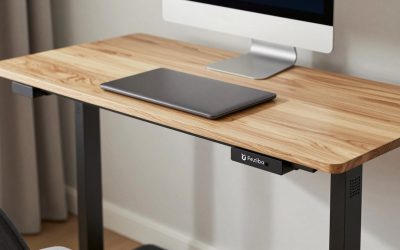
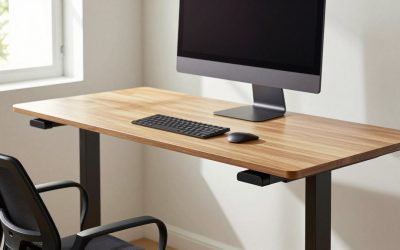
The desk and workflow side of the studio
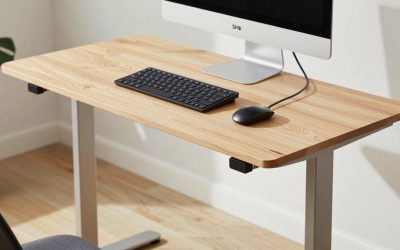
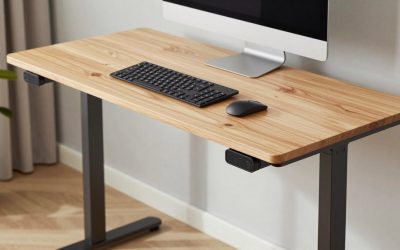
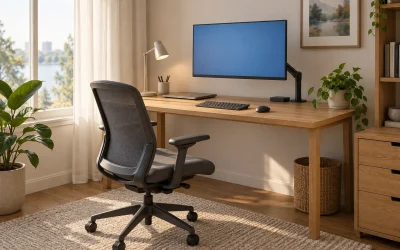
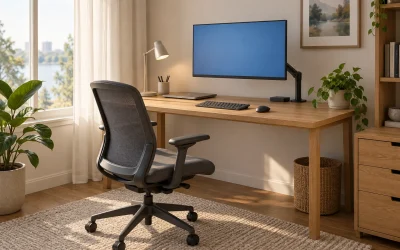
- Two zones: a filming zone that stays set up, and an editing desk facing a different wall so you never have to break down lights to work.
- Power: lights, camera, recorder and a computer on one circuit can trip older breakers. Use a surge-protected strip and know which outlets share a circuit.
- Heat: older tungsten lights are hot; LED panels are far cooler, but a closed room with a PC and three lights still warms up fast. Plan airflow.
- Storage: 4K footage fills drives quickly. One hour of 4K at around 100 Mbps is roughly 45 GB, so plan an external SSD for active projects and a larger HDD or NAS for archives.
- Cable routing: tape or clip cables along the floor edge so you do not trip in the dark between takes.
A sample setup at three budgets
Around $300: phone on a tripod, one LED panel with softbox, a wired lavalier, a rug and curtains. Around $1,000: entry mirrorless body with a fast prime, key light plus fill, a dynamic mic on an arm, and an RGB practical light. $2,000 and up: better lens, larger soft key, a dedicated recorder or interface, acoustic panels and a teleprompter for scripted videos.
FAQ
How big does a room need to be for a home YouTube studio?
A 10 by 10-foot room works for talking-head videos if you shoot diagonally. Aim for at least 4 feet between you and the background, and enough space on each side for a key light stand.
Is a webcam good enough for a YouTube channel?
For screen-recording, gaming or tutorial channels where your face is small, yes. For channels where you are on camera most of the time, a phone’s rear camera or a mirrorless camera will give noticeably better detail and background blur.
Bottom line
Build the YouTube studio around the shot: create depth, make the key light big and soft, keep the mic close, and separate filming from editing so the set stays ready. Upgrade the camera last. Light and sound decide whether a home video looks professional.
Ready to decide? Our #1 pick for 2026 is the Key.
Live price & availability on Amazon.
Related Reviews & Guides
best ergonomic office chair for home office
best ergonomic office chair for programmers